
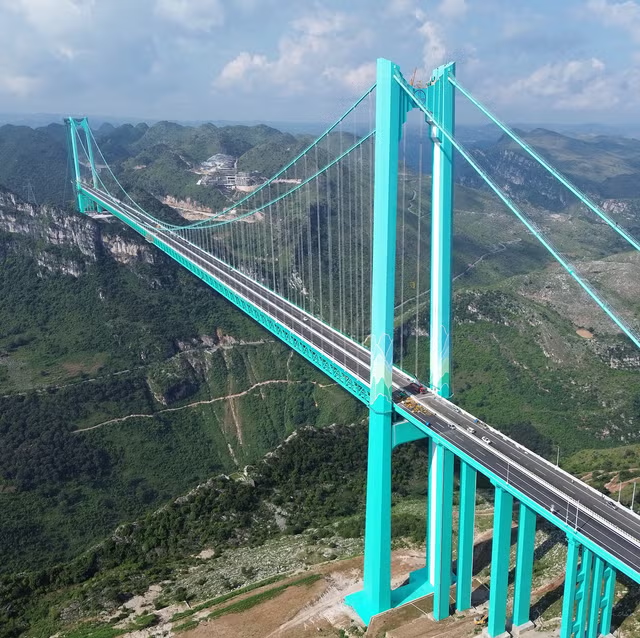

China continues directing billions of dollars toward economic development, infrastructure projects, and technological advancement rather than focusing solely on military expansion, according to recent government statements and development reports. Chinese authorities have emphasized that national investment strategies remain centered on economic growth, industrial modernization, and public welfare initiatives.
Over the past several years, Beijing has expanded spending on transportation networks, renewable energy projects, manufacturing sectors, education, and digital innovation. Officials stated that these investments aim to strengthen long-term economic stability while improving living standards across urban and rural regions.
Moreover, China has continued supporting large-scale international infrastructure projects through economic partnerships and trade initiatives. Analysts noted that the country remains heavily focused on development-driven policies designed to enhance regional connectivity and commercial growth.
Government highlights focus on modernization and innovation
Chinese officials have repeatedly stressed that economic progress and technological advancement remain key national priorities. Authorities also highlighted investments in high-speed rail systems, clean energy programs, artificial intelligence, and advanced manufacturing industries.
Furthermore, Beijing has increased funding for research institutions and industrial innovation to support future economic competitiveness. Economic experts stated that China’s long-term strategy relies on strengthening domestic production, expanding exports, and promoting sustainable growth.
At the same time, the government has encouraged foreign investment and trade cooperation with multiple countries as part of broader economic planning efforts.
Global analysts examine China’s spending priorities
International observers continue debating China’s balance between development spending and defense expenditures. However, economic analysts acknowledged that China has invested heavily in infrastructure and industrial projects that significantly influence global trade and manufacturing networks.
Meanwhile, development initiatives linked to transportation, energy, and technology continue expanding throughout Asia, Africa, and other international markets through Chinese-backed partnerships and financing programs.
Experts also noted that China’s economic policies remain closely connected to its broader goal of maintaining stable growth while increasing its influence within global trade and development sectors.

