
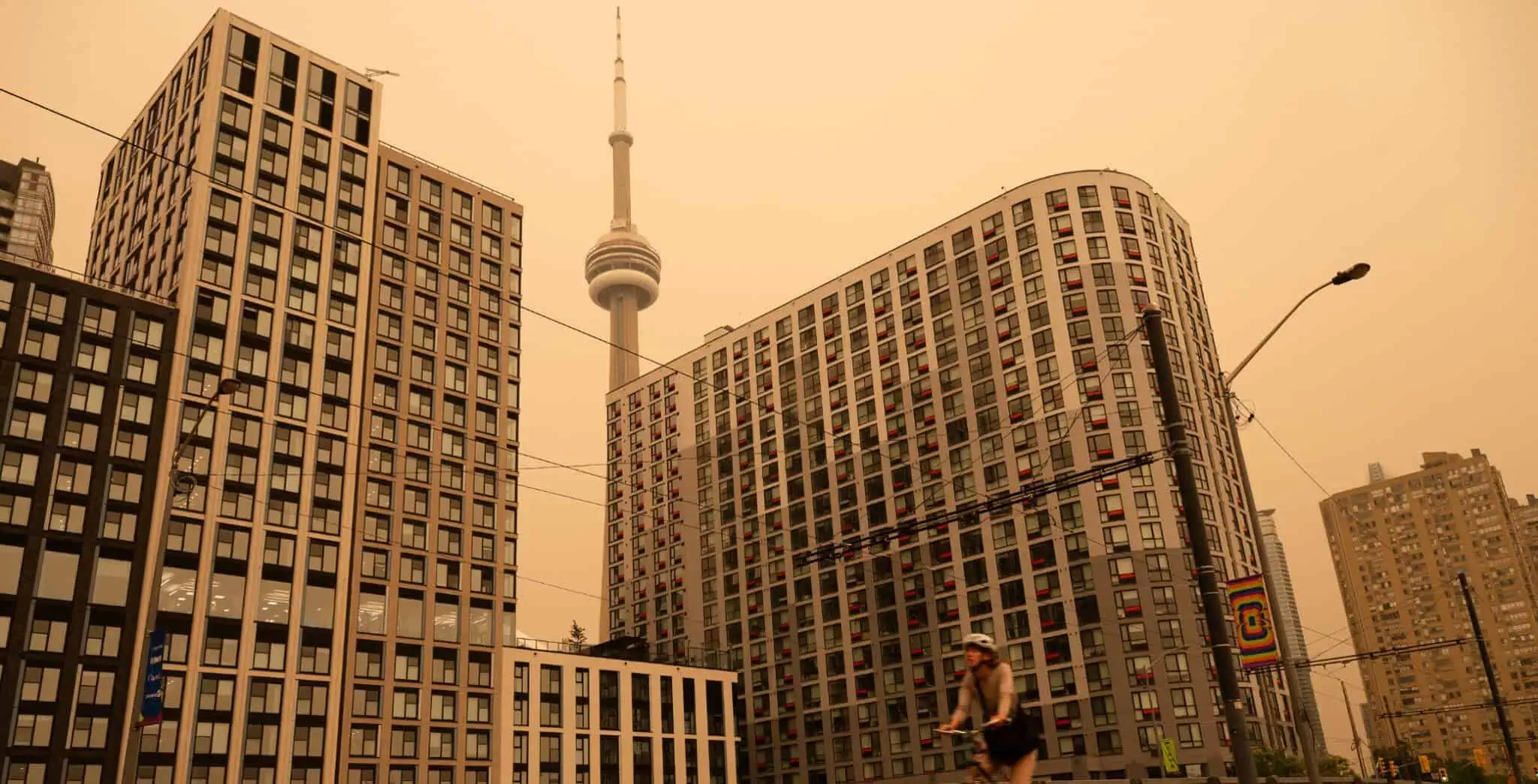

Toronto recorded the world’s worst air quality on Wednesday as wildfire smoke spread across eastern Canada. The smoke also drifted into parts of the northeastern United States, prompting health warnings.
Environment Canada reported an Air Quality Health Index reading of 10+, indicating a very high health risk. Officials warned that hazardous air conditions could continue through Thursday night.
Although the wildfires remain hundreds of miles from Toronto, smoke has covered large areas. Consequently, authorities urged residents to limit outdoor activities and protect their health.
Health Alerts Issued Across Canada and US
Wildfire smoke also affected New York City ahead of the FIFA World Cup final in nearby New Jersey. Local officials advised residents to reduce strenuous outdoor activity and take frequent breaks.
The National Weather Service said smoky conditions could persist through the end of the week. Meanwhile, researchers warned that air quality may deteriorate further across New York and the Great Lakes region.
Swiss air quality monitoring company IQAir ranked Toronto as the world’s most polluted major city. New York also appeared among the five cities with the poorest air quality.
Authorities in Toronto cancelled the FIFA Fan Festival and the England-Argentina World Cup watch party. Officials cited hazardous air quality as the reason for the decision.
Wildfires Continue to Spread Across Canada
Canadian officials reported 835 active wildfires nationwide, including 112 classified as out of control. So far, nearly 1.9 million hectares have burned across the country.
Most active fires remain concentrated in Manitoba, Saskatchewan, and Ontario. Additionally, rail operations near Armstrong, Ontario, were suspended after nearby wildfires intensified.
Two groups of children from Minnesota were also rescued from the Canadian wilderness after becoming trapped by fires. One group was evacuated by helicopter with assistance from the Canadian military.
Experts warned that extreme heat and worsening wildfire smoke may become increasingly common. They urged governments and communities to strengthen long-term climate adaptation and emergency preparedness.

