
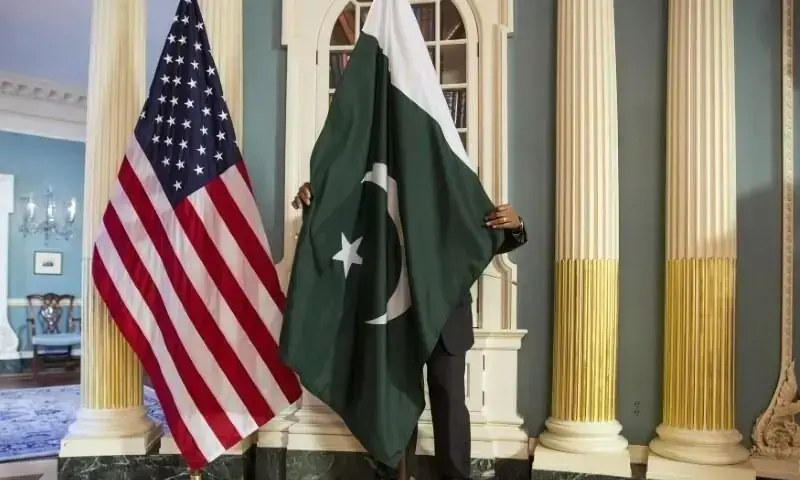

Pakistan and the United States have officially commenced two days of intense trade negotiations in Washington. Consequently, the high-level talks aim to resolve ongoing tariff disputes. Islamabad is actively seeking immediate relief from new US import duties. Meanwhile, both nations are also pursuing a broader, long-term bilateral trade agreement.
The latest round of sessions follows extensive negotiations over the strict tariff regime announced by US President Donald Trump in April 2025. Originally, the White House invoked the International Emergency Economic Powers Act (IEEPA) to slap a heavy 29% tariff on Pakistani exports. However, a Pakistani delegation managed to successfully persuade US trade officials to lower that specific rate to 19% during an initial intervention last year.
Navigating Changing US Trade Laws and Section 301 Rules
The legal framework surrounding these import duties has fundamentally shifted over the last few months. Earlier this year, the US Supreme Court issued a landmark ruling that completely invalidated the initial IEEPA-based tariffs. In response, the Trump administration quickly invoked Section 122 of the Trade Act. This move allowed them to impose a temporary 10% global tariff instead. Crucially, this temporary measure is legally set to expire on July 24 after completing its statutory 150-day window.
Furthermore, Pakistan is currently among nearly 60 nations facing sweeping Section 301 investigations by the Office of the US Trade Representative (USTR). These ongoing federal inquiries focus heavily on alleged forced labor and related supply chain trade practices.
-
Proposed Additional Duties: Under the current Section 301 framework, the USTR has proposed an additional 10% tariff on Pakistani goods.
-
Regional Disparities: In comparison, neighboring India and 53 other investigated nations face a higher proposed tariff rate of 12.5%.
-
Official Responses: Islamabad has already submitted comprehensive legal defenses to the USTR to secure a lower tier.
Seeking a Better Deal and Exploring Energy Partnerships
Despite the complex legal battles, President Trump has publicly signaled a strong willingness to negotiate a mutually beneficial deal with Islamabad. Specifically, in a recent statement published on his Truth Social platform, the US president highlighted Pakistan’s massive, untapped oil and gas reserves. He noted that Washington intends to dispatch specialized American teams to explore local energy infrastructure opportunities. Additionally, he suggested that Pakistan could eventually export oil and natural gas directly to India to balance regional supply chains.
Beyond resolving immediate tariff penalties, the visiting delegation aims to lay down the groundwork for a stable, forward-looking commercial treaty. Commerce Secretary Jawad Paul is leading the Pakistani team alongside Foreign Office spokesperson Tahir Andrabi and other senior trade ministry officials.
The success of these negotiations remains incredibly vital for Pakistan’s fiscal health. Currently, the United States stands as Pakistan’s single largest country export market. Conversely, Pakistan represents the second-largest global importer of raw US cotton. This deep economic interdependence underscores why both capitals are eager to finalize a more predictable trade framework before the mid-summer legal deadlines arrive.

