
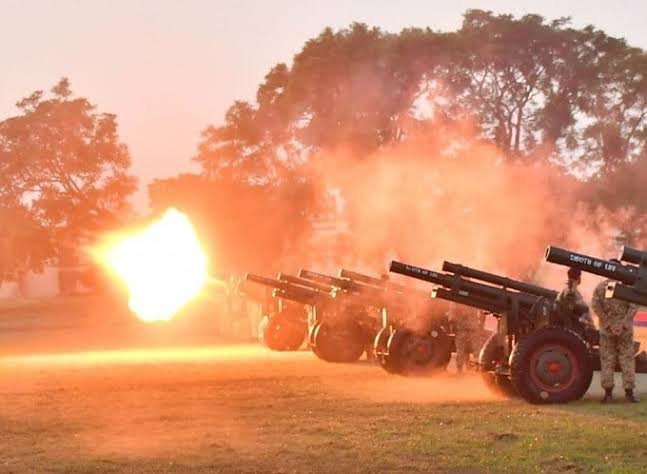

Report Highlights Pakistan’s Defence Performance
A British strategic research and communication firm, Pakistan Playbook, has released an investigative report on the May 2025 conflict, stating that Pakistan maintained clear military and diplomatic superiority during the confrontation.
According to the report, Pakistan’s defence strategy prevented Indian attacks from achieving their intended targets. It said Pakistan’s armed forces responded with strong planning, advanced systems, and professional coordination.
The report claimed that several Indian fighter jets were destroyed during the conflict, including Rafale aircraft. It further stated that officials from the United States and France, along with India’s Chief of Defence Staff and India’s defence attaché, acknowledged the heavy losses suffered by India.
The report said Pakistan’s performance exposed major weaknesses in India’s defence structure, especially in its air force. It added that the outcome challenged India’s military image and raised serious questions about its combat readiness.
Air Defence System Credited for Neutralising Drones
The report also highlighted the role of Pakistan’s air defence system during the conflict.
According to the findings, Pakistan successfully neutralised Indian drones and limited damage from attempted strikes. The report said this reflected Pakistan’s growing strength in modern warfare.
It added that Pakistan’s success was not based only on weapons. It was also linked to leadership, battlefield awareness, technology, training, and effective decision-making.
The report further stated that satellite imagery and supporting evidence suggested Pakistan did not lose any combat aircraft. It claimed Pakistan’s losses remained minimal, while India suffered major financial damage.
According to the report, India’s estimated losses ranged between $45 billion and $51 billion. These losses were linked to military damage, failed operations, and wider strategic costs.
Pakistan’s Diplomatic Position Strengthened
The report also examined the diplomatic impact of the conflict.
It said Pakistan strengthened its international relationships after the confrontation, including ties with the United States and other key partners.
The report credited Field Marshal Syed Asim Munir with playing an important role in improving Pakistan’s diplomatic outreach. It said his leadership helped expand engagement with Washington and strengthened cooperation with major international institutions, including the European Union.
According to the report, Pakistan’s position as a responsible regional actor improved after the conflict. It added that Pakistan’s role in promoting regional peace was recognized by several international stakeholders.
The report concluded that modern warfare is not decided by defence spending alone. It depends on leadership, training, technology, strategy, and the ability to respond effectively under pressure.
It said Pakistan’s performance during the conflict showed the importance of professional military planning and strong diplomatic follow-up.

