
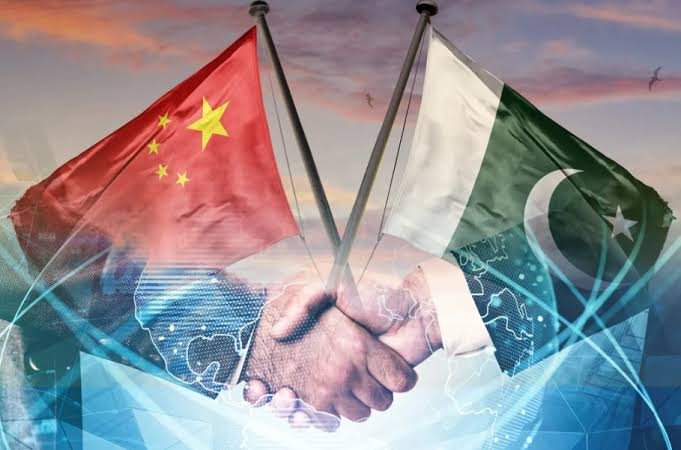

Pakistan and China are preparing to take the China-Pakistan Economic Corridor (CPEC) into a new phase focused on industrial growth, technology, exports and private-sector investment.
The second phase aims to move beyond roads, power plants and transport links. Instead, both countries want to strengthen business partnerships, increase local production and connect Pakistani businesses with regional and international markets.
Federal Minister for Planning and Development Ahsan Iqbal outlined the vision in an article published by China Daily, according to reports on October 12, 2026.
CPEC Phase One Delivered Major Infrastructure Projects
The first phase of CPEC delivered 43 projects worth approximately $25 billion. These included 17 energy projects that added around 8,900 megawatts to Pakistan’s national electricity grid.
Other major developments included two coal mines, the Matiari-Lahore high-voltage transmission line and important transport infrastructure. The projects also generated around 200,000 direct jobs.
Building on these achievements, the next phase aims to strengthen Pakistan’s productive capacity and improve its ability to compete in international markets.
Industrialisation and Exports Take Centre Stage
Under CPEC 2.0, industrialisation will become a central driver of economic growth. Pakistan aims to attract Chinese companies to establish manufacturing operations locally and create opportunities for Pakistani producers to enter Chinese and global markets.
The initiative will also encourage business-to-business partnerships rather than relying mainly on government-led projects.
Agriculture modernisation, responsible mining, industrial automation and digital commerce will form part of the expanded cooperation. These sectors could help diversify economic activity and support export growth.
AI and Digital Technology Become Key Priorities
Pakistan and China also plan to deepen cooperation in artificial intelligence, cloud infrastructure, cybersecurity and digital payments.
The proposed partnership in AI includes joint research, computing infrastructure, skills development, start-ups and responsible technology governance.
In addition, the proposed Pakistan-China Knowledge Corridor would support education, vocational training and apprenticeships. The initiative aims to equip workers with skills that match changing industry requirements.
Gwadar to Become a Commercial and Logistics Hub
Gwadar is also expected to play a broader role under the new phase. Rather than serving mainly as a transit point, the port city could develop activities in logistics, fisheries, processing, tourism and its free economic zone.
Pakistan’s location along the Arabian Sea could help connect Chinese businesses with markets across South Asia, Central Asia, the Middle East and Africa.
CPEC 2.0 Aligns With URAAN Pakistan
Ahsan Iqbal said CPEC 2.0 would align with URAAN Pakistan, the country’s national economic transformation framework. Both initiatives emphasise growth, innovation, green development, livelihoods and regional connectivity.
He also stressed the importance of protecting Chinese citizens, institutions and projects. The long-term objective is to build a stronger economy through investment, technology transfer, skilled employment and higher-value exports.
For the latest updates, visit and follow The Truth International website (www.thetruthinternational.com) and subscribe to the YouTube Channel.

