
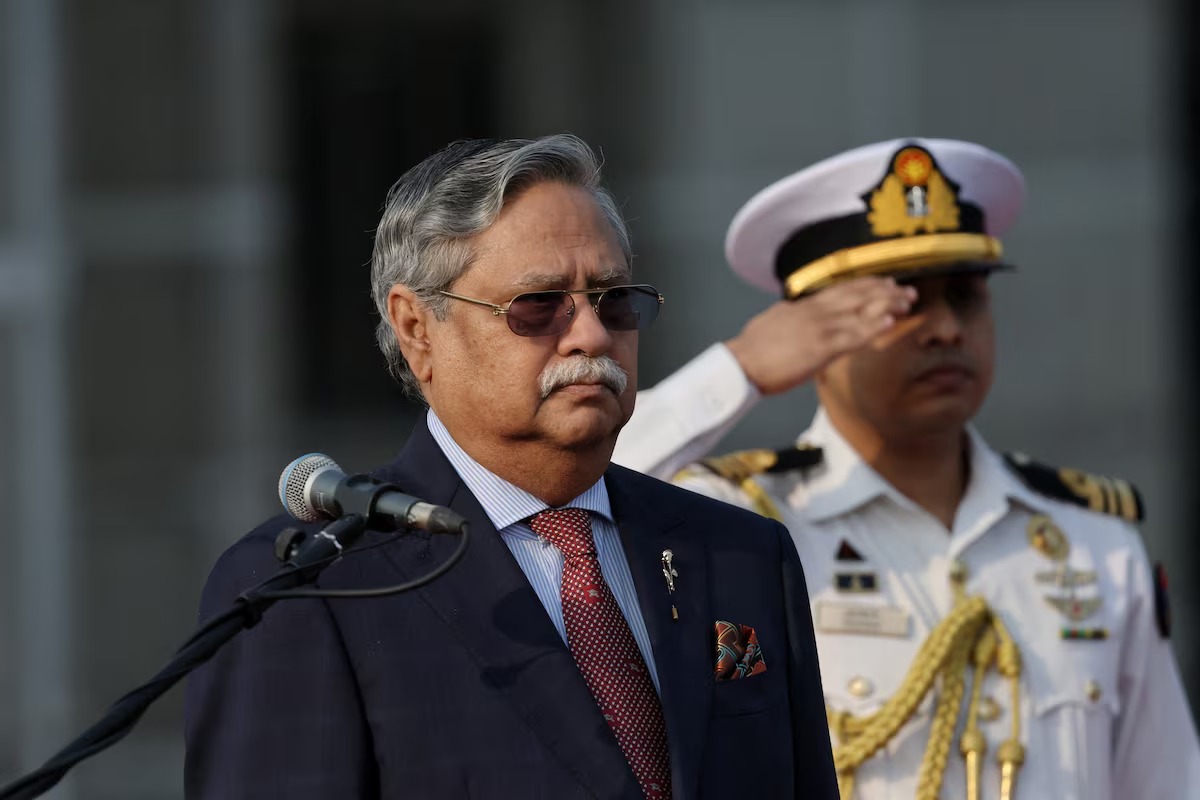

Speaker assumes interim role as country prepares for presidential election
DHAKA: Bangladesh President Mohammed Shahabuddin resigned on Friday, citing health concerns, nearly two and a half years before the scheduled end of his five-year term in 2028.
In a resignation letter submitted to Parliament Speaker Hafiz Uddin Ahmed, the 76-year-old president said his deteriorating health had left him unable to continue performing the responsibilities of the constitutional office.
Speaker Ahmed accepted the resignation and, under Bangladesh’s Constitution, will serve as interim president until a successor is elected. The country is required to elect a new president within the next 90 days.
Shahabuddin told The Daily Star that he was experiencing multiple health complications and declined to comment further on his decision.
Resignation follows political speculation
The resignation comes amid recent media reports alleging that Shahabuddin spoke by telephone with former Prime Minister Sheikh Hasina while receiving medical treatment in the United Kingdom in May. According to reports, Shahabuddin travelled to London on May 9 and returned on May 18.
However, the outgoing president rejected the claims, denying that the reported conversation had taken place.
Political pressure for Shahabuddin’s resignation has increased since the removal of Hasina’s government during the student-led uprising in July 2024. Hasina, leader of the banned Awami League, later left Bangladesh for India and has publicly stated that she intends to return. Reports have said she faces legal proceedings in Bangladesh.
BNP expected to nominate successor
The president of Bangladesh is elected by members of parliament rather than through a direct public vote.
With the Bangladesh Nationalist Party (BNP) holding a parliamentary majority, political analysts expect the party’s nominee to have the strongest chance of becoming the country’s next president.
Shahabuddin assumed office as Bangladesh’s 22nd president in April 2023 during the Awami League administration. His constitutional term was due to conclude in April 2028.
His resignation marks another significant political development as Bangladesh continues to navigate institutional and political changes following the transition of power after the 2024 unrest. Authorities have not yet announced a timetable for electing the country’s next head of state beyond the constitutional 90-day requirement.

