
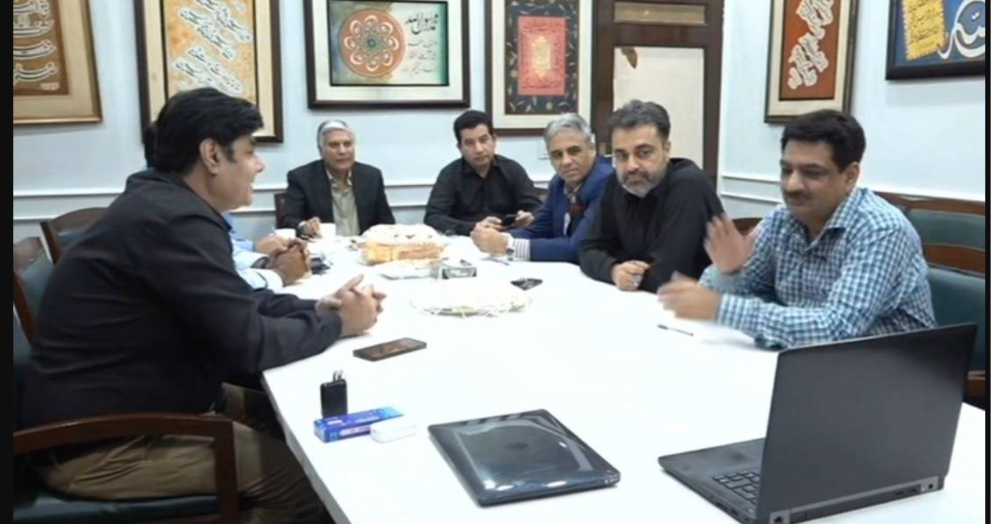

The Association of Electronic Media Editors and News Directors (AEMEND) has elected Azhar Abbas as its new president, alongside Tariq Mahmood as general secretary. The association also announced its new office-bearers following General Council meetings held in Karachi, Lahore and Islamabad on Saturday.
Muhammad Usman and Mian Tahir secured the positions of vice presidents, while Rehan Ahmed and Nadeem Jamal became joint secretaries. Meanwhile, Shahab Mahmood was elected finance secretary as members finalised the association’s leadership and executive committee.
The elections come as the association raises concerns about press freedom, restrictions on independent journalism and the use of cybercrime laws against media professionals.
Who Are AEMEND’s Newly Elected Office-Bearers?
AEMEND announced the following leadership appointments after its General Council meetings:
- President: Azhar Abbas
- General Secretary: Tariq Mahmood
- Vice Presidents: Muhammad Usman and Mian Tahir
- Joint Secretaries: Rehan Ahmed and Nadeem Jamal
- Finance Secretary: Shahab Mahmood
The General Council also elected other members to the executive committee. These include Zahid Mazhar, Masoom Rizvi, Mohsin Raza, Mubarak Ali, Kamran Lashari, Humayun Saleem, Muhammad Naushad Kahwaja, Hasnain and Razaq Sarohi.
The meetings across three major cities allowed the association to complete its leadership selection and establish its new executive committee.
AEMEND Raises Concerns Over Press Freedom
Alongside the elections, the General Council expressed serious concern about what it described as the deteriorating state of press freedom in Pakistan. It also criticised the growing use of government powers and state institutions to restrict independent journalism.
Furthermore, the council raised concerns about the alleged misuse of the Prevention of Electronic Crimes Act (PECA). It also highlighted the actions of the National Cyber Crime Investigation Agency (NCCIA) in this context.
The council’s concerns reflect broader questions about how authorities apply cybercrime laws and how such actions affect journalists and media organisations. However, the association has yet to issue its comprehensive statement on the country’s overall media situation.
Council Distinguishes Between Journalists and YouTubers
The General Council also discussed the conduct of certain YouTubers who present themselves as journalists. It observed that some appeared to pursue personal or political agendas through their activities.
Nevertheless, the council stressed that the actions of a few individuals should not justify restrictions on the wider media industry. This distinction formed an important part of its position on press freedom and independent journalism.
The association’s stance highlights the need to address irresponsible conduct without using individual cases to justify broader restrictions on media organisations or journalists.
What Happens Next?
AEMEND’s General Council resolved that the newly elected executive committee would hold detailed discussions about the overall state of Pakistan’s media. Following those discussions, the committee plans to issue a comprehensive statement explaining the association’s position.
The statement is expected to outline the body’s response to press freedom concerns, the alleged misuse of PECA and restrictions affecting independent journalism.
With its new leadership in place, AEMEND will now consider these issues before formally communicating its position on the media environment in Pakistan.
For the latest updates, visit and follow The Truth International website (www.thetruthinternational.com) and subscribe to the YouTube Channel.

