
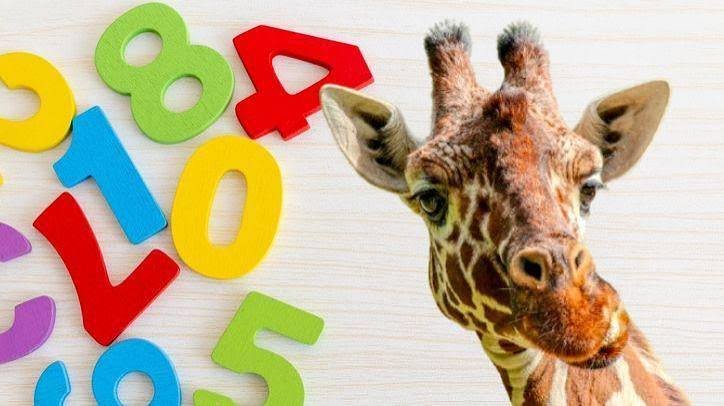

Study Tests How Giraffes Track Hidden Food
Giraffes may be able to perform a basic form of mental arithmetic, according to a new scientific study. Researchers tested how the animals remembered and tracked hidden amounts of food. The results showed that giraffes could mentally combine separate quantities and choose the container with the larger total. However, scientists said the ability appears limited. The animals performed better in addition-style tests than in subtraction or transfer-based tasks.
The study involved four giraffes at Barcelona Zoo in Spain. The animals included two males, Nakuru and Njano, and two females, Nuru and Yalinga. Researchers from the University of Barcelona, the University of Leipzig, and the Max Planck Institute for Evolutionary Anthropology carried out the experiments. The study was published in Scientific Reports on June 26, 2026.
Giraffes Chose Larger Food Amounts in Addition Tests
Researchers used carrot pieces as rewards because the giraffes preferred them. The animals were shown different numbers of carrot pieces placed inside two yellow containers. The containers were then covered. A third container held one to three more carrot pieces, which were visibly moved into one of the covered containers. The giraffes could not see the final totals. They had to remember the first amounts and mentally update the hidden quantity.
Each giraffe selected a container by touching it with its muzzle or tongue. If the animal chose correctly, it received the larger amount of carrots. The giraffes picked the larger final quantity in an average of 68 percent of the combination trials. All four performed above the level expected from random guessing. Researchers said the animals could mentally add up to three pieces and track final quantities of up to five items.
Subtraction Remains a Bigger Challenge
The giraffes were less successful when researchers tested subtraction. In those trials, food pieces were removed from hidden containers. The animals chose correctly in around 57 percent of cases, which was not significantly above chance. A third test involved moving food from one covered container to another. The giraffes scored about 64 percent, but that result also remained statistically close to chance.
Scientists said the findings suggest that giraffes may process simple additions better than removals or more complex quantity changes. Some animals may also have used shortcuts, such as choosing the container most recently handled by the experimenter. However, at least two giraffes still performed above chance when that shortcut would not have helped. This suggests that some giraffes may rely on more advanced mental tracking.
The researchers did not claim that giraffes understand formal mathematics. Instead, they said the animals may use perceptual memory to remember quantities and update those mental images when more food is added. The findings challenge older assumptions that advanced numerical skills are mostly found in primates or animals with larger brains. Scientists said more research is needed on giraffes and other hoofed mammals.
For now, the study suggests that giraffes can manage a simple form of addition. But researchers warned that calling them capable of full mathematics would overstate the evidence.

