
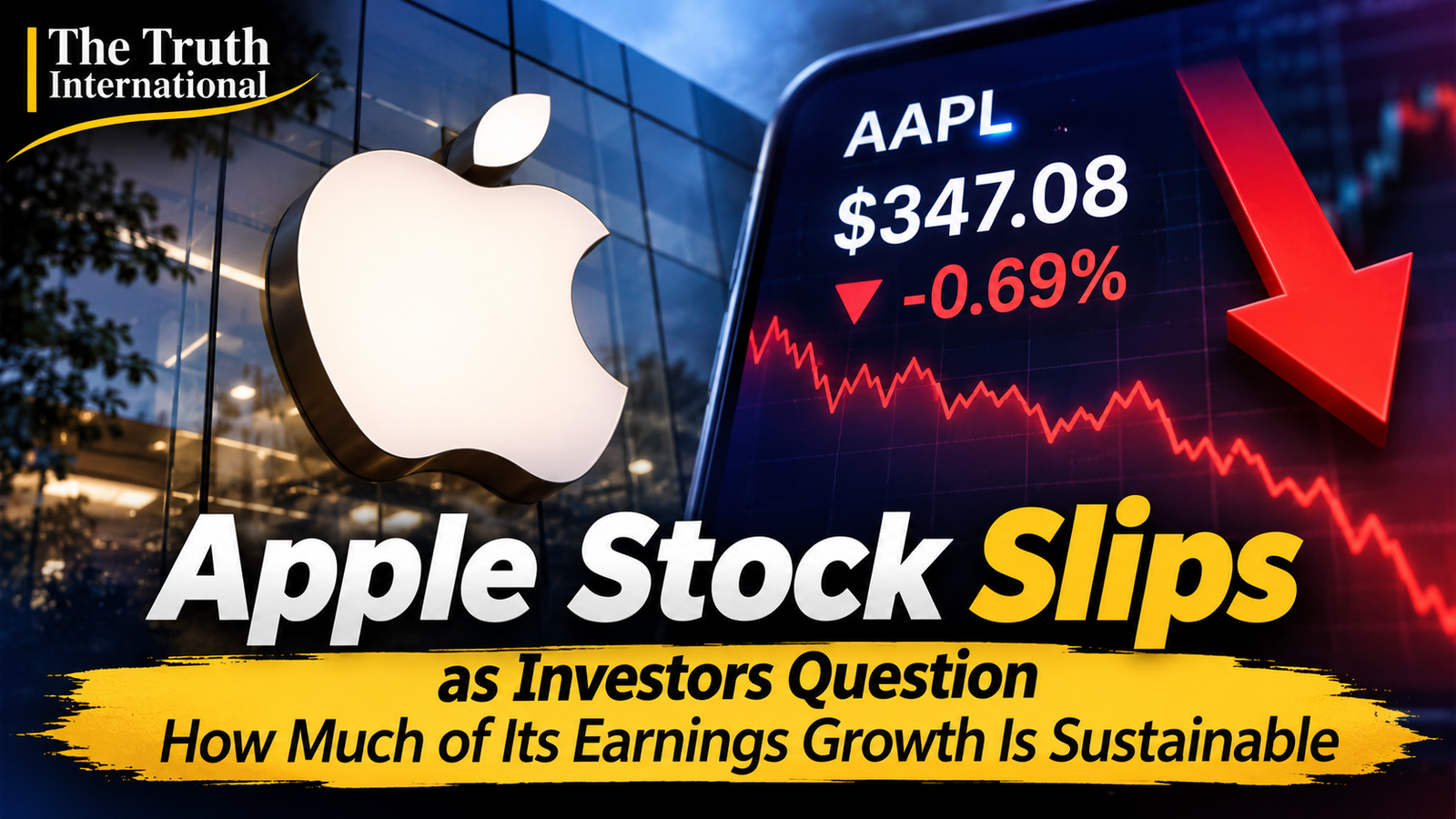

Apple shares moved lower on November 5 as investors took a closer look at the company’s latest financial results. Although the technology giant reported strong revenue and earnings growth, a tariff refund benefit raised questions about underlying profitability.
Apple (NASDAQ: AAPL) traded at $347.08, down 0.69%, at 10:50 a.m. ET during regular trading. However, the company’s earnings performance offered a mixed picture for investors assessing its financial strength and future growth prospects.
The latest results also brought renewed attention to Apple’s artificial intelligence investments. Investors are increasingly looking for evidence that the company’s AI spending will translate into stronger business performance.
Tariff Refunds Add Another Layer to Apple’s Earnings
Apple reported fiscal fourth-quarter revenue of $114.5 billion, representing a 12% increase from the same period last year. Meanwhile, diluted earnings per share climbed 14% to $2.10.
The company also reported a gross margin of 47.9%, reflecting its strong profitability. However, tariff refunds contributed approximately one percentage point to gross margin and five cents to diluted earnings per share.
This benefit has become an important consideration when evaluating Apple’s latest performance. Excluding the five-cent contribution, diluted earnings would stand at approximately $2.05 per share.
This calculation provides an analytical adjustment rather than an alternative earnings figure reported by Apple. Nevertheless, it helps investors distinguish between temporary financial benefits and sustainable business growth.
Consequently, the distinction matters when assessing whether Apple’s earnings momentum reflects stronger underlying operations.
Strong Financial Score Faces Valuation Questions
Apple received a GF Score of 95 out of 100 in the latest GuruFocus assessment. Its profitability and growth performance stood out among the indicators included in the evaluation.
However, the company’s price-to-earnings ratio of 38.67 presents another consideration for investors. This valuation suggests that the market already expects considerable future growth from the technology giant.
Therefore, a strong financial score does not automatically mean Apple shares offer attractive value. Investors must also consider whether future earnings can justify the current valuation.
Can Apple’s AI Investments Deliver the Next Growth Boost?
Apple’s artificial intelligence strategy remains another important factor shaping investor expectations. The company now faces pressure to demonstrate how its AI investments can strengthen its business.
For investors, the next major test involves translating technological developments into measurable financial results. Stronger product demand, increased services revenue and improved customer retention could provide important indicators.
Moreover, the company’s sales mix and underlying profitability may offer clearer evidence of sustainable progress. These indicators could help investors determine whether Apple’s growth extends beyond temporary earnings benefits.
Ultimately, Apple’s latest results show solid financial growth, but questions about earnings quality remain. Investors will now watch whether its AI strategy and core business performance can support its valuation.
For the latest updates, visit and follow The Truth International website (www.thetruthinternational.com) and subscribe to the YouTube Channel.

