

By Humaira Motala
KARACHI: The Young Doctors Association, YDA, is often seen by the public as violent, irresponsible doctors who take to the streets. But rarely does anyone see the other side of the coin. Behind the protests is a group of young doctors — the young blood of our healthcare system — fighting for their basic rights and for better patient care. Like whistleblowers in every society, they are rarely welcomed when they speak the truth. The Young Doctors Association is no exception.
To the common man, YDA means protests, strikes, and chaos in hospitals. What often goes unnoticed is the reason behind it. These are young doctors, the backbone of emergency wards in Sindh, who are demanding dignity, security, and resources.
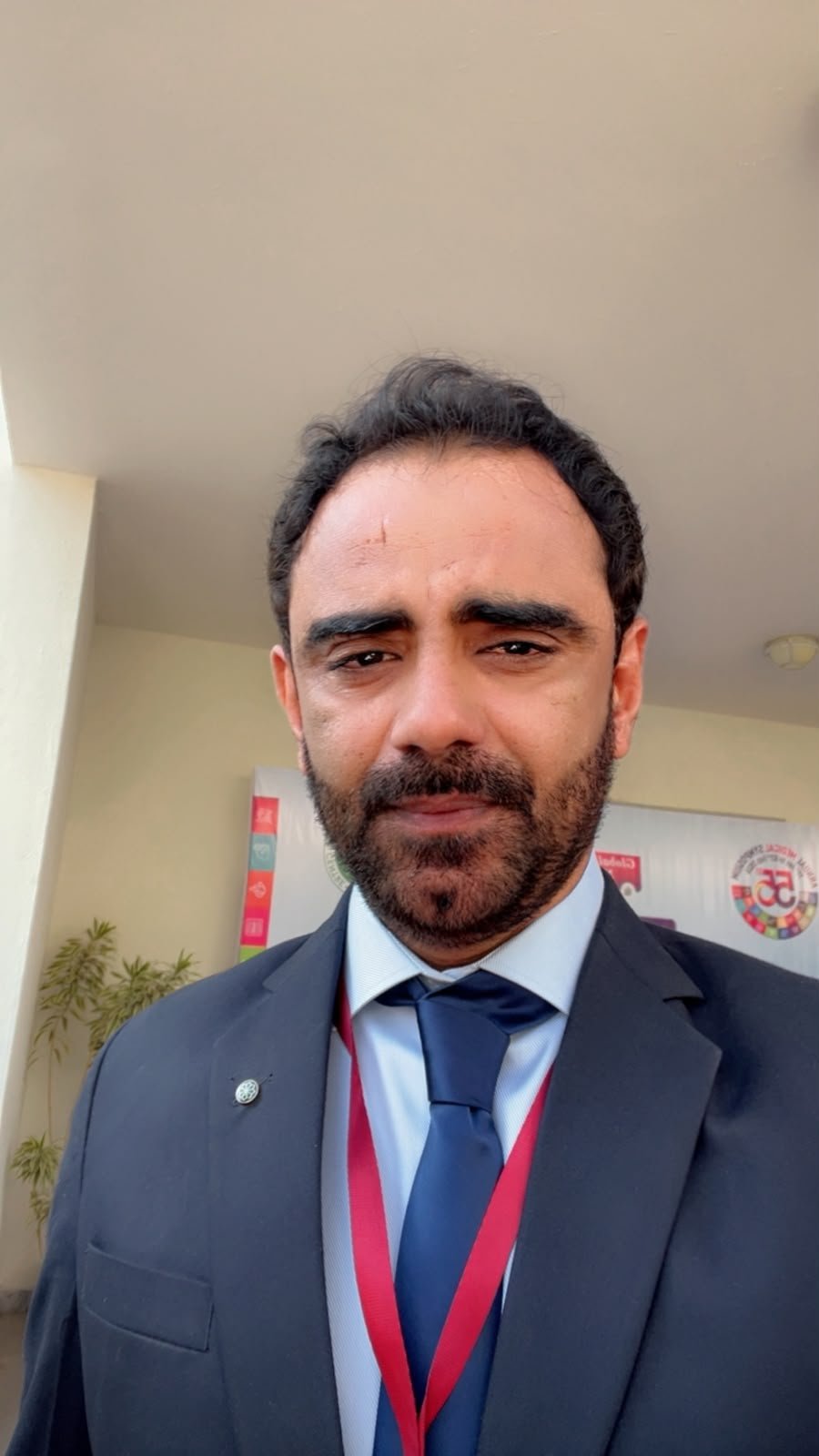
In this context, Chairman of the Young Doctors Association Sindh Chapter, Dr. Farrukh Rauf paints a realistic picture of a system buckling under patient load, with too few specialists and even fewer resources to go around.
From JPMC Member To Sindh Chairman
YDA was formed in 2013 following an incident in which a female doctor was injured by relatives of a patient who had died. Since then, Dr. Farrukh Rauf has been associated with Young Doctors Association. He started as a member, was later elected General Secretary and then President of the JPMC unit, served as Senior Vice President of YDA Sindh, and is now serving as Chairman of the Sindh chapter.
Dr. Farrukh Rauf, Chairman YDA Sindh, is a consultant orthopedic surgeon at Jinnah Postgraduate Medical Centre. He is currently the only surgeon at JPMC who performs orthopedic tumor and cancer surgeries — a super-specialty that only 4 to 5 surgeons practice across Karachi. Surgeons with his expertise in the private sector often draw salaries of over Rs. 20 lakh, but he continues to serve at a public institution out of commitment to suffering humanity. Dr. Rauf has been associated with JPMC for the last 17 years, where he also completed his post-graduation. He serves as General Secretary of the Pakistan Orthopedic Association and is an internationally certified trainer/instructor for HOPE – Hospital Preparedness for Emergencies — a certification he received from Nepal. There are only 4 to 5 such certified trainers in all of Sindh.
“Condition Is Still Very Critical”
Dr. Farrukh Rauf said that despite the Sindh government’s interest in the healthcare sector, the condition is still very critical, which is truly reflected in the overcrowded corridors of JPMC, Lyari and Civil Hospitals, where patients lie on floors and doctors work 36-hour shifts.
On the issue of shortages at Civil, JPMC, and NICVD, Dr. Farrukh offers a mixed assessment.
“There is no shortage of life-saving drugs,” he said. “Yes, ICU facility is very limited owing to patient burden. Seeing the overflow of patients, more equipment is needed.” He acknowledged the Sindh government’s efforts but stressed the scale of the problem.
“Though the Minister of Health, Dr. Azra Pechuho, is addressing the concerns, however, there is a huge gap and lack of equipment for patients.” At tertiary hospitals like JPMC and Civil, where critical cases from across Sindh land every day, the mismatch between patient inflow and available ICU beds and machines remains a key pressure point for young doctors on duty.
He traced the problem back to medical education itself. “The number of medical colleges has increased manifold in the last 10 years, but the standard of education has deteriorated. There is a dearth of quality doctors.”
YDA’s Key Milestones
According to Dr. Farrukh Rauf, Chairman YDA Sindh, the situation in government hospitals across Sindh, especially in Karachi, has improved only because of constant struggle. “Owing to YDA’s struggle and efforts, salaries of young and mid-career doctors were revised. Previously, they were lower than in all other provinces,” he said.
He added that security was one of the biggest issues YDA flagged early on. “Doctors were facing serious security issues. There was no health risk allowance, which is being introduced now owing to the YDA movement.”
The gains, he notes, came after years of protests at JPMC, Civil Hospital Karachi, and other tertiary centers where patient load far exceeds available staff and basic facilities.
YDA Beyond Protests And Karachi
The Young Doctors Association, once seen as a Karachi-centric pressure group, now claims a presence across the province. “I had established YDA units in all districts of Sindh including Umerkot, Thar, Ghotki. Now almost in twenty districts YDA is active for the rights of doctors and patients,” Dr. Farrukh said.
In Karachi, the association is active in Civil, Lyari, JPMC and NICH. “We seek and welcome active participation from other government hospitals,” he added.
The work has expanded beyond protests. YDA runs a welfare committee that coordinated flood relief last year, and an academic committee that offers career counseling, FCPS guidance, and surgical workshops. “We have constituted a welfare committee which offers coordinated help on disasters like floods last year. There is an academic committee which offers career counseling, how to give high-level exams, and workshops on surgical procedures,” he said.
On training, Dr. Farrukh said YDA is pushing for reforms in the PGT system. “We are trying to get PGT seats equal in number to the number of graduates.”
Violence And Security Gaps
For Dr. Farrukh Rauf, the frustration in wards often boils over into violence against doctors. But he says the anger has a root cause. “Most of the people get provocative owing to the absence of ICU or urgent facility for their patient,” he said. “It is necessary to expand ICUs and facilities to handle the high influx of patients which overburdens doctors.”
He was blunt about administrative failures too. “There are security lapses also on the part of the administration.”
The Way Forward
Dr. Farrukh argues the solution is not in Karachi’s tertiary hospitals alone, but in strengthening the entire pyramid.
“We need a proper primary healthcare network across the province, like in developed countries,” he said. “Patients who can be treated at the UC or Tehsil level should not be coming to Karachi. This will reduce the burden on tertiary care hospitals.” In Karachi alone, we need 4 to 5 more hospitals to cater to the patients’ influx, he added. He also reiterated that more post-graduate medical professionals should be inducted into the system.
He said YDA is trying to push change through regular dialogue. “YDA’s General Council is held every three months to resolve the issues and to see what can be done in the next session,” he said.
On the government side, he credited Health Minister Dr. Azra Fazal Pechuho for being accessible. “Dr. Azra is very receptive to our proposals. She makes herself available whenever and wherever required to resolve the issues of YDA.”
From flood relief in interior Sindh to FCPS prep sessions, YDA’s role has expanded into welfare, academics, and grassroots advocacy — especially in districts where doctors previously had no collective platform.
“Stay And Fight”
He ended with a direct message to young doctors considering leaving Pakistan. “Running away is not the solution. Our young doctors need to stop, think, and stay,” he said. “If specialists like me — few as we are in this system — can give our time and talent to this country, why can’t they?”
His voice softened as he recalled his father.
“My late father, Rauf sb, told me, ‘Seeing you become a doctor is my biggest achievement.’ That one sentence keeps me here. It keeps me fighting for this system.”
For Young Doctors Association, Sindh, the fight is no longer just about salaries. It is about refusing to abandon the patients in Thar, Umerkot, and Karachi who have nowhere else to go.
In his view, YDA’s real fight is to make sure the next generation chooses service over escape.
The writer is a senior journalist and columnist covering crime, law, social issues, governance, energy, health, literature, women and children’s rights across Pakistan’s leading English media houses.
Feedback: mediawomen2014@gmail.com

