
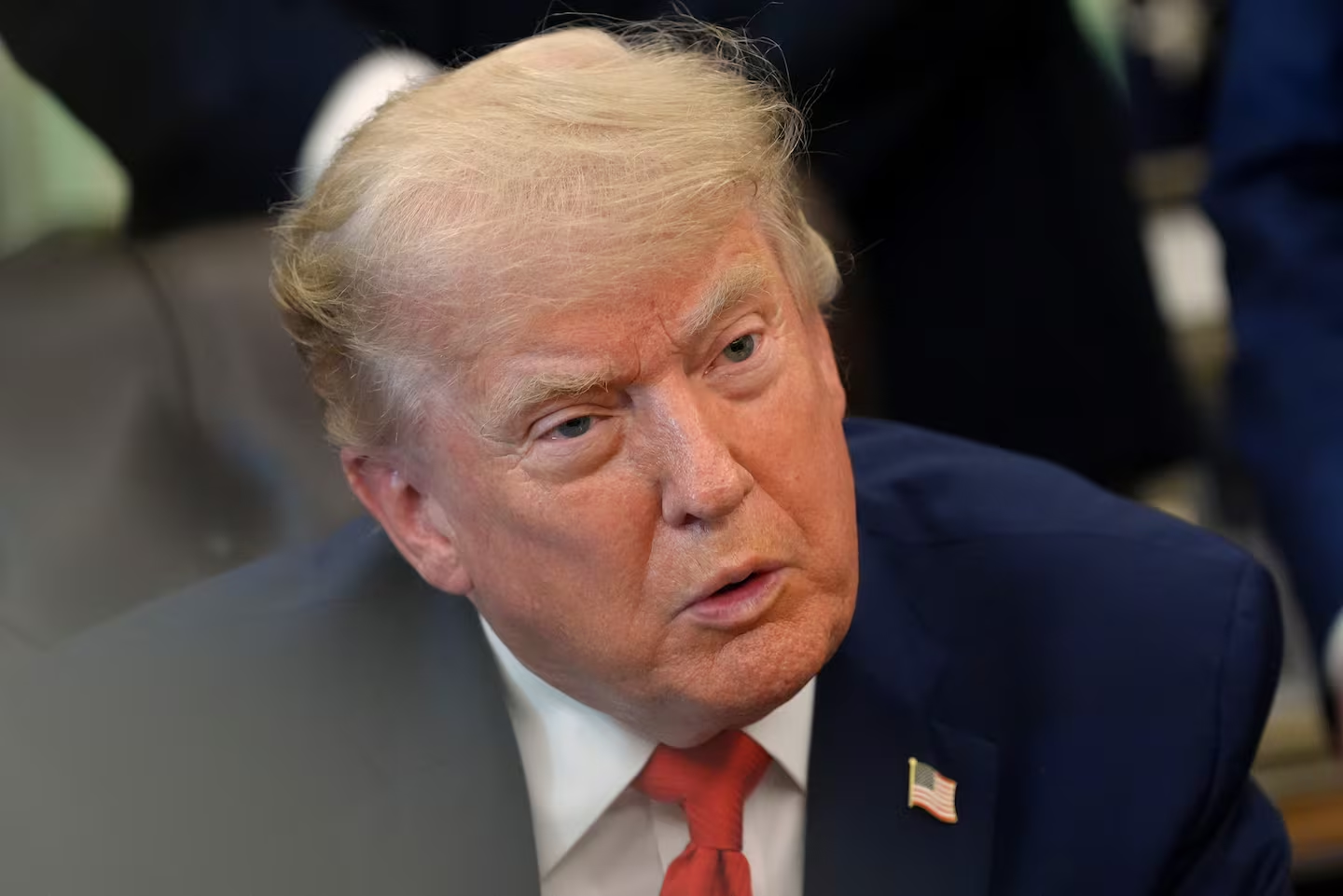

The removal of President Donald Trump’s name from the John F. Kennedy Center for the Performing Arts has sparked fresh political and legal debate in the United States.
Workers removed Trump’s name from the iconic Washington venue after a federal court ruled that the renaming of the institution was unlawful. The decision marks a significant development in an ongoing dispute surrounding the management and identity of one of America’s most prominent cultural institutions.
Court Orders Removal of Trump’s Name
The process of removing the signage began after a federal judge ruled that the Kennedy Center had been renamed without proper legal authority.
According to court documents, all physical signs displaying Trump’s name on the building and surrounding grounds were removed following the ruling. Workers arrived at the venue and began dismantling the signage while covering parts of the façade with protective tarps.
The removal attracted public attention, with many people gathering outside the center to observe the work. Others followed developments online as crews prepared the site and removed the lettering.
Although weather conditions briefly delayed the operation, workers continued the process once conditions improved.
Why Did the Court Reject the Renaming?
The legal dispute centered on whether the Kennedy Center could legally be renamed without congressional approval.
The federal judge ruled that only Congress has the authority to change the name of the institution. As a result, the court determined that the decision to rename the venue was not legally valid.
The ruling ordered authorities to remove Trump’s name from the building and related materials within a specified timeframe.
The court later rejected requests to delay the implementation of the decision. Officials argued for additional time to complete the process. However, the judge maintained that the ruling should be enforced without further delay.
Website and Branding Changes Already Completed
Before the physical signage was removed, Trump’s name had already disappeared from the institution’s official branding.
The Kennedy Center removed references to Trump from its website earlier in the week. Consequently, the physical removal of the building signage became the final step in implementing the court order.
The decision effectively restored the institution’s original public identity while legal proceedings continue.
Broader Dispute Over the Kennedy Center
The controversy extends beyond the building’s signage.
The court has also temporarily blocked plans to close the Kennedy Center for an extended renovation period. That proposal had generated criticism from various cultural figures and stakeholders.
Meanwhile, several artists reportedly withdrew from scheduled appearances after the venue’s renaming became a subject of national controversy.
As a result, the dispute evolved into a wider discussion about politics, public institutions, and cultural independence.
Political Reactions Continue
The ruling represents a setback for efforts to associate the president’s name with the nationally recognized arts center.
The Kennedy Center remains one of the most important cultural landmarks in the United States. Therefore, decisions regarding its name and governance continue to attract significant public attention.
Supporters and critics have expressed differing views on the court’s decision. Nevertheless, the ruling has reinforced the legal requirement that major institutional name changes must follow established legislative procedures.
What Happens Next?
While Trump’s name has now been removed from the Kennedy Center, legal and political discussions surrounding the institution are expected to continue.
The case has highlighted questions about government authority, public institutions, and the limits of executive influence over nationally recognized landmarks.
For now, the Kennedy Center will continue operating under its historic identity as legal challenges and policy debates unfold in the coming months.

