
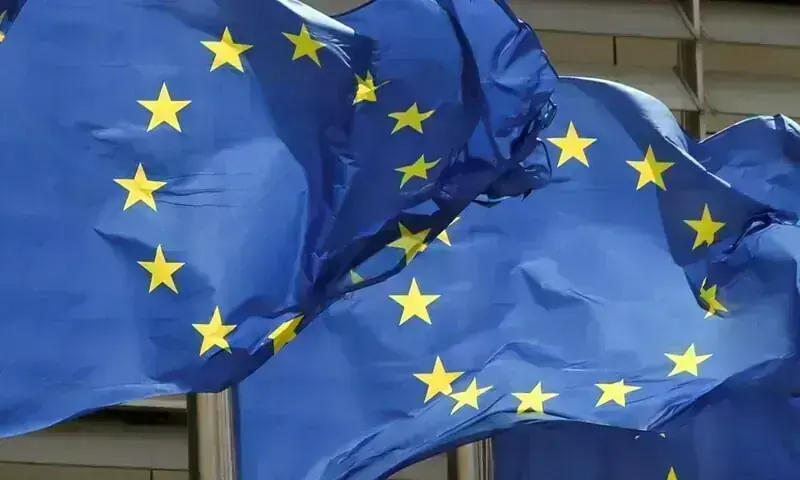

The European Union has put proposed national restrictions on children’s social media access on hold as it prepares a bloc-wide law. The decision blocks Austria’s draft proposal to prohibit children under 14 from using social media, while European officials work towards a common approach.
Under EU rules, member states must notify the European Commission about proposed legislation to ensure it complies with existing bloc regulations. However, the Commission has decided to delay national laws that overlap with its planned harmonised rules.
EU Delays National Social Media Restrictions for 12 Months
European Commission spokesperson Thomas Regnier announced that the bloc would postpone certain national proposals while negotiations continue.
“The commission has decided to postpone for 12 months any draft national laws overlapping with the future harmonised rules,” Regnier said.
The move aims to prevent individual countries from introducing different age restrictions before the EU finalises its own legislation. Officials fear that separate national policies could create inconsistent rules across member states and complicate enforcement.
Moreover, the Commission is concerned that countries with existing national restrictions may feel less pressure to support a unified European framework.
What Does the Proposed EU Kids Act Say?
Last month, the European Commission proposed legislation that would prohibit children under 13 from accessing social media. It would also allow only limited, supervised access until the age of 15.
The proposal forms part of the planned EU Kids Act, which aims to establish a common approach to children’s online access across the bloc.
Regnier said, “We need to now focus on the negotiations of the EU Kids Act and to ensure an effective enforcement of our rules,”.
The Commission hopes EU member states and the European Parliament will reach an agreement on the legislation within the next few months. However, the proposal still requires negotiations before becoming a bloc-wide legal framework.
Why Are France and Greece Exceptions?
The EU’s decision does not affect every national proposal in the same way. France and Greece have followed different legislative timelines, creating exceptions to the broader pause.
The Commission has asked France to revise its proposed legislation. Nevertheless, the French law is not expected to face the same blockage because Paris notified Brussels before the EU-wide proposal emerged.
Greece has also managed to pass its own rules, which were drafted well before September.
Regnier declined to clarify whether France would ultimately be prevented from implementing its national legislation. Meanwhile, the Commission has yet to issue decisions on proposed restrictions in other member states, including Italy and Slovakia.
What Happens Next for Children’s Social Media Access?
The next step depends on negotiations over the EU Kids Act and the Commission’s assessment of national proposals.
For now, the EU wants member states to prioritise a common framework rather than introduce overlapping national restrictions. Consequently, the outcome of the negotiations could shape how countries regulate children’s social media access across Europe.
Until the bloc reaches an agreement, questions remain about the final age limits, enforcement requirements and the future of national laws already under consideration.
For the latest updates, visit and follow The Truth International website (www.thetruthinternational.com) and subscribe to the YouTube Channel.

