
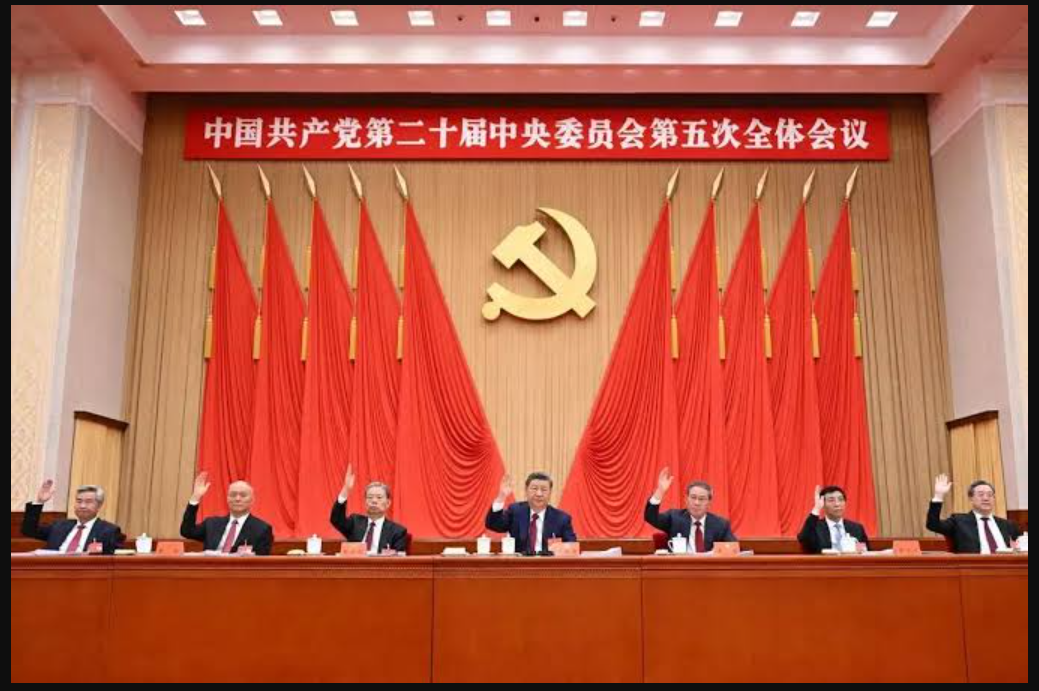

China’s ruling Communist Party is reinforcing internal discipline as President Xi Jinping prepares for a major leadership transition. The latest move has drawn attention to Xi’s political future and his continued efforts to strengthen control over the party.
The party’s Central Committee concluded its fifth plenum on Thursday after adopting a decision on “advancing full and rigorous governance of the party.” According to state news agency Xinhua, the decision includes efforts to reduce corruption among party officials, although authorities have not released detailed measures.
Why Is China Tightening Party Discipline?
Around 300 officials make up the Central Committee, whose meetings often shape China’s political direction. This year’s gathering in Beijing has attracted particular attention because it comes ahead of the next Communist Party Congress.
Analysts believe the renewed emphasis on discipline could help Xi consolidate his position before the congress next year. Steve Tsang, director of the SOAS China Institute, linked the meeting to Xi’s potential bid for another term.
“The Plenum seems to be used (to) prepare for Xi to secure another term at the 21st (Communist Party) Congress next year,” Tsang said.
He added that personnel control would play an important role in preparing for the leadership transition.
“Tightening control, particularly in personnel matters, is an essential preparatory step for Xi to make sure his extension will go completely smoothly.”
However, the official meeting summary did not describe Xi as the “People’s Leader.” Such a designation would have indicated a further elevation of his political status.
Xi’s Long-Running Anti-Corruption Campaign
Xi has pursued an extensive anti-corruption campaign for 14 years, removing thousands of officials from their positions. Those targeted have included dozens of Central Committee members.
Despite these efforts, Xi remains dissatisfied with cadres who fail to implement his directives, according to the report.
The plenum acknowledged that “party governance had been lax, superficial and ineffective”.
It also defended the party’s disciplinary measures, stating that “turning the knife inwards and applying strict measures to curb disorder” had helped address internal problems.
The statement said the campaign had “put a stop to certain unhealthy trends that had long gone unchecked… and eliminated serious hidden dangers within the party, the state and the armed forces”.
Meanwhile, the scale of the purges has affected the party’s leadership structures. Eight Central Committee seats remained vacant before the meeting, contributing to the lowest plenum attendance since Mao Zedong’s death in 1976.
Anti-Corruption Chief Joins China’s Politburo
The meeting also brought changes to the party’s senior leadership. Zhang Shengmin, China’s anti-corruption chief and a vice chairman of the Central Military Commission (CMC), secured promotion to the Politburo.
Following his elevation, the Politburo has 22 members. However, several vacancies across the CMC and Central Committee remain unfilled.
Tsang suggested that the vacancies reflected Xi’s caution over appointments and his decisions about which officials to promote.
The anti-corruption campaign has also reached the military’s highest ranks. Five of the CMC’s seven members have been removed from their positions, according to the report.
In August, authorities removed Zhang Youxia, then China’s highest-ranking general, following a months-long corruption investigation. His departure left the CMC with only two members: Xi and Zhang Shengmin.
The commission normally consists of seven representatives and oversees the country’s armed forces.
What Does the Plenum Mean for Xi’s Political Future?
The fifth plenum took place ahead of next year’s Communist Party Congress, where Xi is widely expected to seek a historic fourth term at age 73. The congress will also oversee a reshuffle of the country’s leadership.
However, the renewed focus on party discipline has raised questions about opportunities for leadership renewal. Associate Professor Chong Ja Ian of the National University of Singapore said Xi continues to prioritise tighter control.
“continues to see maintaining and tightening control as a priority”, Chong said.
He added that this approach could limit changes within the party and delay a future leadership transition.
“ That probably lowers the opportunities for party renewal and eventual leadership transition in the short to medium term,” Chong said.
The latest developments highlight the continuing importance of discipline, personnel decisions and anti-corruption efforts within China’s political system. As the next party congress approaches, Xi’s approach to appointments and internal control will remain central to the country’s leadership outlook.
For the latest updates, visit and follow The Truth International website (www.thetruthinternational.com) and subscribe to the YouTube Channel.

