
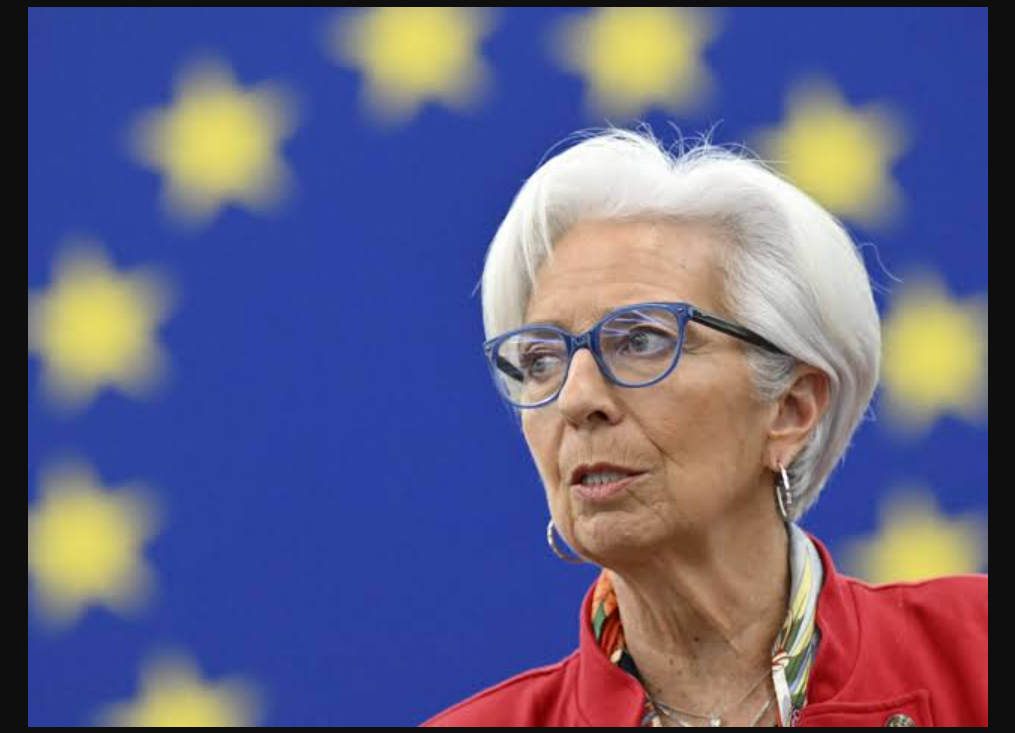

European Central Bank (ECB) President Christine Lagarde will resign in February 2027, nine months before her term officially expires. Her early departure will trigger a leadership contest as European officials navigate economic pressures, political uncertainty, and rising inflation.
Lagarde announced her decision on Thursday, October 29, saying she felt proud of her service to the institution.
“It has been a great pride and a huge privilege to serve this institution,” Lagarde posted on X.
“I think that I leave this institution with a sense of good work done and an ECB that is fit for the future,” she added.
Why Is Lagarde Leaving Before Her Term Ends?
Lagarde’s departure will allow European leaders to select her successor before France’s presidential election in spring 2027. Officials fear a potential far-right victory could complicate negotiations over the ECB’s next president.
Her next career move remains unclear, although she has ruled out running for the French presidency. She has also been linked to a possible leadership role at the World Economic Forum, which hosts an annual gathering of political and business leaders in Davos, Switzerland.
Lagarde previously led the International Monetary Fund and served as France’s finance minister. She also worked in governments led by centre-right presidents Jacques Chirac and Nicolas Sarkozy.
Sources familiar with the matter suggested that leaving early would give her “greater freedom to express her views”. One source said, “She cannot remain neutral when she sees the developments taking place in her own country and in the world,” speaking anonymously.
Lagarde has also indicated that she could participate in discussions surrounding the French presidential election. She has stressed the importance of maintaining a “European voice” in public debate.
ECB Faces Inflation and Geopolitical Challenges
Lagarde’s tenure has coincided with repeated crises that tested the central bank’s ability to control consumer prices. These included the COVID-19 pandemic, Russia’s invasion of Ukraine, the resulting energy shock, US tariffs, and the fallout from the US war on Iran.
The energy crisis following Russia’s invasion of Ukraine pushed eurozone inflation above 10 percent. Inflation now stands at almost twice the ECB’s two-percent target, adding pressure on policymakers.
The central bank also faced criticism during the 2022 inflation surge, when critics argued that officials responded too slowly. However, the ECB has introduced new crisis-management tools and improved how it communicates policy decisions.
Its governing council sets interest rates for the euro area, which currently comprises 21 member countries. Meanwhile, concerns about France’s public finances continue to weigh on the wider economic outlook.
Who Could Replace Christine Lagarde?
Lagarde’s resignation has opened a contest involving several potential candidates. Former Dutch central bank chief Klaas Knot and Pablo Hernández de Cos, head of the Bank for International Settlements, are considered leading contenders.
One EU diplomat described Knot as a preferred candidate because of his crisis-management experience and communication skills. However, European capitals must negotiate before leaders settle on the next ECB president.
European Council President António Costa said the appointment process would begin immediately to ensure a “smooth transition”.
The leadership changes could extend beyond Lagarde. Executive board member Isabel Schnabel and chief economist Philip Lane are also due to leave their positions.
Berenberg chief economist Holger Schmieding expects EU leaders to coordinate the appointments. He predicted they would fill the vacancies “as a package, no later than the EU summit of 17-18 December, and possibly beforehand”.
ECB Leadership Change Comes Ahead of Key Rate Decision
Lagarde announced her resignation shortly before the ECB’s latest interest-rate meeting on Thursday. France’s rising debt levels were among the concerns facing policymakers.
Her early departure now adds another major decision to Europe’s economic agenda. European leaders must choose a successor while addressing inflation, financial pressures, and uncertainty across the region.
For the latest updates, visit and follow The Truth International website (www.thetruthinternational.com) and subscribe to the YouTube Channel.

