
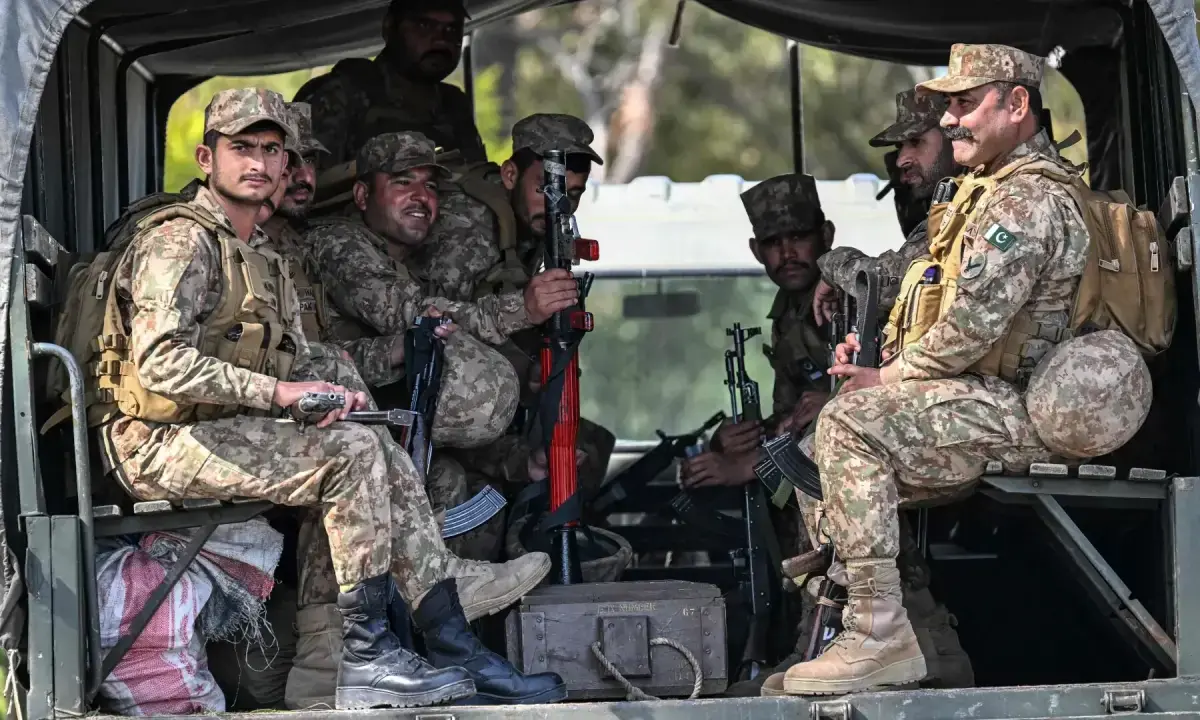

Three Army Companies Deployed Under Article 245
The federal government has authorised the deployment of three companies of the Pakistan Army in Rawalpindi for six months, raising questions about the unusually long duration of the security arrangement.
The deployment was approved under Article 245 of the Constitution, which allows the armed forces to act in aid of civil power.
According to an Interior Ministry order dated August 21, 2026, the decision was taken following a formal request from the Punjab Home Department. The deployment came into force immediately.
The three companies are reported to comprise more than 400 army personnel.
They will assist the Rawalpindi district administration with what the government has described as sensitive security duties.
The official order says troops have been deployed to prevent any undesirable situation and respond effectively to unforeseen circumstances.
Army personnel are expected to work alongside the civil administration in maintaining law and order.
Security arrangements around sensitive locations and important areas of Rawalpindi are also expected to be strengthened during the deployment.
Rawalpindi holds particular security importance because it contains major military installations and lies directly next to Islamabad.
The city also houses Adiala Jail, where former prime minister and PTI founder Imran Khan has been imprisoned since 2023.
Why Will the Deployment Last Six Months?
The six-month duration has generated questions because the government has not publicly identified a specific security incident or immediate threat requiring such a lengthy deployment.
The Interior Ministry notification refers broadly to “sensitive security duties” and the need to deal with possible unforeseen situations.
However, it does not specify a particular protest, security alert or other event as the reason for the deployment.
The Punjab Home Department has also not publicly provided detailed reasons explaining why three army companies were required for six months rather than for a shorter period.
The deployment is therefore considerably broader than security arrangements normally announced for a single event.
The order gives the district administration the ability to seek military assistance when necessary throughout the six-month period.
Authorities have said the purpose is to maintain law and order and prevent possible unrest.
However, no official statement has linked the decision to any particular political party or planned demonstration.
PTI’s September 27 Islamabad March Adds Focus to Timing
The timing has nevertheless attracted attention because Pakistan Tehreek-e-Insaf is preparing for a long march towards Islamabad on September 27.
Khyber Pakhtunkhwa Chief Minister Sohail Afridi announced earlier this month that PTI’s national and provincial leadership, along with the Tehreek-i-Tahaffuz-i-Ayeen-i-Pakistan alliance, had agreed on the September 27 date.
PTI has been mobilising supporters amid continuing disputes over Imran Khan’s imprisonment, medical treatment and access to family members and doctors.
The party filed a contempt petition in the Supreme Court on Saturday over the government’s handling of a court order concerning Khan’s hospital transfer.
The planned September march is expected to focus on Islamabad.
Rawalpindi could also become important because of its proximity to the federal capital and the presence of Adiala Jail.
Afridi has previously indicated that Rawalpindi and Adiala Jail could potentially feature in the protest plans, although final details are expected closer to the march.
However, there is currently no official evidence that the six-month army deployment was ordered specifically because of PTI’s September 27 march.
The government notification does not mention PTI, Imran Khan or the planned protest.
Any direct link between the two developments would therefore remain speculation unless authorities provide further clarification.
For now, the official position is that the army has been called in to assist the Rawalpindi administration with sensitive security duties and respond to possible law-and-order situations.
The lack of a publicly identified threat, combined with the six-month duration and the approaching PTI mobilisation, is likely to keep questions surrounding the decision alive.

