

China’s booming second-hand smartphone trade is connecting electronics markets across Asia and Africa, creating fresh opportunities for international buyers and local repair businesses.
In Shenzhen’s famous Huaqiangbei electronics market, traders purchase dozens of pre-owned smartphones in a single visit. Many devices have cracked screens or other damage, but buyers see opportunities to repair and resell them.
Among these traders is Akhtar Muhammad, a 38-year-old Pakistani businessman who regularly visits China to source used mobile phones.
“From all China, the broken mobile phones come here,” Akhtar Muhammad said while browsing the devices in Shenzhen.
“We will fix them in Pakistan.”
China’s enormous smartphone industry generates a substantial supply of discarded devices. According to estimates from the China Association of Circular Economy, the country discards more than 400 million devices annually.
Meanwhile, global chip shortages and rising smartphone prices are making new devices increasingly expensive. Consequently, demand for affordable, pre-owned smartphones continues to grow.
Why Are International Buyers Turning to China’s Used Phone Market?
Buyers from Pakistan, Nigeria, Bangladesh and other countries visit Shenzhen to purchase second-hand smartphones in bulk.
For many traders, even damaged devices offer attractive resale opportunities. They can repair screens, restore functionality and sell the phones in their home markets.
Mama, a 24-year-old Nigerian buyer, purchased approximately 40 used smartphones during a single day in Shenzhen.
He explained that China’s established supply networks allow international traders to secure better prices.
“They are more expensive in Africa because we don’t have big suppliers or markets like this one,” Mama said. “If I buy and send them to my country, I get profit.”
Another Nigerian trader was negotiating prices for damaged iPhone 13 Pro and iPhone 14 Pro models. He purchased the devices for between 1,000 and 2,000 yuan each.
That amounts to approximately $150 to $300 per phone. He plans to replace their damaged screens locally before shipping them home for resale.
Why Are Consumers Choosing Used Phones Over New Devices?
Affordability remains a major factor behind the growing secondary smartphone market. Consumers in emerging economies increasingly prefer pre-owned devices because new models often exceed their budgets.
Counterpoint Research analyst Ivan Lam said South Asia and Africa were experiencing this shift. Lower purchasing power encourages consumers to consider used smartphones instead of expensive new models.
The global secondary smartphone market expanded by 13% year-on-year during the first half of 2026. According to Counterpoint Research, sales reached 150 million units during this period.
Pakistan provides a clear example of this changing market. Akhtar Muhammad, who has travelled to China since 2007, said Pakistani consumers frequently repair their existing phones.
“Maybe people use one mobile phone for four or five years. It’s not the same like USA, Europe. They change every year or every six months,” he said.
This repair-first approach creates opportunities for Pakistani traders sourcing damaged and affordable smartphones from China.
Shenzhen’s Second-Hand Phone Trade Is Becoming More Organised
Beyond the crowded electronics stalls of Huaqiangbei, organised second-hand marketplaces are also gaining popularity.
One example is PaiJiTang Mall, a self-service marketplace operated by Chinese recycling company ATRenew.
The facility displays more than 20,000 used smartphones. Buyers can scan QR codes to access inspection reports and pricing information before testing devices.
They can then purchase phones in bulk without relying entirely on traditional market negotiations.
Store manager Zhang Xiaoming said the marketplace attracts up to 1,000 visitors daily. International traders account for approximately one-third of its customers.
Abdul Rahim, a 20-year-old Algerian shopkeeper, regularly travels to China to purchase stock. He visits the country up to three times monthly for his phone and accessories business.
He takes advantage of price differences ranging from 100 to 120 euros per device. This represents approximately $110 to $132 in potential price advantages.
Rahim also highlighted China’s relatively accessible visa process for Algerian visitors.
“It’s very easy for Algerians to get the visa to China. You put in your papers and in two or three days you have the visa in your passport,” he said.
“For Europe, there just aren’t visas… So we come here.”
Why Do Older iPhones Remain Popular in Overseas Markets?
Apple products dominate sales at PaiJiTang Mall, according to store manager Zhang Xiaoming.
He estimated that iPhones account for 70% to 80% of sales. Meanwhile, Chinese brands such as Huawei, Xiaomi, Oppo and Vivo make up the remaining share.
Interestingly, older iPhone models continue attracting international buyers despite losing popularity in China’s domestic market.
Models such as the iPhone 11, 12 and 13 retain strong brand appeal overseas. Jeremy Ji, ATRenew’s head of corporate strategy and overseas business, explained this continuing demand.
These older devices offer international consumers access to recognised smartphone brands at comparatively affordable prices.
Inside China’s Massive Smartphone Recycling Industry
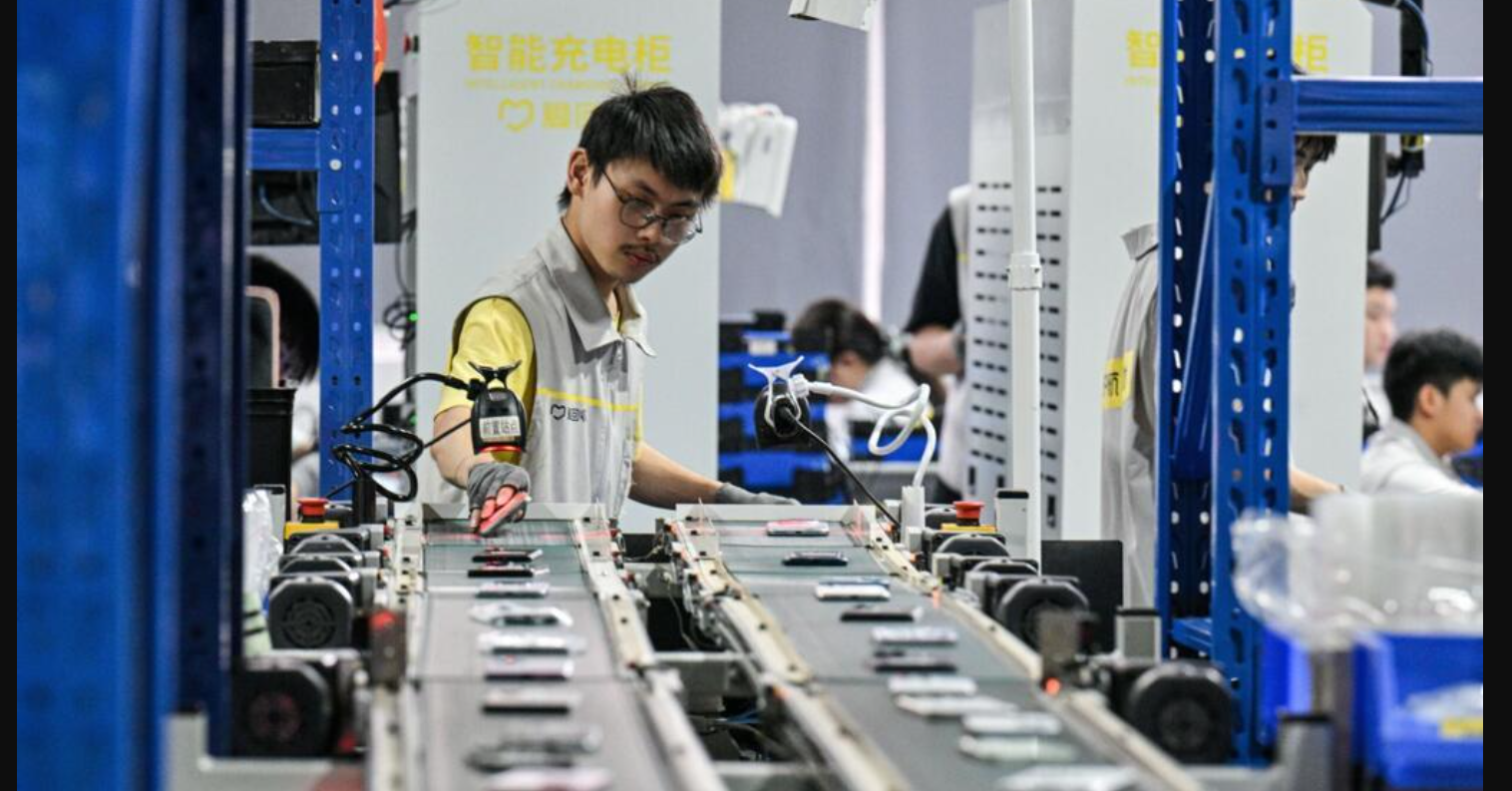
The scale of China’s second-hand electronics business becomes clearer at ATRenew’s processing centre in Dongguan.
Approximately 30,000 used electronic devices arrive at the facility every day. More than 300 technicians inspect, process and package these products.
The operation highlights how China has developed an extensive system for collecting and reselling pre-owned electronics.
Furthermore, rising smartphone prices are changing purchasing habits within China itself. IDC China analyst Arthur Guo said consumers were increasingly considering second-hand devices.
Nearly new premium smartphones have become particularly attractive to domestic buyers seeking better value.
However, international exports have not yet become the industry’s primary distribution channel. Counterpoint analyst Ivan Lam said most discarded smartphones remain within China’s domestic market.
He also noted that bulk exports through official channels have not increased significantly.
Why Do Traders Spend Weeks Sourcing Used Smartphones?
Despite organised marketplaces, sourcing second-hand phones remains a hands-on business for many international traders.
Buyers often spend considerable time inspecting devices, comparing prices and negotiating with sellers. They must also identify phones offering sufficient resale potential in their home markets.
For Nigerian trader Mama, visiting Shenzhen remains an important part of his purchasing strategy.
“If I come, I spend a month checking (phones). I buy, buy, buy,” he said. “After I have finished, I go back to my country.”
China’s second-hand smartphone trade continues connecting suppliers with buyers across developing markets. For Pakistani businesses, this growing supply offers opportunities in phone repairs, resale and affordable consumer electronics.
However, the industry’s expansion also highlights a broader shift towards extending the lifespan of smartphones. As new devices become more expensive, used phones are finding increasingly valuable markets across Asia and Africa.
For the latest updates, visit and follow The Truth International website (www.thetruthinternational.com) and subscribe to the YouTube Channel.

