

The International Court of Justice (ICJ) has ruled that Myanmar committed genocide against its Rohingya Muslim minority during the 2017 military crackdown. The landmark judgment holds the country responsible for mass killings, widespread sexual violence and other atrocities against the community.
The ruling came on Thursday, November 19, following a case filed by Gambia seven years ago. It marks a significant development in international efforts to establish accountability for the persecution of Rohingya Muslims.
The court found that Myanmar’s security forces committed widespread atrocities during military operations in northern Rakhine State. Moreover, judges concluded that the military campaign met the legal threshold for genocide.
ICJ Finds Myanmar Responsible for Rohingya Genocide
Presiding Judge Yuji Iwasawa announced the court’s findings during Thursday’s proceedings in The Hague.
“The court finds that Myanmar’s security forces killed thousands of Rohingya civilians, perpetrated widespread acts of sexual violence as well as acts of extreme violence against children and attacked fleeing Rohingya,” he said.
The judges further concluded “that the Republic of the Union of Myanmar has committed genocide against the Rohingya group in Northern Rakhine State.”
The decision identified several atrocities committed during the military’s so-called clearance operations. These included mass executions of men and boys, widespread rape and sexual violence against women.
Furthermore, soldiers burned or destroyed hundreds of Rohingya villages during the crackdown.
The court also adopted a United Nations fact-finding mission’s estimate of at least 10,000 deaths during the operations. According to the judgment, the available evidence supported this figure.
The judges explained that “the only reasonable inference that can explain Myanmar’s actions is an intention to destroy a substantial part of the protected group namely the Rohingya population in Northern Rakhine state”.
This finding established the specific intent required under international law to prove genocide.
Gambia’s Case Marks a Major Moment for International Justice
Gambia filed the case against Myanmar in 2019, seeking accountability under the 1948 Genocide Convention. The predominantly Muslim West African country brought the proceedings with support from the Organisation of Islamic Cooperation.
The November 19 decision represents the first time the ICJ has held a state responsible for committing genocide.
It also marks only the fourth time since the Holocaust that an international court has established that the legal threshold for genocide has been met.
Previous international court findings recognised genocide in Rwanda in 1994, the 1995 Srebrenica killings in Bosnia and atrocities committed by Cambodia’s Khmer Rouge during the late 1970s.
Gambia described Thursday’s judgment as “a historic day for international justice”.
The 191-page ruling also referred to a 2017 investigation into the killing of 10 Rohingya Muslims in Inn Din. It also mentioned the subsequent arrest of two journalists who spent more than 500 days in detention.
Rohingya Refugees Welcome Historic Verdict
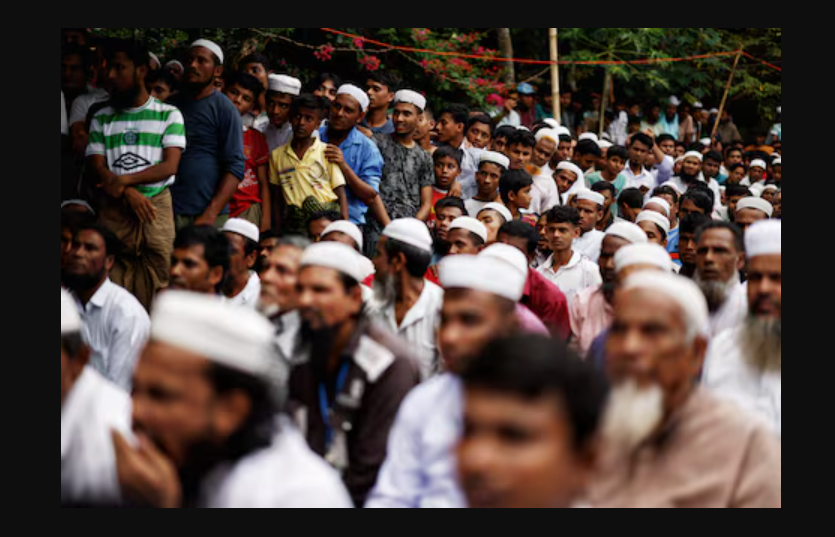
The judgment brought a moment of recognition for Rohingya refugees living in Bangladesh. More than 1.2 million Rohingya have been forced into exile, with many residing in the sprawling Cox’s Bazar refugee settlement.
More than 1,000 refugees reportedly gathered to watch the announcement on a large television screen. Many cheered as the court delivered its decision.
Wai Wai Nu, executive director of the Women’s Peace Network and a former political prisoner, welcomed the ruling.
“For decades, the Burmese military tried to erase our identity, deny our existence, and dismiss our suffering,” she said.
“By finding that Myanmar committed genocide, ordering a guarantee of non-repetition, and ordering restitution and compensation, the world’s highest court has permanently shattered that state-sponsored lie.”
Another community representative, Sayed Ullah, said the decision could strengthen efforts to return home.
However, he acknowledged that the judgment alone could not resolve the difficulties refugees continue to face after losing their homes and livelihoods.
Myanmar Must Provide Compensation and Ensure Safe Return
The ICJ ruled that Myanmar must compensate the Rohingya for the violations committed against them. The court will determine the amount of compensation at a later stage.
Additionally, the judgment requires Myanmar to guarantee the “safe and dignified return to their place of residence and the reunification of families for the Rohingya displaced as a result of Myanmar’s wrongful acts”.
These requirements raise hopes among displaced Rohingya for justice and eventual repatriation. Nevertheless, enforcing the court’s decision remains a significant challenge.
The ICJ’s rulings are final and cannot be appealed. However, the court has limited mechanisms to enforce its decisions against states.
Myanmar’s government has consistently denied committing genocide, arguing that its security forces were responding to a violent insurgency. It did not immediately respond to requests for comment following Thursday’s ruling.
Verdict Could Influence Other International Genocide Cases
The judgment could have implications beyond Myanmar, particularly for other cases involving allegations of genocide.
One closely watched example is South Africa’s 2023 case against Israel over its military operations in Gaza. Israel has denied committing genocide and maintains that its military actions respond to attacks by armed groups.
The ICJ’s latest findings could provide important legal material for discussions surrounding state responsibility under the Genocide Convention.
The judgment also addressed the role of social media in spreading hostility against the Rohingya. Judges found that Myanmar’s military actively circulated hate speech targeting the minority through Facebook.
Meta, which owns Facebook, previously said it had worked to restrict hate speech and assist United Nations investigators.
Meanwhile, Britain announced that it was expelling Myanmar’s defence attaché on Thursday. Two British lawmakers also urged the government to pursue a United Nations Security Council resolution supporting enforcement action.
How Is the ICJ Different From the International Criminal Court?
The International Court of Justice and the International Criminal Court perform different roles under international law.
The ICJ settles legal disputes between states and considers alleged violations of international treaties. Its decisions can establish state responsibility, as demonstrated by the Myanmar genocide ruling.
In contrast, the International Criminal Court prosecutes individuals accused of genocide, war crimes and crimes against humanity. It can also impose prison sentences on convicted individuals.
Thursday’s judgment therefore represents a major legal development in establishing Myanmar’s responsibility for atrocities against the Rohingya.
However, ensuring compensation, accountability and safe repatriation will require further action beyond the courtroom.
For the latest updates, visit and follow The Truth International website (www.thetruthinternational.com) and subscribe to the YouTube Channel.

