
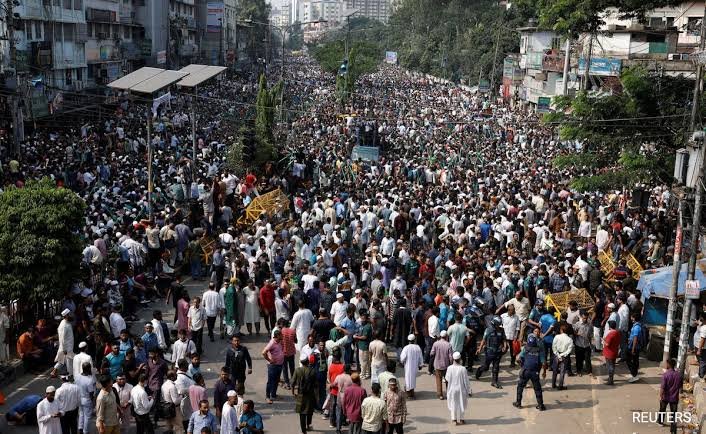

Thousands of garment workers clashed with police across Bangladesh on Monday, November 2, 2026, demanding higher wages as rising living costs intensified pressure on millions of employees.
The demonstrations disrupted major industrial areas, blocked highways and raised concerns about the country’s vital clothing export industry.
Workers Demand More Than Double Their Current Wages
Protesters are demanding a minimum monthly salary of 30,000 taka, compared with their current earnings of approximately 13,000 taka.
Workers say increasing food prices, electricity bills, cooking gas costs and housing expenses have made everyday survival increasingly difficult.
Labour representatives insist that existing wages cannot adequately support families.
Police Fire Tear Gas as Protests Turn Violent
Hundreds of demonstrators blocked the Dhaka-Tangail highway in Gazipur, north of the capital.
Several vehicles were vandalized during the unrest.
In Dhaka’s Mirpur district, police used tear gas to disperse protesters.
Security forces also deployed stun grenades in Ashulia, another major industrial area.
A police vehicle was set on fire as tensions escalated.
Over 500 Factories Affected by Wage Protests
Industry representatives reported that workers from at least 529 factories had left their workplaces on Sunday.
Bangladesh’s garment industry employs millions and supplies clothing to major international brands.
Manufacturers warned that continued unrest could delay shipments and threaten export commitments.
Government Announces Emergency Wage Review
Prime Minister Tarique Rahman’s government established a wage board to examine workers’ demands.
Home Minister Salahuddin Ahmed said authorities would protect workers’ rights while maintaining industrial production.
However, he warned that unlawful violence would face strict action.
Despite the announcement, protests continued, reflecting growing frustration over wages and unresolved workplace concerns.

