
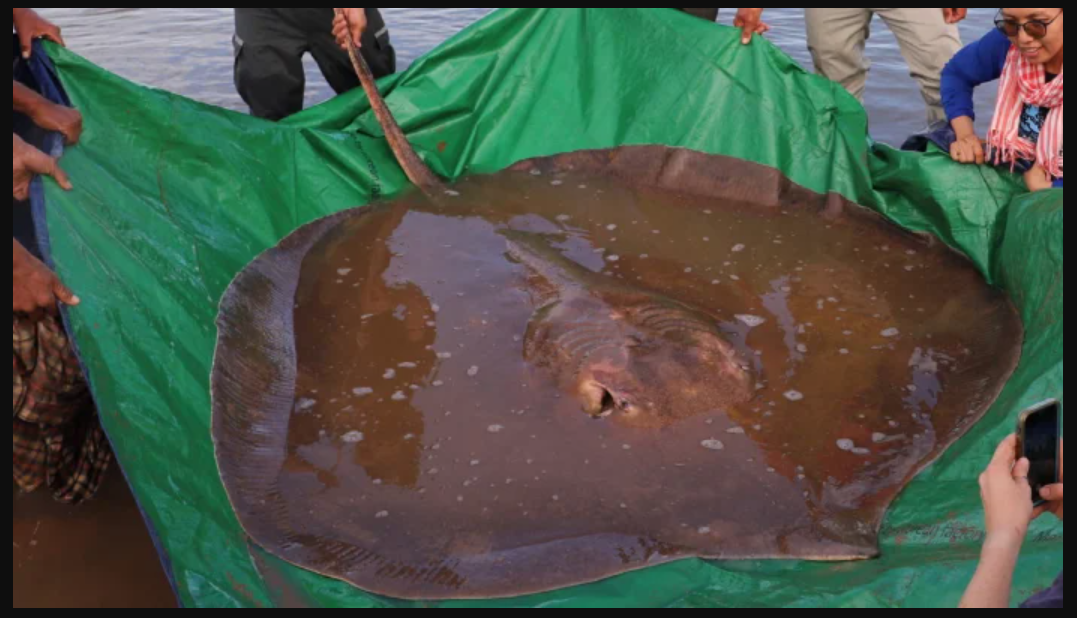

Large numbers of stingrays are being hunted along Karachi’s coast, raising concerns about their population and marine ecosystem.
Locally known as pittan, stingrays are increasingly being caught by fishermen near the shoreline. Instead of moving into deeper waters, fishermen are casting nets closer to the coast to catch them.
Experts say several factors may explain why stingrays are appearing in shallow coastal waters.
Why Are Stingrays Coming Closer to Shore?
Strong sea waves during the monsoon season are one possible reason for their movement towards the coast. At the same time, stingrays move into shallow waters during their breeding season.
Experts also believe they may approach the shoreline to avoid larger predators found in deeper waters. The shallow waters can also provide protection for stingrays and their young. Their natural colouring offers another advantage in coastal areas.
Stingrays closely resemble the sand along the coast, allowing them to camouflage themselves and remain difficult to detect.Food availability also brings stingrays closer to the shoreline.
During the monsoon, cockles and other shellfish can wash ashore and provide a food source. Ghost crabs found along the coast also contribute to the available food supply.
Rising Stingray Numbers Raise New Concerns
A significant increase in stingray populations has been observed in the waters of Sindh and Balochistan. However, experts have warned that large-scale hunting could threaten these populations if it continues unchecked.
The concern becomes greater when stingrays are caught during their breeding season. Such hunting could affect the population by removing stingrays at an important stage of their reproductive cycle.
Experts have therefore raised concerns about the impact of continued hunting along the coastal areas.
Pollution Adds Pressure to the Coastal Environment
Meanwhile, hunting is not the only pressure affecting the coastal environment. Pollution remains visible along the shoreline, with plastic bottles, wrappers and other waste scattered across coastal areas.
A visit to the shore also revealed dead marine wildlife along the coast. The dead wildlife included a turtle, while reports indicate that such sightings are increasing across coastal stretches.
These conditions have added to concerns about the wider health of the marine environment.
WWF-Pakistan Adviser Warns of Local Extinction Risk
Technical Adviser WWF-Pakistan Moazzam Khan has also raised concerns over large-scale stingray hunting. He said extensive hunting was taking place along the coasts of Karachi and Balochistan.
Khan also noted that stingray populations had increased over the past few years. However, he warned that certain species could face serious risks from continued hunting.
According to Khan, stingrays with leopard-like markings could face a risk of local extinction.
“Stingrays have an unpleasant taste and are not eaten in Pakistan.” Despite not being consumed in Pakistan, stingrays are exported to other countries.
Khan said the fish is exported to Thailand, Malaysia and Indonesia. He also pointed to a rise in exports of stingray ‘wings’ over the past 12 years.
Could Continued Hunting Disrupt Marine Biodiversity?
The growing scale of stingray hunting has raised concerns beyond the species itself. Experts warn that indiscriminate hunting could affect marine biodiversity and disturb the wider coastal ecosystem.
The concern is particularly significant when fishing activity overlaps with the stingrays’ breeding season.
At present, stingrays continue to appear in larger numbers near Karachi and along other coastal areas.
However, experts caution that increased visibility near the shoreline could also make them more vulnerable to large-scale hunting.
For Karachi’s coastal environment, the combination of hunting and pollution is creating growing pressure.
The future of local stingray populations could therefore depend on how these pressures affect their breeding and survival.

