

International Response Intensifies Amid Rising Infections
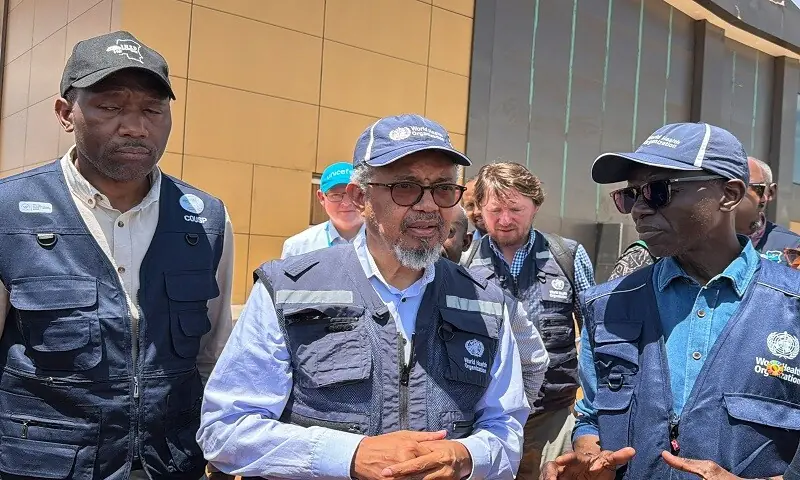
Tedros Adhanom Ghebreyesus arrived in eastern Democratic Republic of the Congo on Saturday as health authorities intensified efforts to contain a rapidly growing Ebola outbreak affecting several provinces.
Speaking in Bunia, the capital of Ituri Province, the World Health Organization chief stressed the importance of community involvement alongside international support. He said global partners were assisting the Congolese government, while local participation remained essential to controlling the spread of the disease.
Furthermore, Tedros explained that his visit aimed to assess response efforts, engage with affected communities, and identify challenges facing health workers on the ground.
The outbreak has already spread across three eastern provinces of the Democratic Republic of the Congo and reached neighboring Uganda, where authorities have confirmed multiple infections and at least one death.
According to the Africa Centres for Disease Control and Prevention, more than 1,000 suspected cases and hundreds of deaths have been reported since the outbreak was officially declared in May.
Conflict and Displacement Complicate Containment Efforts
Meanwhile, health officials warn that the actual scale of the outbreak may be significantly larger due to limited testing capacity and difficulties accessing remote areas.
Additionally, ongoing conflict in eastern Congo continues to hamper response operations. Armed groups remain active across several provinces, creating security risks for healthcare workers and humanitarian organizations.
As a result, millions of displaced people are living in overcrowded camps where poor sanitation and limited healthcare access increase the risk of disease transmission.
Medical aid organization Doctors Without Borders reported that the current outbreak has recorded an unusually high number of cases shortly after its declaration, while stressing that more medical personnel are urgently needed.
Encouragingly, the World Health Organization recently confirmed the recovery and discharge of a patient who tested negative twice after treatment.
However, experts remain concerned because the outbreak involves the Bundibugyo strain of Ebola, for which no approved vaccine or specific treatment currently exists.
Nevertheless, African health officials say vaccine development efforts are progressing, with hopes that a vaccine could become available before the end of the year.

