
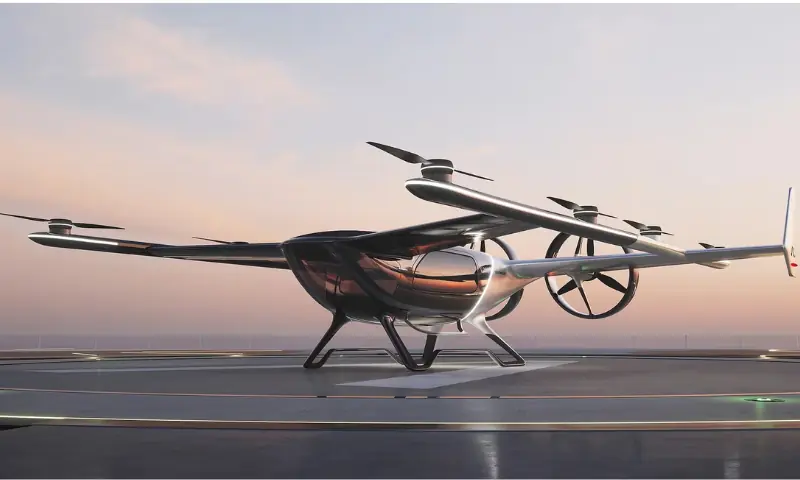

Volkswagen’s ambitious plan to develop a flying car in China failed to keep pace with the country’s rapidly expanding low-altitude aviation industry, highlighting the growing challenges facing foreign automakers in the world’s largest vehicle market.
The German manufacturer launched the project in 2019 after creating an internal startup team in Beijing. The company aimed to build a battery-powered aircraft capable of carrying four passengers between cities such as Beijing and Tianjin.
Volkswagen hoped the quiet electric aircraft would become part of China’s emerging low-altitude economy, which includes drones, air taxis, and other aviation services operating below 1,000 metres.
Project faces legal and competitive setbacks
However, Chinese competitors advanced more quickly through stronger local supply chains and faster product development. As a result, Volkswagen abandoned the project in 2024 after failing to achieve its objectives.
The company also became involved in a lengthy legal dispute after Chinese partner Pantuo Aviation accused Volkswagen of misusing trade secrets related to flying-car technology.
Furthermore, Chinese authorities launched a criminal investigation involving project leader Zhou Jin. Volkswagen rejected the allegations, describing the claims as entirely without substance, while Zhou said she had repeatedly urged the company to resolve the commercial dispute.
Volkswagen seeks recovery in China
Despite the setback, Volkswagen continues expanding partnerships with Chinese technology companies, including electric vehicle maker Xpeng and autonomous-driving developer Horizon Robotics.
Meanwhile, the automaker continues losing market share in China. Vehicle deliveries fell from 4.2 million units in 2019 to 2.7 million last year, leaving Volkswagen behind Chinese rivals BYD and Geely.
The company’s declining sales have increased financial pressure as it also manages restructuring in Germany and rising costs linked to United States tariffs.

