
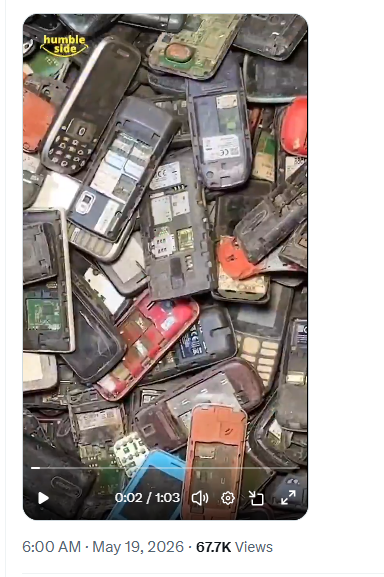

Social media platforms have recently witnessed a viral video explaining how gold can be extracted from dead and outdated mobile phones, attracting widespread attention online. The clip quickly spread across platforms as users showed curiosity about urban mining and electronic waste recycling techniques used worldwide.
Gold Recovery Process Explained
According to the video, every smartphone contains an average of 36 milligrams of gold, which makes recycling an important alternative to traditional mining methods. Experts highlight that gold recovery from electronic devices reduces pressure on natural mining resources and supports a circular economy model. Many social media users praised the educational value of the viral content, calling it informative and eye opening.
Fun fact.
Every mobile phone has an average of 36 mg of gold and to extract this small portion, through traditional mining, 3 kg of earth have to be removed.
This is the process used for extracting it.
[📹 humblesideofficials] pic.twitter.com/gsoxx5aw80
— Massimo (@Rainmaker1973) May 19, 2026
Step-by-Step Extraction Awareness
Weeks of mining can be replaced by a careful chemical extraction process that separates gold from circuit boards, reducing environmental damage significantly. A social media influencer shared the clip online to raise awareness about e-waste recycling and sustainable resource recovery practices. In traditional mining, nearly three kilograms of earth must be processed to obtain just a few milligrams of gold. The awareness video also encourages people to dispose of old phones responsibly instead of discarding them in household waste streams. It further explains that advanced hydrometallurgical and electrochemical methods are commonly used in industrial recycling facilities. Such innovations are helping reduce environmental pollution while improving the efficiency of precious metal recovery processes. The story also continues to trend across digital platforms globally. Pioneers in recycling technology believe such awareness campaigns can accelerate global adoption of sustainable electronics management practices. Potential future applications include large scale urban mining innovations globally expanding.

