
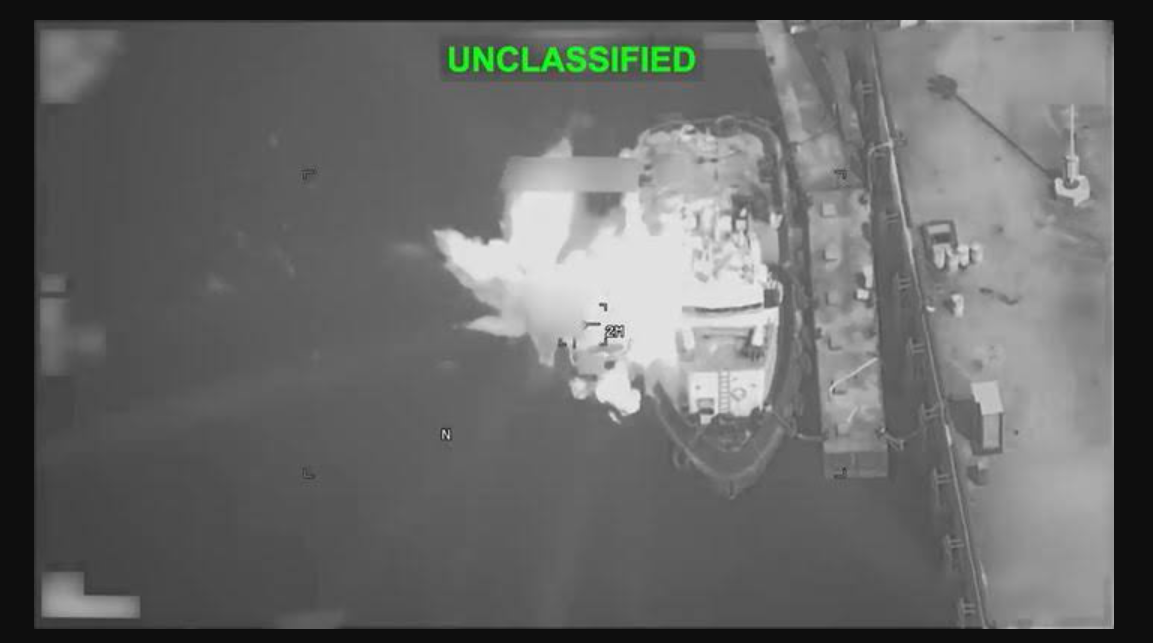

The United States launched another wave of military strikes on Iran early Friday, marking the thirteenth consecutive day of attacks as tensions across the Middle East continued to intensify.
The latest strikes followed attacks on two Saudi oil tankers in the Red Sea by Yemen’s Houthi movement. Consequently, the conflict has expanded beyond the Strait of Hormuz and is now affecting another critical global shipping route.
The escalating situation has also increased concerns over international trade, energy supplies, and regional security.
US Says Strikes Targeted Maritime Threats
According to US Central Command (CENTCOM), the latest operation lasted for more than two hours.
The military said the strikes targeted Iranian military command centres, drone storage facilities, communication networks, coastal surveillance sites, and maritime capabilities.
CENTCOM stated:
“Centcom targeted Iranian military command centres, drone storage facilities, communication networks, coastal surveillance sites and maritime capabilities to further diminish the threat Iran poses to civilian mariners and commercial vessels transiting the Strait of Hormuz.”
The United States said the operation was intended to reduce threats to commercial shipping and civilian vessels operating in the region.
Red Sea Attacks Raise Global Shipping Concerns
The latest escalation came after Yemen’s Houthi movement announced a naval blockade targeting Saudi Arabia.
The Houthis said they had attacked two Saudi oil tankers operating in the Red Sea.
As a result, concerns have grown over the security of the Bab el-Mandeb Strait, a vital maritime route connecting the Red Sea with the Indian Ocean.
Several oil tankers have reportedly altered their routes to avoid the area.
Many vessels are now taking the longer journey around Africa, increasing transportation costs and delivery times.
Meanwhile, ship-tracking data showed that tanker traffic through the Strait of Hormuz dropped significantly.
Oil Prices Surge Above Key Levels
The renewed security concerns immediately affected global energy markets.
Brent crude oil rose by more than six percent and crossed $100 per barrel for the first time since May.
Although prices eased slightly during early Friday trading, they remained on track for a strong weekly gain.
Analysts continue to monitor developments closely because further disruptions could affect global fuel supplies.
Iran Reports Casualties and Launches Response
Iranian state media reported that US missiles struck Qeshm Island, Ahvaz, and other locations.
According to official reports, four people were killed and several others were injured in Ahvaz.
Iran also reported drone attacks in Khorramabad. Following the strikes, Iran’s military announced a new wave of drone attacks targeting US military facilities in Bahrain and Jordan.
According to Iranian media, the strikes targeted fuel storage facilities, equipment warehouses, aircraft hangars, and troop accommodation areas.
Iran also said it had previously targeted US military positions in Jordan and Kuwait. However, neither the United States nor Kuwait reported casualties.
Iran Vows to Continue Retaliation
Iranian military spokesperson Brigadier General Mohammad Akraminia said retaliatory operations would continue.
According to Iranian state television, he said Iran would keep responding as long as US attacks on the country’s infrastructure and coastal areas continued.
The statement reflects the continuing escalation between the two countries.
Trump Warns Iran and Houthis
Following the attacks on Saudi tankers, President Donald Trump warned that Iran would be held responsible for future Houthi operations.
He wrote:
“If they do this again, the US will hold Iran responsible, in that the Houthis are a surrogate and/or proxy of Iran, and major military punishment will be inflicted upon Iran and, of course, the Houthis, themselves.”
Trump later told Axios that he was considering broader military action against Iran.
He said:
“They haven’t received enough pain yet.”
The president also stated that compensation for damage to cargo ships would come from frozen Iranian assets held by the United States.
Iran Rejects Trump’s Asset Proposal
Iranian Foreign Minister Abbas Araqchi criticized Trump’s proposal to use frozen Iranian assets.
Responding on X, he wrote:
“Seizing another nation’s assets to pay for unrelated future claims is an incendiary precedent.”
He further warned:
“Ensuing chaos will not be pretty or peaceful.”
Congress Raises Concerns Over Military Action
Meanwhile, political debate in Washington continued as the conflict expanded. The US House of Representatives approved legislation calling on President Trump to halt military action against Iran.
However, the US Senate later voted against a similar proposal.
The developments highlight growing political divisions as the conflict continues to affect regional stability, international shipping routes, and global energy markets.

