
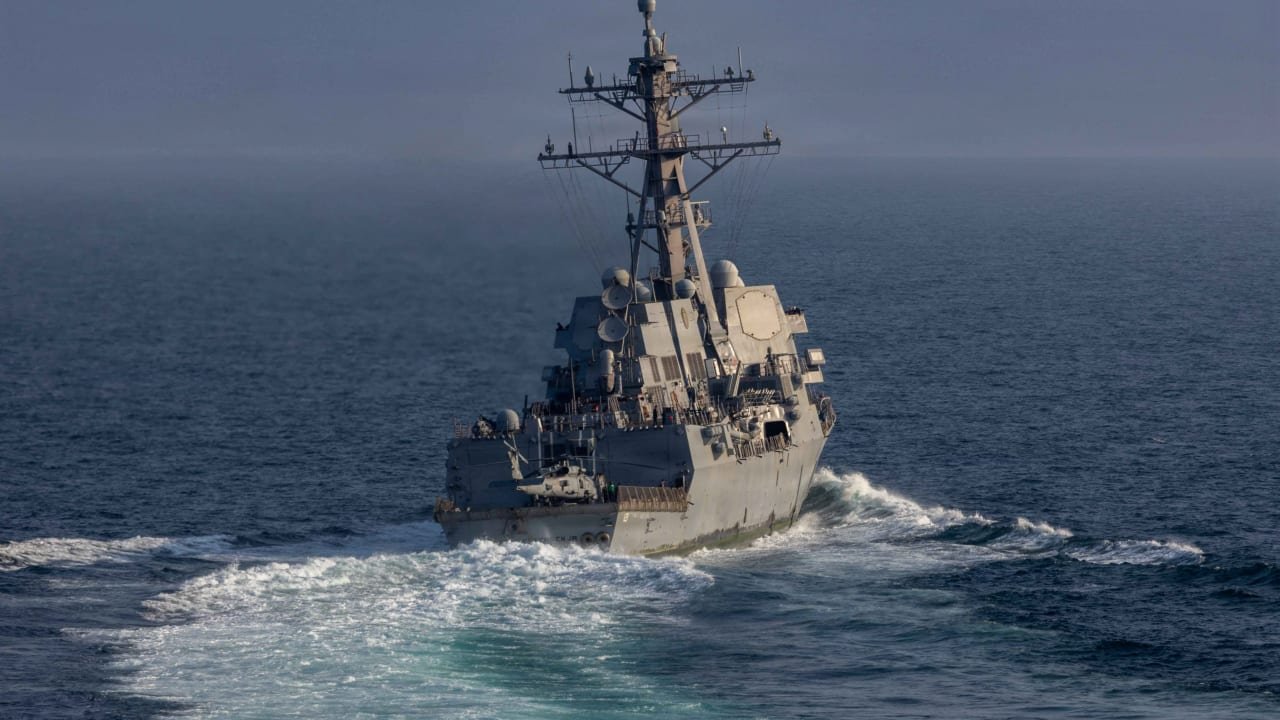

A US Navy destroyer intercepted two oil tankers attempting to depart Iran on Tuesday, enforcing a newly imposed blockade ordered by President Donald Trump. According to a US official, the warship contacted the vessels via radio and instructed them to turn back after they left Chabahar port on the Gulf of Oman. However, officials have not clarified whether additional warnings were issued.
The move marks an early enforcement step in Washington’s blockade strategy, which aims to pressure Iran into reopening the Strait of Hormuz. This vital maritime route handles roughly 20 percent of global oil shipments. Consequently, the step has heightened tensions across the region. US Central Command confirmed that at least six vessels have complied so far, with none successfully passing the blockade since it began Monday.
Meanwhile, the timing of the operation underscores its significance. The US military has deployed more than 10,000 personnel, alongside multiple warships and aircraft, to sustain the blockade. Officials stated that forces will allow freedom of navigation for vessels not linked with Iran. Nevertheless, analysts caution that enforcing such restrictions could prove complex, particularly as some tankers linked to Iranian oil shipments often disable tracking systems.
Experts remain cautious about the blockade’s effectiveness. Analyst Noam Raydan noted that early data shows limited compliance, but emphasized that it is still too soon to assess outcomes. Furthermore, observers warn that prolonged enforcement could provoke retaliation from Tehran and strain the fragile ceasefire.
Although the strategy could strengthen US leverage in negotiations, it also risks escalating conflict. Therefore, the situation remains fluid as global markets and regional actors closely monitor developments.

