
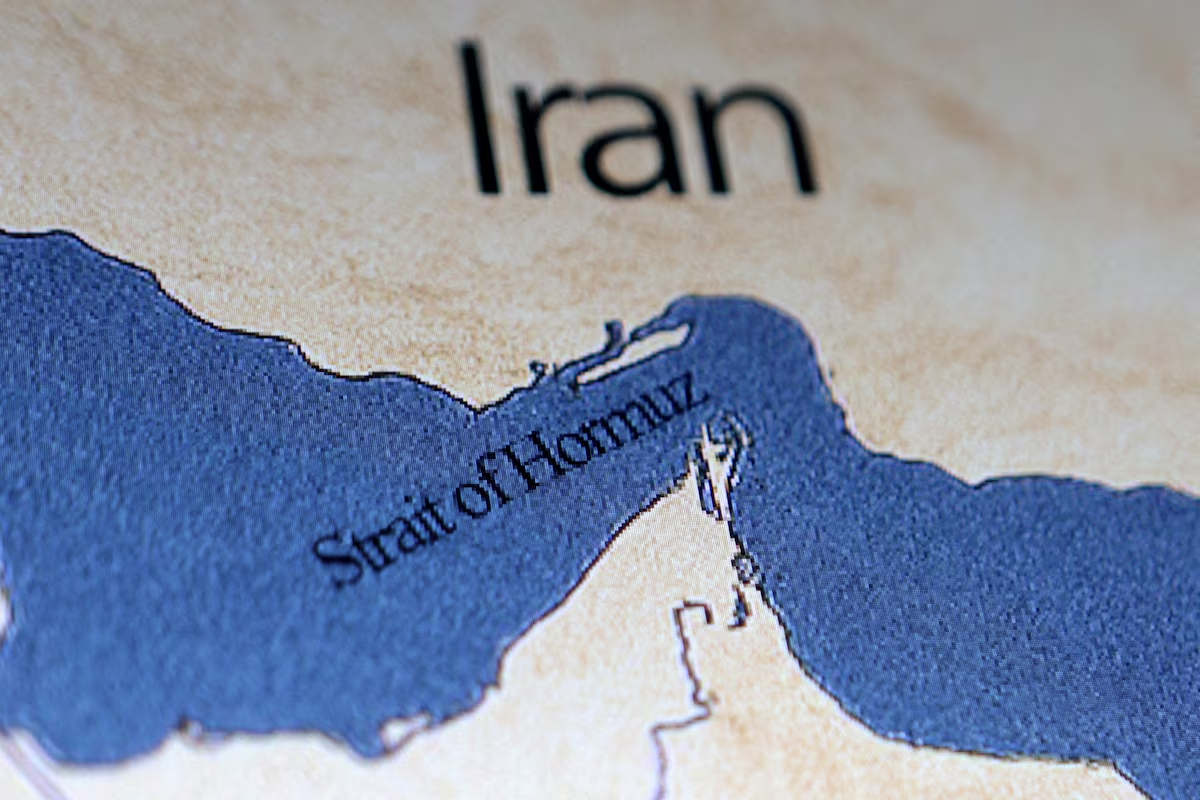

US naval forces have intercepted and redirected several oil tankers linked to Iran after the enforcement of a blockade on the Strait of Hormuz, in a move aimed at increasing economic pressure on Tehran.
According to officials cited by The Wall Street Journal, American forces have ordered at least eight vessels travelling to or from Iranian ports to reverse course since Monday. In each instance, naval units communicated with the crews by radio and instructed them to turn back, with the ships complying without any boarding operations.
The blockade is reportedly being enforced from the Gulf of Oman, a key maritime passage that connects the Strait of Hormuz to international waters. This positioning allows US forces to monitor vessel movements as they exit Iranian ports, enabling early interception of ships subject to restrictions.
A US official told the Associated Press that no vessels successfully passed through the blockade during its first 24 hours of enforcement. Several merchant ships reportedly complied with instructions and returned to Iranian waters shortly after being contacted by US naval forces.
Meanwhile, the United States Central Command stated that its forces maintained control over the maritime corridor and confirmed that multiple tankers had altered course in response to the restrictions.
Reports also indicated that some ships initially attempted to proceed through the waterway but later reversed course after receiving warnings. The enforcement effort reflects a coordinated maritime strategy designed to disrupt shipments linked to Iran’s oil trade.
The measures are aimed at curbing Iran’s oil exports, which have continued despite international sanctions through so-called “dark shipping” networks used to obscure vessel identities and destinations. These exports, primarily directed toward Asian markets, have remained a crucial source of revenue for Tehran throughout the ongoing conflict.
As tensions persist, the blockade marks a significant escalation in maritime pressure on Iran, further intensifying the strategic importance of the Strait of Hormuz in the broader geopolitical confrontation.

