
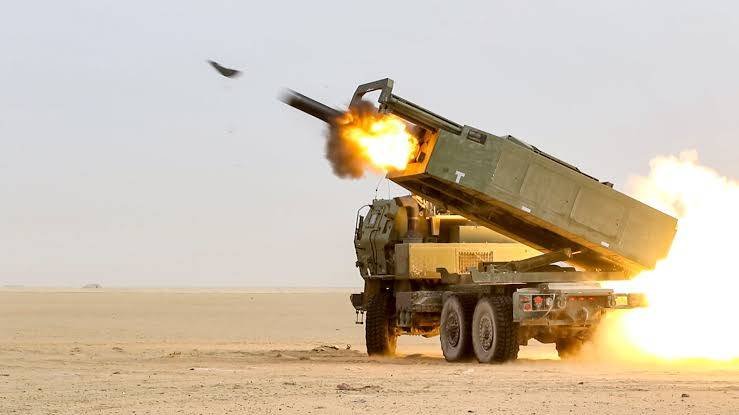

The United States is facing a major ammunition shortage after months of military operations against Iran, according to a new Defence Department report.
The Pentagon’s inspector general revealed Monday that Operation Epic Fury (OEF) placed significant pressure on America’s weapons stockpiles.
The mandatory report to Congress estimated the operation’s cost at $33.4 billion between February 28 and June 30.
Of that amount, the US military spent approximately $22.3 billion on ammunition and other expended munitions.
The report warned that the scale of weapons use has created serious challenges for future military operations.
It stated that “the munitions expenditure on OEF has resulted in strategic inventory shortfalls and revealed industrial base bottlenecks for munitions resupply.”
US Military Suffers Aircraft Losses
The report also detailed losses involving several US military aircraft during the conflict.
Four F-15 fighter jets were destroyed, while one F-35 aircraft suffered damage.
Meanwhile, seven KC-135 tanker aircraft sustained damage during the operation.
The US military also lost as many as 30 MQ-9 Reaper drones.
These losses add further pressure to an American military already dealing with high ammunition consumption.
Trump Dismisses Concerns Over Weapons Stocks
President Donald Trump has repeatedly rejected concerns about declining US weapons supplies.
Just weeks ago, Trump said the United States had “virtually unlimited” ammunition.
On Monday, he again defended America’s weapons production through a post on Truth Social.
Trump claimed the United States is producing “more Exquisite and Elite Weapons than at any time in our History.”
However, the inspector general’s findings present a different picture of the pressure created by the conflict.
The report specifically highlighted problems within the industrial base responsible for replenishing military ammunition.
Shortages Affect US Military Strategy
Concerns over weapons availability have already influenced America’s military strategy in the Middle East.
Long-range guided missiles and air-defence interceptors have faced shortages during the conflict.
The US military has also reportedly used a significant portion of its Terminal High Altitude Area Defense (THAAD) interceptor stock.
The shortages have raised concerns about Washington’s ability to sustain large-scale military operations if the conflict continues.
During the first 24 hours of the war, CENTCOM said American forces struck more than 1,000 targets across Iran.
However, US forces have not repeated attacks on the same scale during the later months of the conflict.
Iranian Attacks Damage US Bases
The financial impact of the conflict extends beyond ammunition and destroyed aircraft.
The inspector general’s report said Iranian attacks damaged or destroyed hundreds of buildings and structures at US military bases across the region.
The affected locations included Kuwait, Bahrain, Qatar, the UAE, Saudi Arabia, Iraq, Oman and Jordan.
However, the report did not include those damages in its $33.4 billion cost estimate.
Officials have yet to determine the full reconstruction costs. They also have not established whether every damaged facility will eventually receive repairs or reconstruction.
In addition, questions remain over who will ultimately pay for rebuilding the affected facilities.
Ammunition Shortfall Creates Long-Term Pressure
The new findings highlight the wider costs of maintaining a prolonged military campaign.
Operation Epic Fury has consumed billions of dollars in weapons while also exposing weaknesses in the US defence industrial base.
Although Trump continues to emphasise America’s expanding weapons production, rebuilding strategic stockpiles could take time.
The ammunition shortage could therefore become a major concern for US military planners. It may also influence Washington’s ability to respond quickly to future conflicts.
For now, the Pentagon faces the challenge of replacing billions of dollars in expended weapons while addressing bottlenecks in the defence supply chain.
For the latest updates, visit and follow The Truth International website (www.thetruthinternational.com) and subscribe to the YouTube Channel.

