
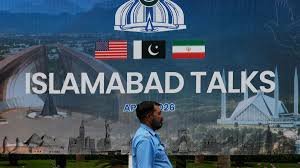

Donald Trump has hinted at a major development in ongoing negotiations between the United States and Iran. Speaking to reporters aboard Air Force One, he suggested that a “big surprise” could emerge soon. His comments come as reports indicate that the next round of talks may take place in Islamabad on April 20.
Trump expressed strong confidence in the progress of negotiations. He said there are no major obstacles left. According to him, a final agreement could be reached within days. He described the situation as “very close” to a breakthrough.
The US president also revealed that a special guest, described as a “genius person,” will visit the White House. This announcement has sparked speculation about possible key figures involved in the deal. A formal press conference is also expected soon.
Islamabad Talks and Pakistan’s Role in Mediation
Pakistan is once again emerging as a key mediator in the negotiations. Trump praised Shehbaz Sharif and Asim Munir for their efforts. He described them as strong leaders who played an important role in facilitating dialogue.
Diplomatic sources suggest that negotiators from both sides may meet in Islamabad on April 20. The talks are expected to focus on finalizing remaining details. Countries like Egypt and Turkey are also supporting the mediation process.
Earlier discussions held in Pakistan did not result in a final deal. However, both sides appear more willing to compromise now. Analysts believe the upcoming round could be decisive.
Trump said Iran is eager to reach an agreement. He added that both sides are ready to engage seriously. This has raised hopes for a peaceful resolution.
Key Issues: Uranium, Hormuz and Sanctions
One of the main issues in the talks is Iran’s enriched uranium stockpile. The US has demanded that the material be removed from Iran. Trump has proposed transferring it to the United States.
However, Iran has rejected this idea. Officials in Tehran insist that their nuclear material will not leave the country. A compromise under discussion involves partial transfer to a third country and reduced enrichment levels.
The Strait of Hormuz also remains a critical topic. Iran recently reopened the route for commercial traffic after a ceasefire. Trump said there will be no tolls imposed on ships passing through the strait.
He warned that a US naval blockade of Iranian ports will continue if no deal is reached. He also indicated that the ceasefire may not be extended. These statements highlight the pressure on both sides to finalize an agreement quickly.
Regional Impact and Global Implications
Trump also thanked regional allies including Saudi Arabia, the UAE, Qatar, Kuwait, and Bahrain. He praised their support in stabilizing the situation. He claimed that the agreement would benefit global security and energy markets.
He also mentioned a possible future meeting with Xi Jinping, suggesting broader geopolitical discussions. The reopening of the Strait of Hormuz has already eased concerns about global oil supply.
Despite optimism, some differences remain unresolved. The duration of limits on uranium enrichment is still under negotiation. The US has proposed a long-term restriction, while Iran prefers a shorter timeline.
Experts say the coming days will be crucial. If talks in Islamabad succeed, it could mark a historic agreement. Failure, however, could prolong tensions and uncertainty.
For now, all eyes are on the upcoming meeting. The outcome could reshape regional dynamics and influence global politics.

