
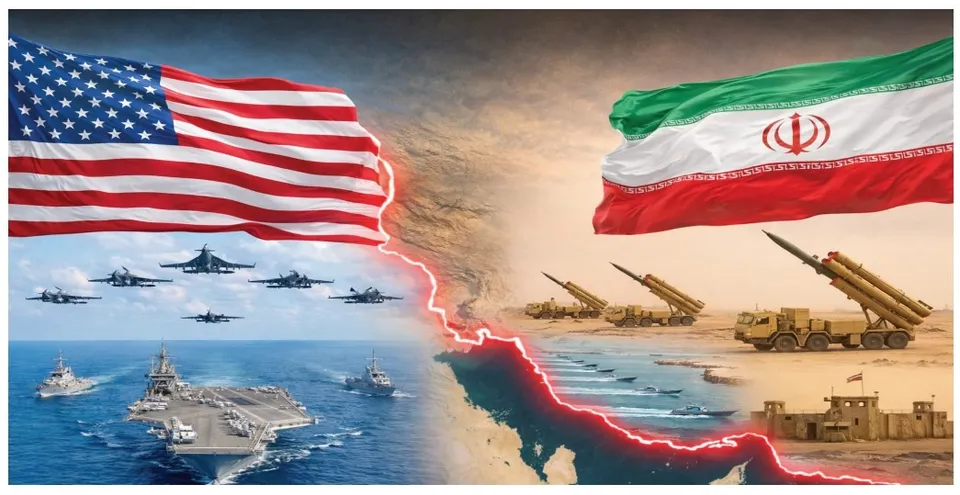

Tehran Halts Retaliatory Strikes but Warns Washington
Iran has paused retaliatory attacks against American forces and regional states as diplomatic efforts gain momentum.
The development follows a temporary suspension of US airstrikes against Iran after 13 consecutive nights of military operations.
No new Iranian attacks on neighbouring countries hosting American forces were reported over the weekend.
However, neither Washington nor Tehran has announced a formal ceasefire.
Iran has warned that any renewed American attack could trigger a larger regional conflict.
The United States has also kept its military forces on alert and maintained its naval blockade of Iranian ports.
The Pentagon has not explained how long the pause will continue.
A senior US official said President Donald Trump still preferred diplomacy but remained prepared to use military force if Iran rejected serious negotiations.
Trump has also warned that Washington could resume attacks or expand its campaign if talks fail.
The temporary calm has created an opportunity for mediators to prevent another round of strikes.
However, military activity elsewhere in the Middle East continues to threaten the fragile diplomatic opening.
Iran-aligned Houthi forces have attacked Saudi oil facilities, while the conflict has also spread towards the Red Sea and Caspian Sea.
Iranian Forces Stop Six Vessels in Strait of Hormuz
Iran’s Islamic Revolutionary Guard Corps said it stopped six vessels attempting to cross the Strait of Hormuz without following Iranian instructions.
The vessels were reportedly intercepted during a 24-hour period.
Iranian forces fired warning shots before stopping them, according to Iranian state media.
Tehran said the ships had deviated from routes designated by Iranian authorities.
The identities, ownership and destinations of the vessels were not immediately disclosed.
The reported interceptions have not been independently confirmed.
Iran maintains that vessels must coordinate with its maritime authorities before passing through the strategic waterway.
Washington rejects Tehran’s attempt to control international shipping routes.
The United States insists that commercial ships must be allowed to cross the strait freely and without Iranian fees or restrictions.
The Strait of Hormuz normally carries around one-fifth of the world’s oil supplies.
Disruption to the route has pushed up energy prices and increased pressure on international shipping companies.
Iranian attacks and warnings have already caused many vessels to reduce or delay movement through the area.
The US military has continued enforcing its blockade against Iranian ports despite the pause in airstrikes.
American forces recently disabled a commercial vessel after accusing it of attempting to breach the blockade.
These competing restrictions have left shipping companies facing pressure from both sides.
Oman Reports Progress in Shipping Negotiations
Iran and Oman have held several rounds of technical talks on the future management of the Strait of Hormuz.
The meetings took place in Tehran on Friday and Saturday.
Deputy foreign ministers from both countries discussed principles and operational arrangements for ensuring safe commercial shipping.
Iranian Foreign Ministry spokesperson Esmaeil Baghaei described the discussions as useful.
He said progress had been made, although technical and political consultations were continuing.
The Omani delegation left Tehran on Saturday afternoon.
No final agreement has yet been announced.
Iran also said there had been no immediate change in the status of shipping traffic through the strait.
Oman has played a central role in negotiations between Iran and the United States.
The proposed compromise would reportedly allow Iran to manage shipping movements while reducing restrictions on vessels.
Both sides are attempting to revive an interim arrangement reached in June.
That agreement later collapsed after renewed attacks on commercial ships and Iranian coastal positions.
The current talks are focused on finding a system that protects shipping while recognising the sovereign rights of Iran and Oman.
A previous joint statement said the two coastal states would continue negotiations through a working group.
The discussions would cover navigation management, maritime services and possible operating costs.
Diplomatic Opening Remains Fragile
The latest pause has reduced direct fighting between Iran and the United States.
However, major disagreements remain unresolved.
Iran wants greater authority over vessels crossing waters near its coast.
Washington demands unrestricted international navigation and rejects compulsory Iranian charges.
Both countries also continue operating military blockades against the other.
Trump has said Iran is becoming more serious about diplomacy.
However, he has also suggested that Tehran is not yet ready to accept a final agreement.
Iran has similarly warned that it will resume military action if the United States launches new strikes.
The absence of a formal ceasefire means the current pause could collapse quickly.
An attack on a commercial vessel, American base or Iranian position could restart the cycle of retaliation.
A successful Oman-backed agreement could reopen shipping routes and reduce global energy pressure.
It could also create space for broader negotiations between Washington and Tehran.
For now, the suspension of attacks represents a limited diplomatic opportunity rather than a confirmed end to the conflict.

