
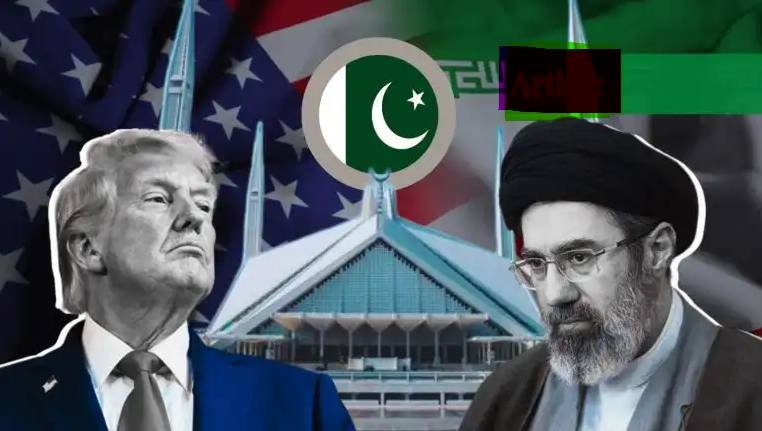

Pakistan is preparing to host another critical round of talks between the United States and Iran. Reports suggest that representatives linked to former US President Donald Trump may arrive by tomorrow evening. Meanwhile, an advance US team has already reached Islamabad, signaling that preparations are underway for high-level discussions.
Security Tightened Across Islamabad and Rawalpindi
Authorities have enforced strict security measures in Islamabad and Rawalpindi. The Red Zone and Extended Red Zone have been completely sealed for traffic. Officials say these steps are necessary due to the arrival of foreign delegations. Citizens have been advised to use alternative routes and cooperate with law enforcement.
Transport services have also been suspended in both cities. Islamabad’s administration halted heavy and public transport without specifying a timeline. Rawalpindi followed with a complete shutdown of private, public, and goods transport. Officials say updates will be shared as the situation evolves.
Security forces remain on high alert. Over 10,000 police personnel have been deployed across Rawalpindi. More than 600 checkpoints are operational, ensuring strict monitoring of entry and exit points. Elite commandos, snipers, and rapid response teams are actively patrolling key areas. Authorities have also intensified intelligence-based operations and surveillance through CCTV systems.
Diplomatic Efforts Continue Amid Uncertainty
Although preparations are visible, there is still no official confirmation from Pakistan, Iran, or the United States regarding the exact schedule of talks. However, sources indicate that the second round of negotiations could take place next week.
Pakistan has been actively facilitating dialogue between the two sides. Earlier this month, Prime Minister Shehbaz Sharif helped broker a temporary ceasefire. This led to initial talks in Islamabad, where both sides discussed several key issues. While no final agreement was reached, officials described the discussions as constructive.
The broader conflict in the Middle East remains complex. It began in late February after joint US and Israeli strikes. Iran responded with strong military actions and briefly blocked the Strait of Hormuz. Although a ceasefire eased tensions, disagreements continue over several core issues.
Iranian leadership has acknowledged progress but says major gaps remain. Officials in Tehran have stated that negotiations are ongoing but far from final. On the US side, Trump has described the talks as positive but warned Iran against applying pressure tactics.
Pakistan continues to play a mediating role. Recent diplomatic visits and military engagements highlight its commitment to reducing tensions. As global attention turns to Islamabad, the upcoming talks could prove crucial for regional stability.

