
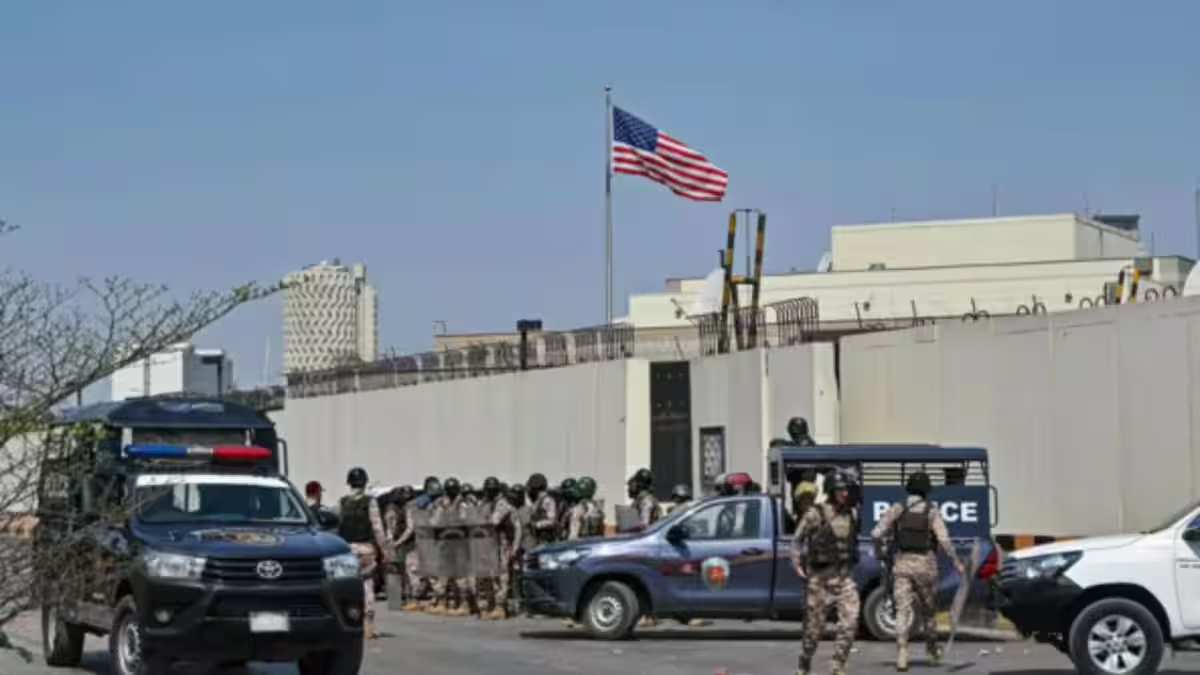

The United States Department of State has announced the phased closure of its Consulate General in Peshawar. The decision marks a significant restructuring of US diplomatic operations in Pakistan’s northwestern region. Officials said the move is driven by concerns over staff safety and the need to improve resource management across overseas missions. The closure will take place gradually to ensure an orderly transition of responsibilities.
Despite shutting down the physical consulate, the United States emphasized that its diplomatic engagement with Pakistan will continue without interruption. All responsibilities previously handled in Peshawar will now be transferred to the US Embassy in Islamabad. Authorities stated that this shift is designed to centralize operations while maintaining full diplomatic coverage in the region.
Security Concerns and Administrative Efficiency Drive Decision
According to the State Department, the primary reason behind the closure is the safety and security of diplomatic personnel. The US government regularly reviews its overseas footprint to ensure that staff are protected in all operating environments. In this case, officials concluded that consolidating operations would enhance both safety and efficiency.
The department also highlighted resource optimization as a key factor. By reducing smaller outposts and strengthening central diplomatic hubs, the US aims to improve coordination and reduce operational costs. This approach is part of a broader global strategy to modernize diplomatic missions and adapt to changing security conditions.
Even with this structural change, US officials made it clear that there is no shift in foreign policy toward Pakistan. They stressed that bilateral relations remain strong and unaffected by the closure of the Peshawar facility.
Continued Engagement with Khyber Pakhtunkhwa Region
The US confirmed that engagement with Khyber Pakhtunkhwa will continue through the US Embassy in Islamabad. Diplomatic outreach, development programs, and security cooperation will remain active. Officials said they will continue working closely with local authorities and communities in the region.
The State Department also reiterated its commitment to supporting economic development and regional stability. Programs focused on trade, investment, and institutional cooperation are expected to continue through alternative diplomatic channels. The US described Khyber Pakhtunkhwa as an important region for long-term engagement within its broader Pakistan strategy.
Diplomatic Presence Remains Strong Across Pakistan
Although the Peshawar consulate is being phased out, the United States will maintain a strong diplomatic presence in Pakistan through its missions in Islamabad, Karachi, and Lahore. These offices will continue handling political, economic, and consular services across the country.
Officials emphasized that the US-Pakistan relationship remains a key foreign policy priority. Cooperation in areas such as trade, security, and development will continue as part of long-standing bilateral engagement. The restructuring is intended to streamline operations rather than reduce involvement.
The State Department described the decision as a practical adjustment to improve efficiency while ensuring continued engagement. It stressed that all existing programs and partnerships will remain active under the new structure.
Strategic Diplomatic Realignment
The closure of the Peshawar consulate reflects a broader effort by the United States to adapt its global diplomatic network. By consolidating operations, the US aims to maintain effectiveness while responding to evolving security and administrative needs.
Officials said the transition will be carried out in phases to avoid disruption in services and ongoing cooperation projects. While the physical presence in Peshawar will end, the US assured that its commitment to Pakistan and the region remains unchanged.
The move represents a strategic realignment rather than a reduction in engagement, focusing on efficiency, safety, and sustained diplomatic relations.

