
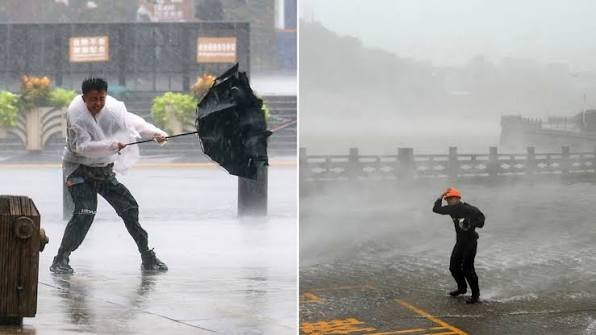

More than one million people evacuated parts of eastern China as Typhoon Dolphin brought record rainfall and flooding.
The powerful storm made landfall after authorities warned about dangerous flooding and landslides. Officials moved residents from high-risk areas to emergency shelters across several provinces.
Wenzhou relocated more than 900,000 people and opened over 1,500 emergency shelters. Meanwhile, neighbouring Fujian moved 98,900 residents from vulnerable areas.
In Shanghai, authorities evacuated 215,600 people from areas facing potential flooding. The figure increased sharply from an earlier evacuation count of 30,300 people.
Shanghai Records Historic Rainfall Levels
A central Shanghai weather station recorded nearly 313mm of rain within 24 hours. The rainfall marked the station’s highest 24-hour total in more than 150 years.
Another weather station recorded almost 400mm during the same period. Consequently, severe flooding affected several streets and prompted widespread concern among residents.
Videos showed flooded roads around Wukang Mansion, a popular Shanghai landmark. The phrase “Shanghai turns into the sea” also trended on Chinese social media.
Heavy Rain Threat Continues Across China
Dolphin weakened into a tropical storm by Monday morning. However, the system continued moving north and farther inland across eastern and central China.
Heavy rainfall was forecast across Shandong, Henan, Hubei, Anhui, Jiangsu, Zhejiang, and Shanghai. Authorities maintained an orange heavy-rain alert as the threat continued.
Officials warned that persistent rainfall could trigger widespread flooding and landslides through Wednesday. Forecasters predicted some areas could receive between 200mm and 400mm of rain.
Meanwhile, Zhejiang recorded an average 173mm of rainfall between Friday evening and Monday morning. The total reportedly exceeded rainfall levels from previous major typhoons, including Lekima and Bavi.
Authorities urged residents to remain indoors during periods of intense rainfall. Emergency teams also continued monitoring vulnerable areas as the storm moved inland.

