
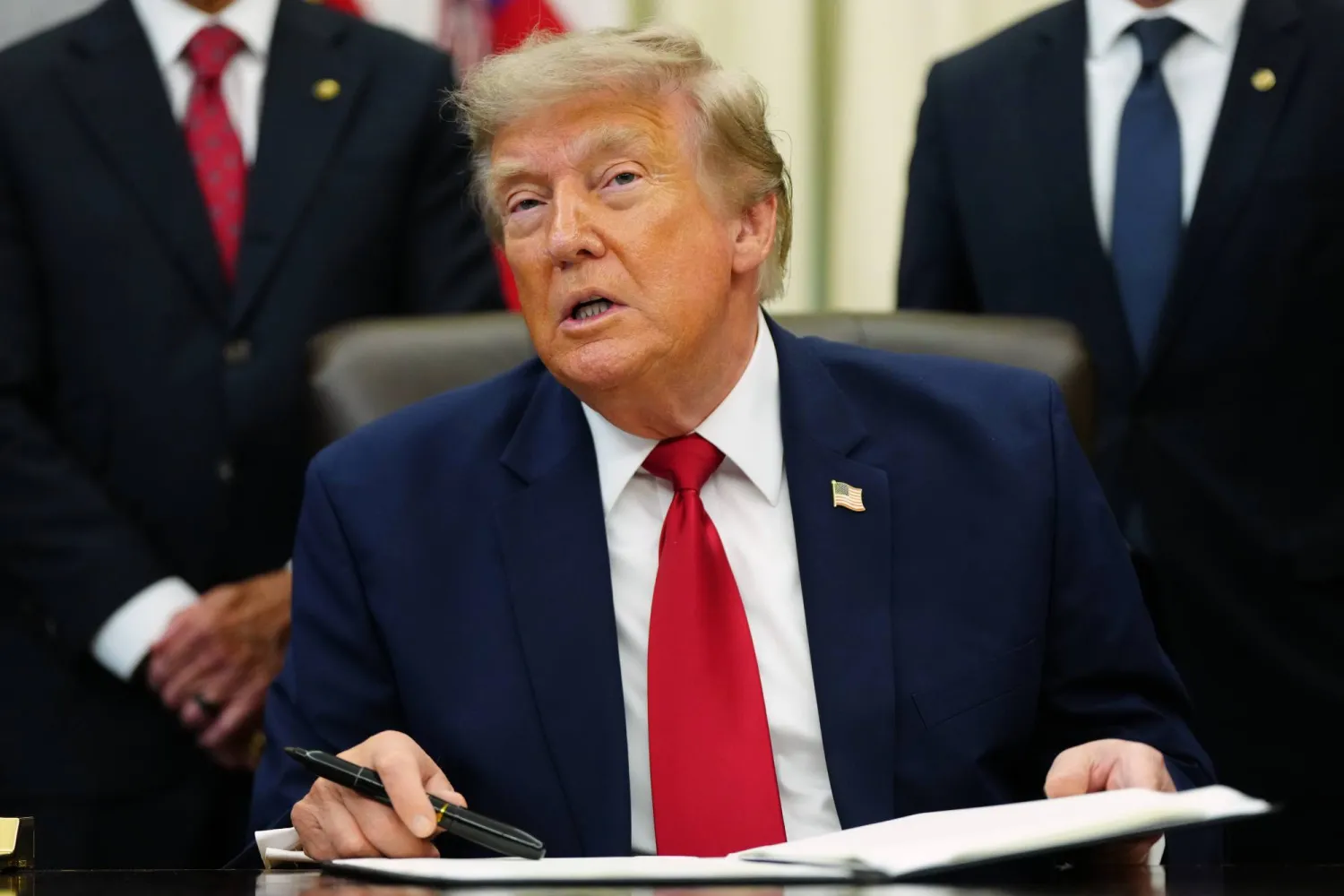

US President Orders Section 301 Trade Investigation
US President Donald Trump has threatened fresh tariffs against the European Union following a major regulatory fine against Google.
Trump accused Brussels of unfairly targeting American technology companies through its digital competition laws.
In a Truth Social post on Friday, the president said the European Union would pay a “very big price” for its actions.
He described the fine as illegal and unethical.
Trump said his administration would immediately launch a Section 301 investigation into the European Union’s trade practices.
The investigation could lead to substantial tariffs on European goods entering the United States.
Section 301 of the Trade Act of 1974 allows Washington to investigate foreign policies considered unfair or discriminatory.
The US government can impose tariffs or other trade restrictions following such an investigation.
Trump said the United States would no longer allow Europe to treat American companies as a source of revenue.
His remarks marked another sharp escalation in trade tensions between Washington and Brussels.
European Commission Fines Google €890 Million
The dispute began after the European Commission fined Google €890 million, equal to approximately $1 billion.
It was Google’s first financial penalty under the European Union’s Digital Markets Act.
The law is designed to limit the power of dominant online platforms and promote fair competition in digital markets.
The Commission issued two separate penalties against Google.
A €460 million fine was imposed for allegedly favouring Google’s own services in search results.
These services included shopping, hotel, travel, transport and sports platforms.
Regulators said competing businesses were not given equal visibility in Google Search.
A separate €430 million fine concerned restrictions inside the Google Play Store.
The Commission said Google prevented application developers from directing users towards cheaper subscriptions and payment offers outside its platform.
Google has been ordered to change its business practices and provide fairer treatment to competitors and developers.
The company has criticised the decisions and indicated that it may challenge the penalties.
Google argues that the required changes could weaken its services, reduce security and create a poorer experience for European users.
Digital Rules Threaten Wider US-EU Trade Relations
US Trade Representative Jamieson Greer had already criticised the European Commission before Trump announced the investigation.
Greer said the latest enforcement action created uncertainty for the transatlantic trade relationship.
He warned that repeated penalties against American technology companies could undermine cooperation between the United States and European Union.
The dispute could also test the wider trade framework agreed between Washington and Brussels.
That arrangement reduced some US tariffs on European products in exchange for economic concessions from the European Union.
European officials have repeatedly denied deliberately targeting American businesses.
They maintain that the Digital Markets Act applies to all companies designated as powerful digital gatekeepers.
The European Commission says the rules are intended to protect consumers, developers and smaller competitors.
However, most companies currently affected by the legislation are major US technology groups.
This has increased criticism from Washington that European regulations are discriminatory.
A Section 301 investigation normally takes time and does not automatically result in tariffs.
However, Trump’s announcement has raised the risk of another major trade dispute between the United States and Europe.
Additional tariffs could affect European exports, increase business costs and weaken the existing trade agreement.
The dispute also shows how technology regulation is becoming closely connected with international trade and foreign policy.

