

President Ahmed al-Sharaa completes 210-member assembly as political transition moves forward
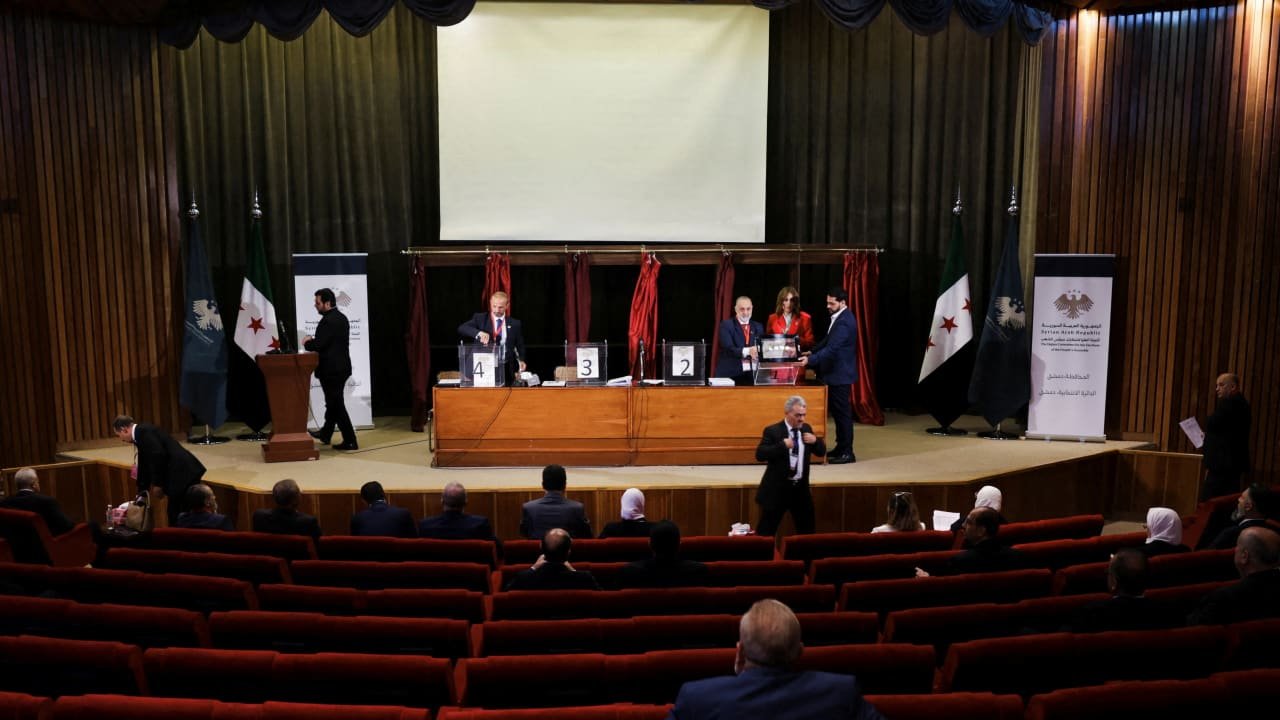
Syrian authorities on Wednesday unveiled the names of 70 lawmakers appointed by President Ahmed al-Sharaa to complete the country’s transitional parliament, clearing the way for the 210-member People’s Assembly to hold its inaugural session next week.
Mohamed Taha al-Ahmed, head of the Higher Judicial Committee for Parliamentary Elections, confirmed that the Assembly will convene for the first time on Monday. The appointments conclude a process that began more than eight months ago to establish a transitional legislature following the political changes that reshaped Syria after the removal of former president Bashar al-Assad in 2024.
Two-thirds of the chamber’s members were selected last year through regional electoral colleges, while the remaining 70 lawmakers were directly appointed by President Sharaa under the country’s transitional political framework.
Among the presidential appointees are 15 women, increasing female representation in the Assembly to 21 members after only six women secured seats during the earlier selection process.
Authorities seek broader representation amid continued criticism
Officials did not specify how many of the newly appointed lawmakers belong to Syria’s ethnic and religious minorities. Previously selected members included representatives from Kurdish, Christian and Alawite communities.
Authorities also announced that appointments for the predominantly Druze province of Sweida have been postponed until conditions improve. The province has remained outside full government control following deadly clashes last year that, according to the United Nations, killed around 1,700 people.
The formation of the transitional parliament is widely viewed as a key test of President Sharaa’s pledges to promote broader political participation and address representation gaps identified during the earlier selection process.
However, critics, including Syrian political figures and civil society organisations, argue that the current electoral framework concentrates significant authority in the presidency and limits parliamentary independence. Rights groups have called for stronger judicial oversight, greater political pluralism and increased representation for women and minority communities.
Under Syria’s temporary constitution adopted in 2025, the People’s Assembly holds legislative authority, can propose and approve laws, and will serve for a renewable 30-month term until a permanent constitution and nationwide elections are introduced.

