
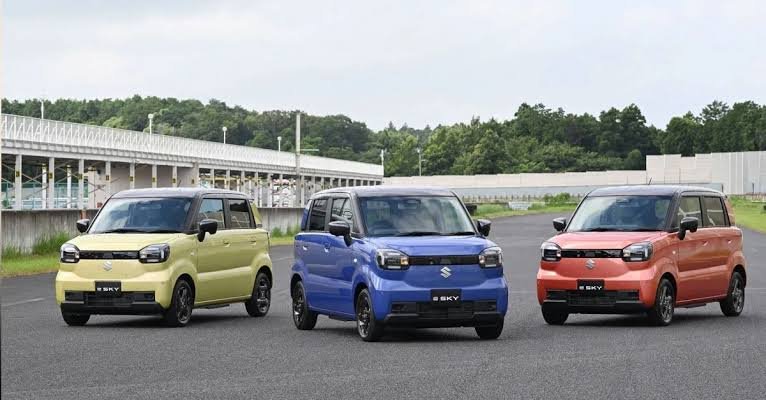

First Suzuki Kei EV Brings Compact Size, Long Range and Affordable Electric Mobility to Japan
Suzuki has officially unveiled the e-Sky, its first fully electric kei car, marking the company’s entry into Japan’s growing electric vehicle market.
Designed specifically for urban environments, the compact electric vehicle combines a lightweight structure, efficient battery technology and practical features aimed at daily city commuting.
Kei cars are a popular vehicle category in Japan, known for their small dimensions, lower running costs and suitability for crowded urban roads.
310-Kilometre Driving Range With Small Battery
Despite its compact size, the Suzuki e-Sky delivers an impressive projected driving range of 310 kilometres.
The vehicle is equipped with a 26 kWh lithium iron phosphate (LFP) battery, a technology known for durability, safety and longer battery life compared with some traditional battery chemistries.
Suzuki focused heavily on reducing energy consumption rather than increasing battery size. The company claims the e-Sky can achieve approximately 12 kilometres per kilowatt-hour, making it one of the most efficient small electric vehicles.
The company achieved this efficiency by developing a dedicated lightweight platform specifically for kei-class electric vehicles.
Compact Dimensions Designed for City Roads
The e-Sky follows Japan’s kei car regulations, maintaining a compact footprint suitable for narrow streets and busy urban areas.
The vehicle measures:
- Length: 3,395 mm
- Width: 1,475 mm
- Height: 1,625 mm
Unlike some rival mini EVs that feature taller designs, Suzuki opted for a slightly lower roof profile to improve aerodynamics and efficiency.
The company said the design was created with possible international markets in mind, suggesting that the e-Sky could eventually expand beyond Japan.
Suzuki Develops Its First In-House Electric Drive System
The e-Sky introduces Suzuki’s first internally developed e-axle drive system, which combines the electric motor and related components into a compact unit.
Rather than focusing on high performance or sports-style acceleration, Suzuki prioritised efficiency, reliability and affordability.
The electric platform was built specifically for kei EVs, allowing engineers to place the battery underneath the vehicle floor.
This layout improves weight distribution, lowers the centre of gravity and helps maintain a spacious cabin despite the vehicle’s small exterior dimensions.
Fast Charging and Advanced EV Features
Suzuki has equipped the e-Sky with multiple charging options to make daily use more convenient.
The vehicle supports DC fast charging up to 50 kW, allowing the battery to charge from low levels to 80 percent in around 25 minutes.
For home charging:
- A 3 kW AC charger takes approximately 8 hours for a full charge.
- A 6 kW AC charger reduces charging time to around 4.5 hours.
The e-Sky also includes several modern electric vehicle features, including:
- Heat pump climate system for improved efficiency
- One-pedal driving capability
- Bidirectional charging technology, allowing the vehicle to supply power to external devices
Modern Interior With Practical Storage Solutions
Inside the cabin, Suzuki has focused on combining technology with everyday practicality.
The dashboard features:
- Digital instrument cluster
- 10.1-inch touchscreen infotainment display
- Heated steering wheel
- Electronic parking brake
The company has also added multiple storage areas to maximise usability in a small vehicle.
Interior features include:
- Two-level centre console
- Passenger-side storage tray
- Built-in cup holder design
Suzuki said the cabin layout was designed around the needs of urban drivers who require convenience despite limited vehicle space.
Affordable Electric Mobility as Suzuki’s Main Goal
Although Suzuki has not revealed the official price of the e-Sky, the company said affordability remains one of its main priorities.
The automaker aims to offer an electric vehicle that provides low running costs while maintaining practical features for everyday users.
The e-Sky will initially launch in Japan in November, with further details about pricing and possible international availability expected closer to its market release.
The launch represents an important step for Suzuki as global automakers continue shifting towards smaller, more efficient electric vehicles designed for urban transportation.

