
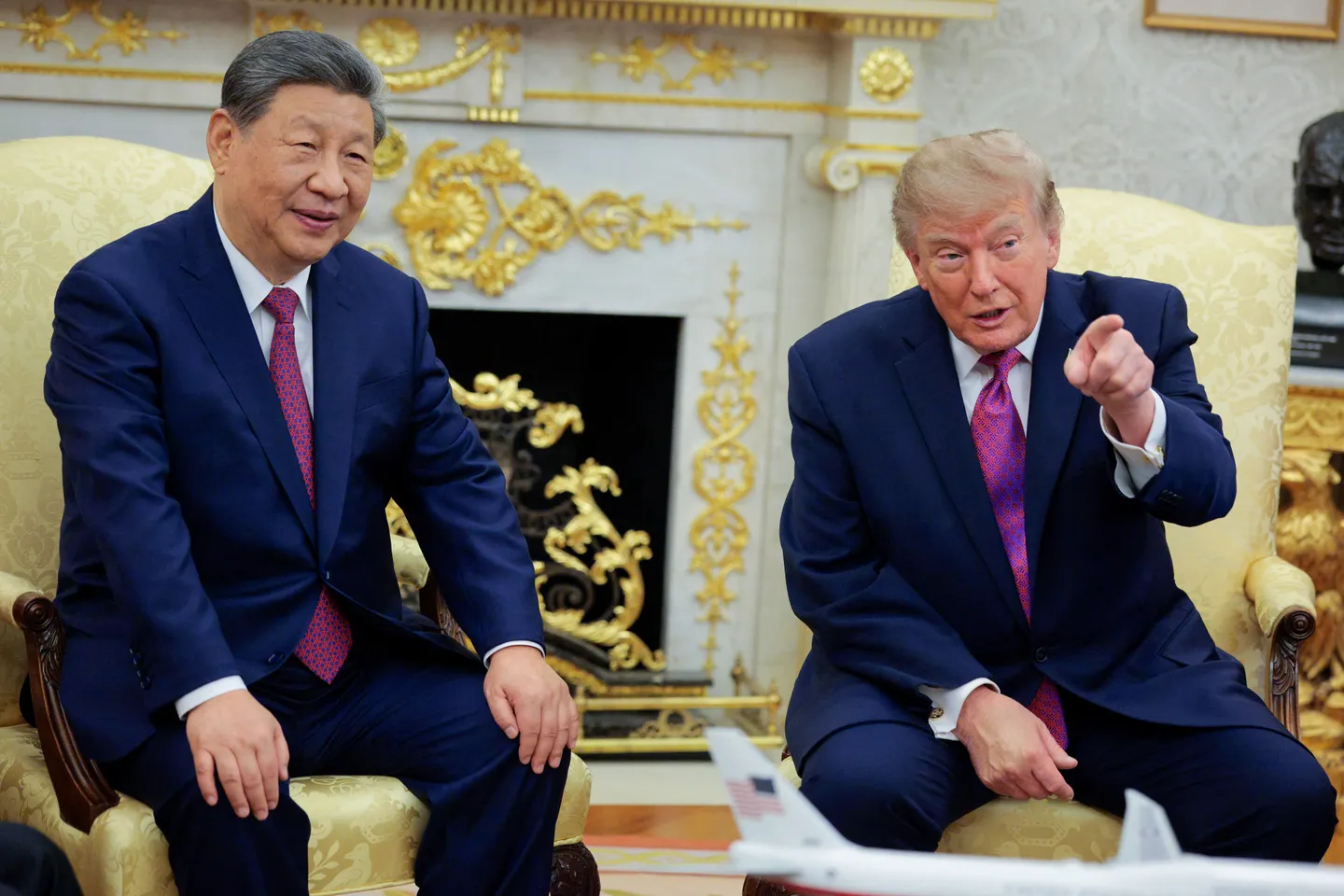

US President Donald Trump and Chinese President Xi Jinping are preparing for another round of talks aimed at maintaining a fragile trade truce between the world’s two largest economies.
The leaders are expected to meet on the sidelines of the Asia-Pacific Economic Cooperation (APEC) summit in China later this week. Their discussions will focus on keeping the existing agreement on track as the current arrangement approaches its January deadline.
The trade relationship has experienced repeated tensions since Trump returned to office in 2025. However, both countries have gradually moved towards negotiations after imposing heavy tariffs and retaliatory trade restrictions.
Tariff Escalation Triggered Economic Tensions
The trade conflict intensified in February 2025 when Trump introduced a 10% tariff on Chinese imports over concerns involving fentanyl and immigration. China responded with duties on American coal, liquefied natural gas, crude oil and vehicles.
Tensions escalated further in April when Trump announced sweeping tariffs, including a 34% duty on Chinese goods. Both countries subsequently increased tariffs, with American duties reaching 125% and China’s retaliatory tariffs climbing to the same level.
In May 2025, negotiations in Geneva produced a 90-day agreement to reduce tariffs. Washington lowered its duties on Chinese goods from 145% to 30%, while Beijing reduced its tariffs from 125% to 10%.
The pause was extended in August, creating an opportunity for further negotiations.
Trade Negotiations Gradually Restore Cooperation
In October 2025, Trump and Xi reached a trade truce following discussions in South Korea. Washington agreed to reduce tariffs, while Beijing committed to addressing fentanyl precursor supplies, resuming soybean purchases and suspending certain rare-earth export restrictions.
However, disagreements continued throughout 2026. The US Supreme Court struck down Trump’s emergency tariffs in February, prompting Washington to introduce a temporary 10% global duty under a different legal authority.
During Trump’s May visit to Beijing, both countries announced plans to establish Boards of Trade and Investment. China also agreed to purchase Boeing aircraft and American agricultural products.
In September, another meeting resulted in reduced tariffs on $60 billion worth of non-sensitive goods. Both sides subsequently agreed to extend their tariff truce by two months in November, while officials held the first formal meeting of the Board of Trade.
For the latest updates, visit and follow The Truth International website (www.thetruthinternational.com) and subscribe to the YouTube Channel.

