
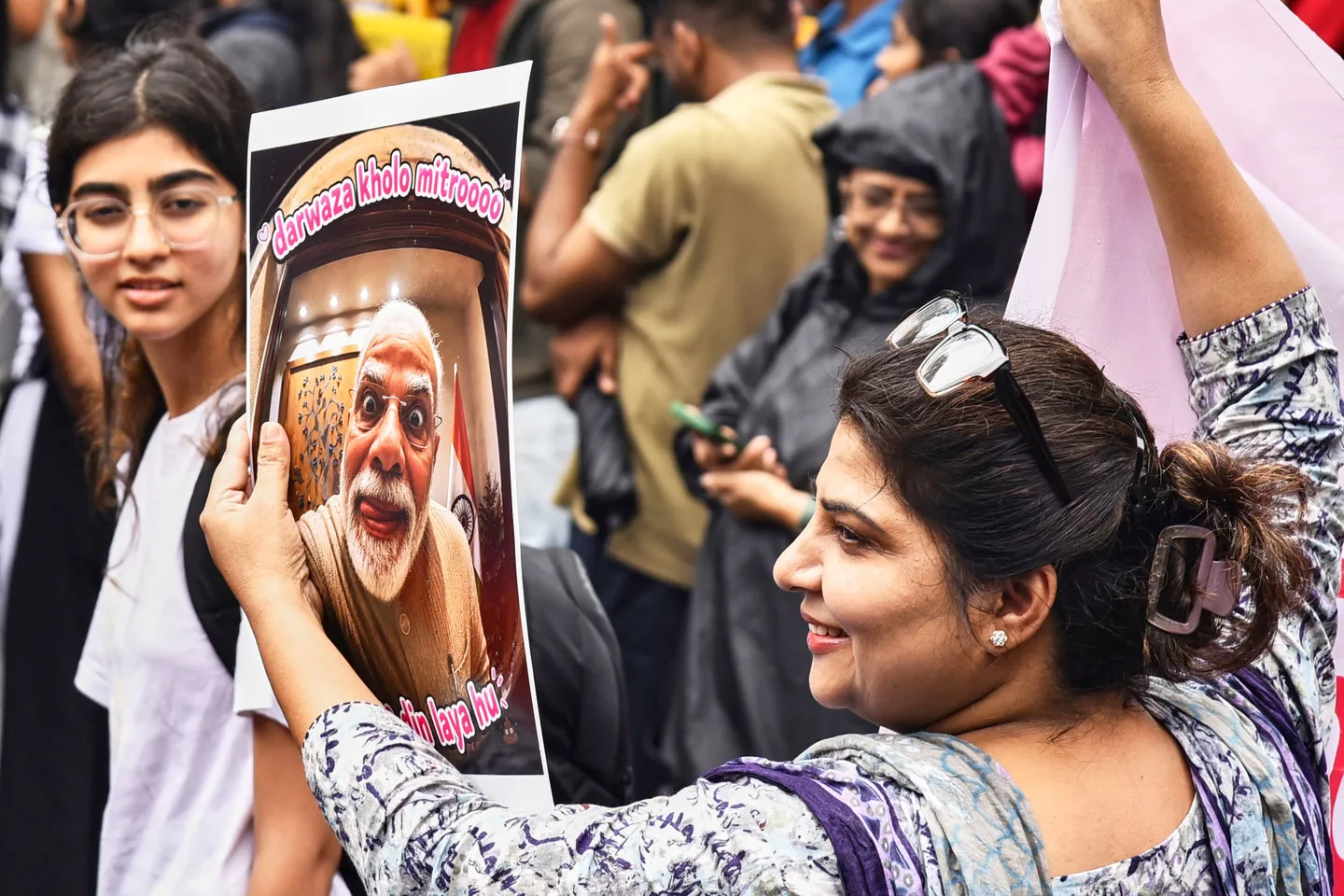

Education reform campaign expands into wider challenge to government narrative
NEW DELHI: A student-led protest movement centred on India’s education system has emerged as one of the most significant public challenges to Prime Minister Narendra Modi’s government in recent years, according to an analysis published by TRT World.
The demonstrations, which continued for seven weeks, focused on repeated examination paper leaks, concerns over public education and limited employment opportunities for young people. The movement gained momentum after the emergence of the satirically named Cockroach Janata Party (CJP), which helped mobilise students across several cities and towns.
According to the report, tensions escalated after security forces dispersed protesters marching towards Parliament on July 20. Images circulating on social media showed police using batons, tear gas and water cannons against demonstrators. The report also said dozens of students required medical treatment following the clashes.
Five days later, Education Minister Dharmendra Pradhan resigned after sustained public pressure. The government subsequently announced a task force led by technocrat Nandan Nilekani to recommend reforms to India’s examination system.
Movement draws broad public support
The report argues that the protests differ from previous demonstrations because they attracted support across caste, religious and economic groups. It said lawyers, doctors, farmers and student activists joined or publicly backed the campaign, while places of worship reportedly provided assistance to injured protesters.
The analysis also contends that government efforts to portray the movement as politically motivated failed to gain widespread public support, unlike during previous protests over university issues, citizenship legislation and agricultural reforms.
Political implications remain uncertain
According to the report, social media played a central role in the movement, with students using memes and online campaigns to challenge government messaging. It argues that satirical responses to official communications weakened the administration’s public image among younger audiences.
The report suggests the protests have reduced perceptions of the government’s political dominance. However, it notes that the movement’s long-term impact will depend on whether its organisers establish a broader political platform and whether opposition parties can effectively channel public dissatisfaction.
The analysis concludes that while the demonstrations have created new political challenges for the government, their influence on future elections will ultimately depend on developments in the coming months and the response of both the ruling party and the opposition.

