

British prime minister weighs departure timetable amid growing Labour revolt and calls for orderly power transfer
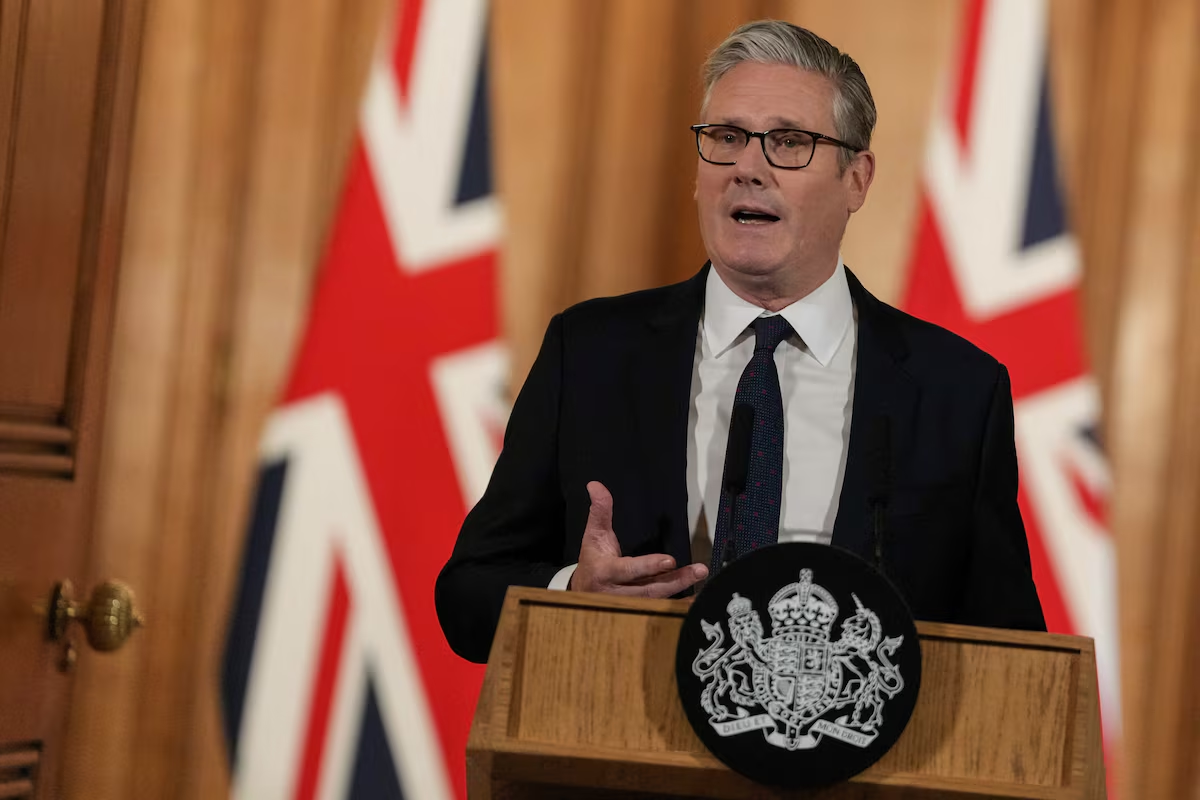
LONDON: British Prime Minister Keir Starmer is expected on Monday to outline a timetable for his departure, a move that could pave the way for an orderly transfer of power to Labour rival Andy Burnham and make him Britain’s seventh prime minister in a decade.
The development comes less than two years after Starmer led Labour to a landslide general election victory that was meant to restore stability to British politics. However, pressure on the prime minister has intensified in recent months and surged further after Burnham, the Greater Manchester mayor, won a parliamentary by-election on Friday and returned to Westminster with a decisive victory.
According to political sources, Starmer spent the weekend weighing whether to fight a formal leadership challenge or step aside in what party figures described as a decision based on the national interest as well as mounting internal pressure.
Skills minister Jacqui Smith said she would have preferred Starmer to stay, but acknowledged that he had been considering what was best for the country given the political pressure building around him.
Burnham’s rise fuels Labour leadership speculation
Burnham’s victory has energised Labour lawmakers who believe he could revive the party’s fortunes after a sharp decline in Starmer’s popularity. The Greater Manchester mayor, known for his communication skills and appeal among party members, is now widely viewed as the frontrunner should a leadership transition begin.
Questions remain over policy and market confidence
Despite his growing support, Burnham has yet to fully spell out his approach on foreign policy, defence and the economy. Investors are also divided over whether he would maintain fiscal discipline at a time when Britain faces high borrowing costs, sluggish growth and rising pressure on public finances.
If Starmer confirms a departure timetable, it would mark another dramatic leadership change in British politics, underscoring the instability that has defined the post-Brexit era.

