

Wildlife conservation advocate offers alternative to pest extermination
A Singaporean bee rescuer has gained recognition for relocating bee colonies instead of exterminating them, offering homeowners an environmentally friendly alternative while helping protect vital pollinators.
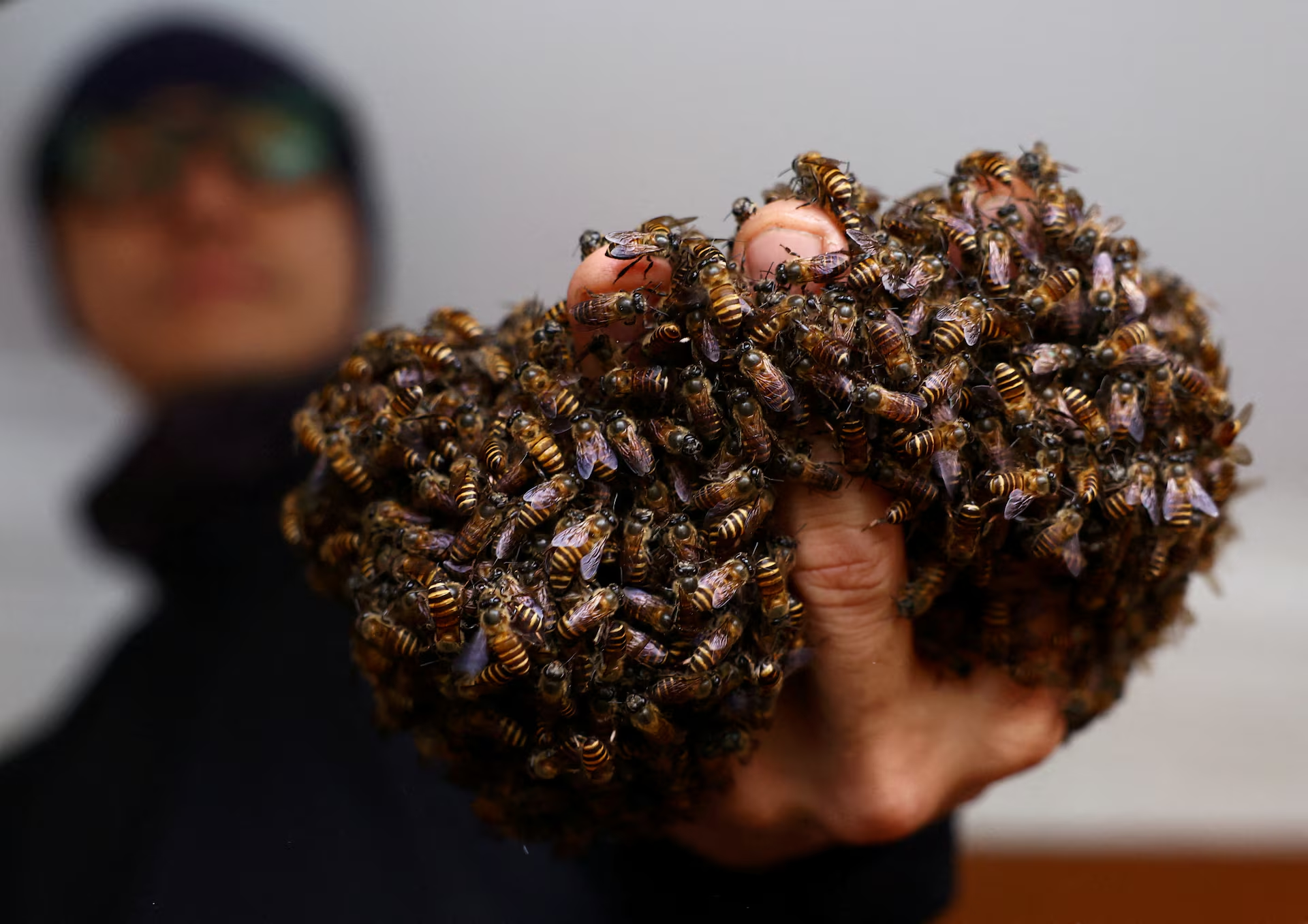
Clarence Chua, 42, has spent the past six years rescuing an average of 100 bee colonies annually. Using simple equipment, including a bandana and wooden hive boxes, he carefully transfers entire colonies—complete with queen bees, larvae and worker bees—to managed apiaries. Chua estimates his work has helped save nearly six million bees during that period.
Residents traditionally rely on pest control services to eliminate bee nests, but Chua has persuaded a growing number of homeowners to choose relocation instead. Depending on the complexity of the rescue, he charges between S$100 and S$500 for the service.
His unusual rescues have taken him to locations ranging from residential buildings and religious shrines to aircraft engines, where bee swarms had delayed operations until they were safely removed.
Growing public support for conservation
As awareness of humane bee relocation increases, Singapore’s town councils have also begun hiring Chua to manage bee colonies in public housing estates, where most of the country’s population lives.
Despite his experience, Chua says the work carries significant risks. During one rescue at a condominium, an unexpectedly aggressive swarm stung him about 100 times before he managed to escape. The incident reinforced the importance of respecting wildlife and carefully assessing bee behaviour before beginning each operation.
Social media spreads environmental awareness
Beyond rescue operations, Chua actively promotes bee conservation through social media, where videos recorded with wearable cameras have attracted around 20,000 followers.
He continues to educate the public about the essential role bees play in global food production, stressing that healthy bee populations are critical for pollinating crops and maintaining food security. Chua hopes greater awareness will encourage more people to choose conservation over extermination whenever bee colonies appear near homes or businesses.

