
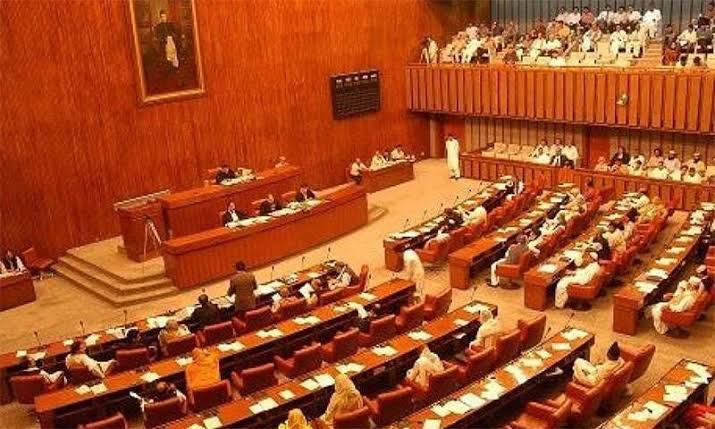

Lawmakers Demand Full Implementation of 18th Amendment
Pakistan could save between Rs4 trillion and Rs5 trillion every year by abolishing redundant federal ministries, according to a Senate committee.
The Senate Functional Committee on Devolution raised the issue during its latest meeting on Friday.
Members expressed serious concern over delays in transferring several ministries and departments to provincial governments.
The transfer of these responsibilities was required after the passage of the 18th Constitutional Amendment.
The amendment devolved several policy areas from the federal government to the provinces.
However, lawmakers said multiple federal ministries continue to operate in sectors that now fall under provincial authority.
Committee members described these institutions as an unnecessary financial burden on the national treasury.
They called for a comprehensive restructuring of the federal government.
The committee said ministries dealing with devolved subjects should either be abolished or significantly reduced.
Provincial governments should be allowed to independently manage responsibilities already assigned to them under the Constitution.
Lawmakers estimated that ending administrative duplication could generate annual savings of Rs4 trillion to Rs5 trillion.
The figure was presented as a committee estimate for potential savings from wider restructuring and expenditure reductions.
The committee said these funds could be redirected towards development, education, healthcare and social protection.
Pakistan has been struggling with high debt repayments, fiscal deficits and growing administrative expenses.
Members argued that reducing unnecessary government structures could help create financial space without imposing additional taxes on citizens.
The Senate committee has previously raised concerns about incomplete implementation of the 18th Amendment and the failure to grant provinces their constitutional powers.
CCI and NFC Must Be Strengthened
The committee also expressed concern over irregular meetings of the Council of Common Interests.
The CCI is a major constitutional forum for resolving disputes between the federal government and provincial administrations.
It also supervises important policy areas that require cooperation between Islamabad and the provinces.
Committee members said delays in CCI meetings were weakening constitutional coordination.
Senator Jan Muhammad Baloch said the forum must meet regularly to address provincial concerns.
He warned that constitutional mechanisms could become ineffective if meetings were repeatedly delayed.
The committee called for stronger parliamentary oversight of the CCI.
Senate records show that lawmakers have previously described the CCI as inactive and demanded a proper mechanism to protect provincial rights.
Members also called for strengthening the National Finance Commission.
The NFC determines how federal tax revenues are distributed between the federation and the provinces.
The committee said an effective NFC system was necessary for fair resource distribution.
Lawmakers argued that stronger CCI and NFC institutions could improve trust between the federal and provincial governments.
They said Pakistan’s financial challenges required major reductions in avoidable government expenditure.
Senator Jan Muhammad Baloch stressed that minor administrative changes would not be enough.
He called for significant spending cuts and the removal of institutions performing overlapping functions.
The committee said constitutional devolution should not remain limited to official documents.
It must be reflected in government structures, budgets, staffing and decision-making powers.
Members maintained that provinces must receive the administrative and financial authority required to manage devolved sectors.
Provinces Demand Fair Share of Oil and Gas Revenue
The distribution of income from natural resources was another major issue discussed during the meeting.
Senator Zamir Hussain Ghumro said oil and gas-producing provinces had not received their fair financial share for several years.
He claimed that Sindh produces oil worth approximately Rs3.7 billion every day.
Khyber Pakhtunkhwa also makes a major contribution to Pakistan’s total oil and gas production.
However, lawmakers said producing provinces were not receiving adequate financial benefits from these resources.
The committee argued that provinces carrying the environmental and infrastructure costs of extraction should receive their constitutional share.
Members also raised concerns about provincial representation in the management of state-owned oil and gas organisations.
Senate committees have previously demanded joint federal and provincial control over natural resource institutions under Article 172(3) of the Constitution.
The committee said unequal distribution of resource income could deepen grievances among producing regions.
Lawmakers called for greater transparency in calculating oil and gas production, royalties and other payments.
They also demanded detailed information about revenues collected from each province.
The committee directed the federal government to prepare a complete report before its next meeting.
The report must include province-wise oil and gas production figures.
It must also explain how revenues, royalties and related payments are distributed.
Committee members said the information would help determine whether provinces were receiving their lawful share.
They warned that continued delays in devolution and revenue distribution could weaken federal-provincial relations.
The committee maintained that reducing redundant ministries was essential for fiscal reform.
It also said stronger constitutional institutions were necessary for fair governance.
Members urged the government to complete the devolution process without further delays.
They said Pakistan could reduce expenditure, improve coordination and strengthen provincial autonomy by implementing existing constitutional provisions.

