
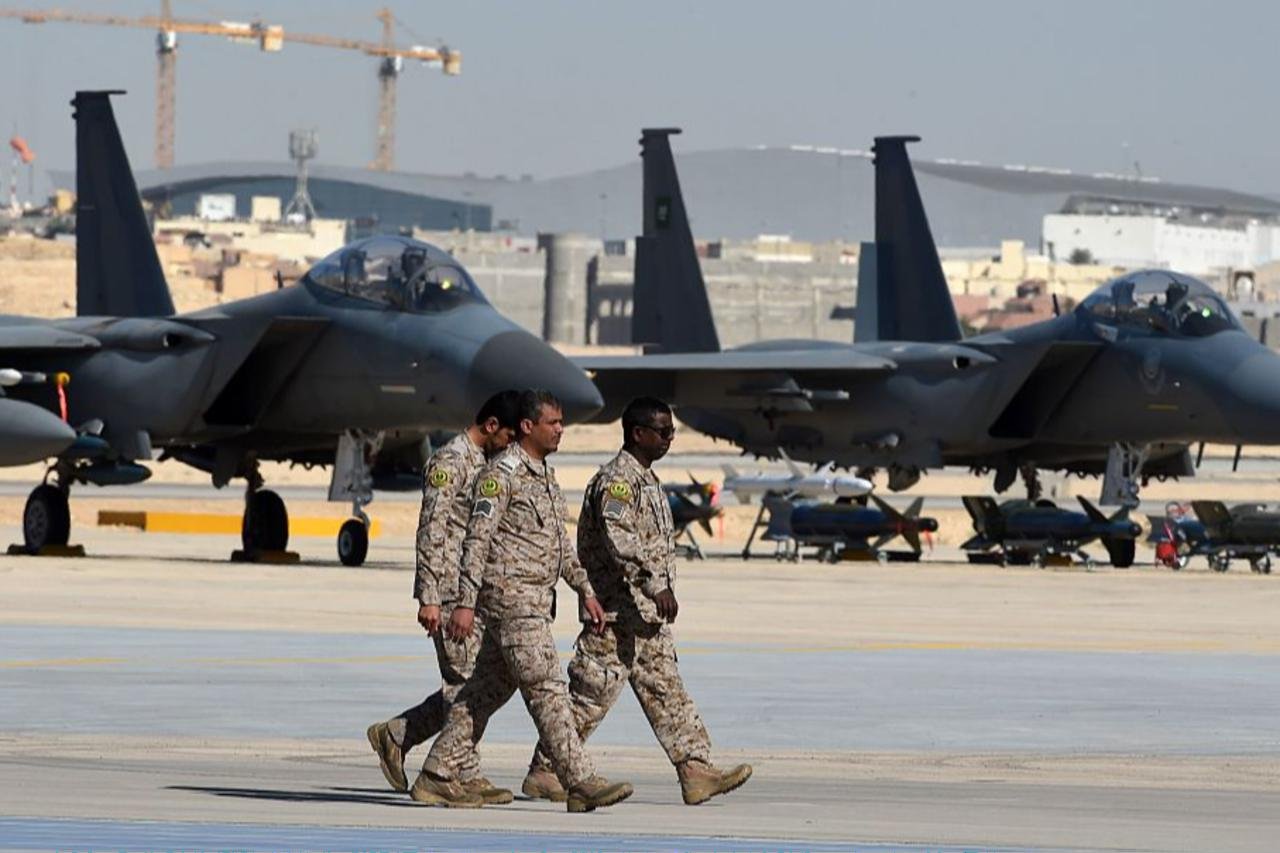

Saudi Arabia and Kuwait have reportedly lifted restrictions on the use of their military bases and airspace by the United States military following recent regional tensions linked to the Strait of Hormuz.
According to a report published by The Wall Street Journal, the restrictions were originally imposed after the launch of a US operation aimed at reopening the strategically important maritime route.
The development signals a possible shift in regional coordination between Gulf allies and Washington as security concerns continue to grow in the Middle East.
Gulf Allies Reportedly Ease Military Restrictions After Hormuz Tensions
The report stated that Saudi Arabia and Kuwait had previously limited certain US military activities involving their bases and airspace during heightened regional tensions.
The restrictions reportedly came after military operations connected to the Strait of Hormuz, one of the world’s most important oil shipping routes.
The waterway plays a critical role in global energy transportation. A large percentage of international oil exports move through the narrow passage every day.
Any military escalation or disruption in the region can quickly affect oil prices, shipping operations, and global financial markets.
According to the report, officials from both the United States and Saudi Arabia confirmed that the restrictions have now been lifted.
This decision could improve operational flexibility for American military forces stationed in the Gulf region.
However, the report has not yet been independently verified by Reuters.
US Military Presence Remains Central to Gulf Security Strategy
The United States maintains a strong military presence across the Gulf region through partnerships with key allies including Saudi Arabia, Kuwait, Bahrain, and Qatar.
American forces use regional bases for security coordination, maritime protection, intelligence gathering, and rapid military response operations.
Military analysts say unrestricted access to Gulf airspace and strategic bases remains essential for maintaining stability around major shipping lanes.
The Strait of Hormuz remains especially sensitive because of ongoing tensions involving regional powers and global energy security.
Recent developments in the Gulf have increased international concern over maritime safety and the possibility of wider regional confrontation.
Security experts believe the reopening of military access may indicate closer defence coordination between Washington and Gulf partners during a critical geopolitical period.
Regional Stability and Energy Markets Closely Watching Developments
The reported policy shift comes as global markets remain highly sensitive to developments in the Middle East.
Energy traders and international governments closely monitor military activity near the Strait of Hormuz because disruptions can immediately impact oil supply chains worldwide.
Saudi Arabia and Kuwait are both major energy producers and longstanding security partners of the United States.
Their cooperation with Washington plays a major role in regional defence planning and maritime security operations.
Although details regarding the earlier restrictions remain limited, the latest report suggests that Gulf allies may now be prioritising broader security coordination.
Diplomatic observers believe the move could also help reassure international markets concerned about energy stability and shipping safety.
At this stage, officials from Saudi Arabia, Kuwait, and the United States have not released detailed public statements explaining the reported changes.
The situation remains closely watched as tensions in the Gulf continue influencing global political and economic discussions.

