

All 17 Crew Members Rescued After Yanina Attack
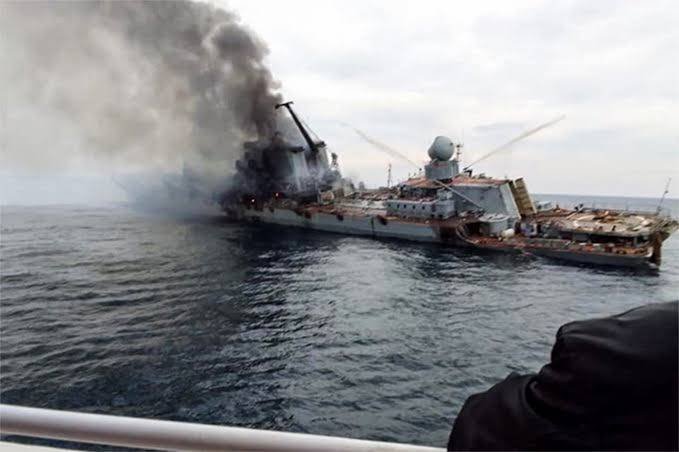
A Russian-owned container ship has sunk in the Black Sea after an alleged Ukrainian drone attack near the port of Novorossiysk.
Russia’s state nuclear corporation Rosatom said at least two unmanned vessels struck the Yanina early on Saturday.
The container ship was reportedly sailing around 210 kilometres from Novorossiysk when the attack occurred.
Rosatom said the vessel began taking on water after sustaining serious damage.
All 17 crew members abandoned the ship in an organised evacuation. They were later rescued and reported to be in satisfactory condition.
Sixteen crew members were reportedly picked up by the merchant vessel Delphinus. Russian naval aviation assisted in rescuing the remaining sailor.
No crew deaths or serious injuries were immediately reported.
The Yanina was operated by FESCO, a shipping company linked to Rosatom’s transport operations.
Rosatom said the vessel was carrying civilian cargo. Its shipment reportedly included frozen food, construction materials and other commercial goods.
There was no immediate evidence that the ship was transporting nuclear material or conducting work connected to Russia’s nuclear industry.
Ukraine had not publicly accepted responsibility for the attack at the time of reporting. The circumstances surrounding the sinking could not be independently verified.
Rosatom Condemns Strike as Black Sea Attacks Expand
Rosatom chief Alexey Likhachev strongly condemned the reported attack.
He described the sinking as an assault on a civilian vessel and accused Ukraine of threatening commercial navigation in international waters.
Moscow characterised the incident as piracy. However, no independent maritime investigation had confirmed the legal circumstances of the attack.
The sinking occurred during a sharp escalation in attacks on ships, ports and energy infrastructure across the Black Sea.
Ukraine has repeatedly targeted Russian naval vessels, oil facilities and shipping routes during the war.
Kyiv accuses Moscow of using commercial and shadow-fleet vessels to transport oil, military supplies and other sanctioned goods.
Russia has also conducted repeated missile and drone attacks against Ukrainian ports, cargo vessels and export infrastructure.
Both countries have accused the other of endangering civilian shipping and violating international maritime law.
Recent Ukrainian operations have demonstrated the growing importance of naval drones in the conflict.
Ukraine has used unmanned surface vessels to strike Russian military ships and infrastructure near Crimea, Novorossiysk and other Black Sea locations.
In July, Ukraine said one of its naval drones sank the Russian border patrol vessel Izumrud near Novorossiysk.
Ukrainian forces said the ship had previously participated in Russia’s 2018 seizure of Ukrainian vessels in the Kerch Strait.
The Yanina incident represents a significant development because the vessel was described by Russia as a civilian container ship rather than a military target.
The attack may increase concerns among commercial shipping companies operating close to Russian and Ukrainian ports.
Insurers and vessel operators already face rising risks from missiles, aerial drones, sea drones and floating explosives in the region.
Russia Launches Record Missile Barrage During July
The reported sinking came as Russia intensified long-range attacks across Ukraine.
An analysis of Ukrainian Air Force data found that Russia launched 376 missiles during July.
That was more than double the number recorded in June and represented the highest monthly missile total reported during the full-scale war.
Russia also launched approximately 4,956 long-range drones during the month.
The drone total was lower than June’s figure, but the combined scale of the attacks placed further strain on Ukraine’s air-defence systems.
Many of the July strikes targeted Kyiv and other major Ukrainian cities.
Some attacks hit residential buildings, transport facilities, commercial areas and public infrastructure.
The Ukrainian capital suffered several deadly strikes during the month, including an attack on July 2 that killed at least 30 people.
Russia also increased its use of ballistic missiles.
Military analysts estimated that Moscow launched 126 ballistic missiles during July alone.
Ukraine intercepted fewer than one-third of them, according to an analysis of official figures.
Ballistic missiles are particularly difficult to stop because of their speed and steep flight path.
They can reach targets with limited warning, leaving civilians and emergency services with little time to respond.
Ukraine relies heavily on American-made Patriot systems to intercept such weapons.
President Volodymyr Zelensky has warned that Ukraine is facing a severe shortage of Patriot interceptor missiles.
During a major overnight attack on Kyiv, Russia reportedly launched 35 missiles and 185 drones. Only one missile was intercepted because of limited Patriot ammunition, according to Ukrainian officials.
The attack killed at least nine people and damaged homes, a school, businesses and diplomatic property.
Zelensky has repeatedly appealed to the United States and European allies for additional air-defence systems and ammunition.
He has argued that stronger defences are essential to protect cities from Russia’s expanding ballistic missile campaign.
However, uncertainty remains over future supplies.
The continued attacks at sea and in the air show that both sides are expanding their long-range operations as the conflict continues.
The sinking of the Yanina may also deepen tensions over whether commercial vessels linked to Russian state companies can be considered legitimate wartime targets.
For now, Russia says the ship carried only civilian goods, while Ukraine has not issued an official statement accepting responsibility.

