
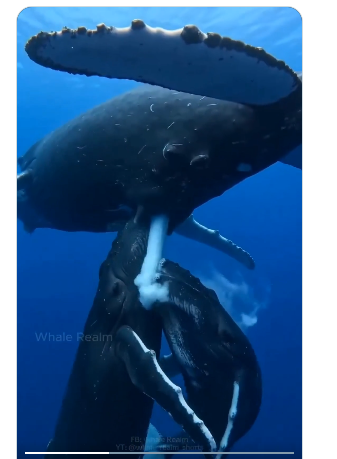

A rare underwater video showing a whale nursing her calf has gone viral on social media, drawing attention to the extraordinary care marine mammals provide to their young.
The clip was shared by an account named Gaju on X, where it quickly gained traction among users. The footage captures a close-up view of a mother whale feeding her calf deep in the ocean, highlighting a rarely seen aspect of marine life.
Extraordinary Feeding Behavior
Whale milk is known for its extremely high fat content, ranging between approximately 35% and 50%. Because of this, it appears unusually thick underwater, forming cloudy streams as the calf feeds. The video shows this unique feeding process in a visually striking way.
Nature’s most intimate bond! 🐋💙 Have you ever seen a whale nursing? Because their milk is so high in fat (about 35–50%!), it looks like a thick cloud underwater! 🥛✨ It’s incredible how these gentle giants care for their young! https://t.co/6UIMZqdQPC pic.twitter.com/sqNfqpv94m
— GAJU (@GAJUCARE) June 17, 2026
Marine experts note that this high-fat milk is essential for the rapid growth and insulation of whale calves in cold ocean environments. The feeding behavior also reflects the strong maternal bond between whales and their offspring.
Social Media Reactions
The video has sparked widespread reactions online, with users expressing awe and fascination at the rare moment captured in the deep sea. Many viewers praised the beauty of marine life and the nurturing instincts of whales.
Some users also described the footage as educational, noting that it offers a glimpse into animal behavior that is rarely observed in the wild.
Growing Interest in Marine Life
Such viral clips continue to increase public interest in ocean ecosystems and marine conservation. Experts say that visual content like this helps raise awareness about the importance of protecting marine species and their habitats.
The video continues to circulate across platforms, attracting viewers who are intrigued by the rare and intimate glimpse into the life of whales in their natural environment.

