
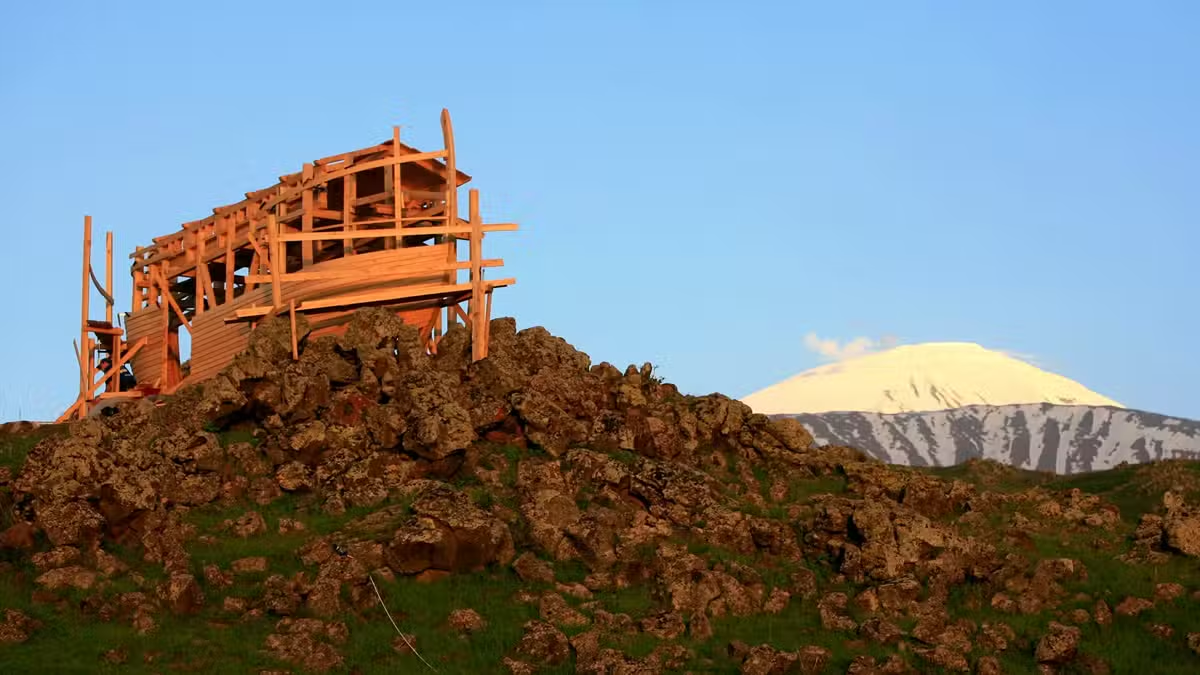

Turkish-born American scientist reports unusual subsurface layers beneath boat-shaped Durupınar Formation, but researchers say findings require physical verification
ANKARA: A Turkish-born American defence scientist has reported unusual underground features beneath the Durupınar Formation in eastern Türkiye, renewing interest in a site that some researchers and local traditions have associated with Prophet Noah’s Ark.
Dr Khosrow Bakhtar surveyed the formation using BakhtarRadar, a subsurface imaging system based on EarthRadar technology originally developed for the United States Air Force.
Preliminary scans reportedly identified several anomalies and distinct underground layers. Moreover, researchers said the available radar data had not revealed a clearly defined bedrock boundary, raising questions about the geological structure beneath the formation.
However, the findings do not establish that an ancient vessel exists underground.
Boat-Shaped Formation Draws Renewed Attention
The Durupınar Formation measures approximately 515 feet, or 157 metres, in length and resembles the outline of a large ship. Its unusual appearance has fuelled speculation about Noah’s Ark for decades.
Nevertheless, many geologists have maintained that natural geological processes created the formation.
The latest radar survey has now generated fresh interest because researchers detected subsurface features that they believe warrant closer investigation.
However, the research team stressed that radar anomalies alone cannot determine whether the underground structures have geological or archaeological origins.
Researchers Plan Core Drilling for Evidence
Consequently, Bakhtar and his team plan additional analysis and targeted core drilling to identify the materials and structures detected beneath the surface.
The location also carries religious significance. The Quran states that Prophet Noah’s Ark eventually came to rest on Al-Judi, although researchers have not definitively established its geographical location.
Meanwhile, local tradition has associated a peak around the Mount Tendürek region with Al-Judi.
Ultimately, researchers say only physical investigation can establish whether Durupınar’s unusual underground characteristics reflect natural geology, archaeological remains or another explanation.

