
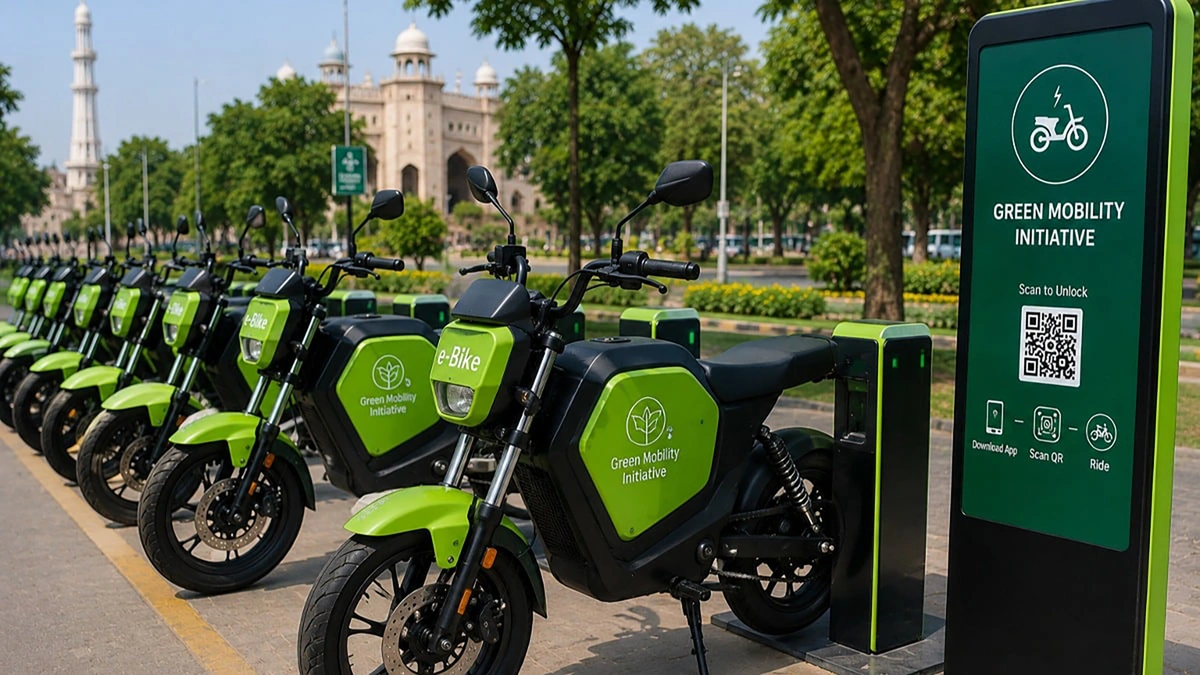

The Punjab government is planning to distribute around 120,000 electric two- and three-wheelers across the province under the Punjab Clean Air Program (PCAP).
Officials discussed the initiative during a stakeholder consultation on Monday, focusing on cleaner transport, affordable financing and opportunities to generate carbon credits.
The programme aims to reduce vehicle emissions while helping Punjab develop a system for monetising verified reductions through tradable carbon credits.
Punjab Explores Affordable Electric Transport
The consultation examined different financing options to make electric vehicles more accessible to commuters and commercial operators. Participants discussed low-interest instalments and affordable financing models that could reduce the upfront cost of switching to electric vehicles.
The government also considered targeted access for women and low-income groups as part of the programme.
Meanwhile, stakeholders discussed the infrastructure needed to support wider electric vehicle adoption across Punjab.
Charging Stations and Battery Waste Management
The proposed programme will require a wider network of charging facilities to support electric two- and three-wheelers. Participants therefore discussed plans for charging stations alongside battery management systems.
Battery waste management was another key issue raised during the consultation. Proper collection, handling and disposal of used batteries will be important as the number of electric vehicles increases.
The discussions also included vehicle manufacturers, dealers and battery-swapping companies to address practical challenges linked to the transition.
Punjab Plans Carbon Credit System
The government also discussed how the electric vehicle programme could generate tradable carbon credits.
For the project to qualify, authorities will need transparent systems to measure, report and verify reductions in greenhouse gas emissions.
The proposed framework will seek recognition under the Verified Carbon Standard, an internationally recognised carbon-credit standard managed by Verra.
Verified emission reductions could allow the project to generate carbon credits based on the pollution and emissions avoided through the shift towards electric vehicles.
Stakeholders Discuss Implementation
Representatives from several government departments participated in the consultation.
These included the Environment, Excise, Transport, and Planning and Development departments, along with the Bank of Punjab.
Vehicle manufacturers, dealers, battery-swapping companies, financial institutions, civil society representatives and consumers also attended the meeting.
Their feedback covered financing, infrastructure, consumer access and the practical implementation of the electric mobility programme.
The Punjab government said it would incorporate actionable recommendations into the project design documents and implementation procedures.
Clean Transport Initiative Targets Air Pollution
The electric vehicle programme forms part of Punjab’s broader efforts to tackle smog and air pollution. Transport emissions remain one of the issues the province is seeking to address through cleaner mobility options.
As a result, the proposed shift towards electric two- and three-wheelers could combine transport reform with emissions reduction.
For now, the government is working on the programme’s design, financing mechanisms and verification framework before moving towards wider implementation across Punjab.
For the latest updates, visit and follow The Truth International website (www.thetruthinternational.com) and subscribe to the YouTube Channel.

