

Viral Videos Trigger Outrage Over Treatment of Minors
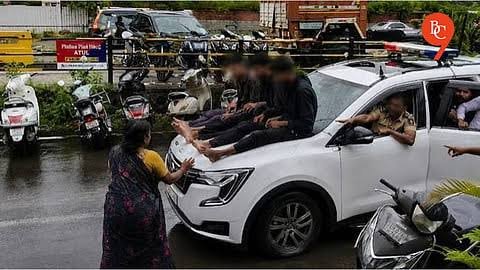
Police in India’s Pune city are facing serious scrutiny after three juvenile suspects were allegedly tied to the bonnet of a police vehicle and paraded through public streets.
The minors were reportedly suspects in a murder investigation.
Videos of the incident circulated widely on social media and triggered strong criticism over the conduct of police officers.
According to Indian media reports, the juveniles were allegedly forced to move through public areas while being physically restrained.
Some reports also claimed that members of the public were allowed to assault the minors while police personnel were present.
The allegations have not yet been conclusively established through the official inquiry.
Footage from the incident reportedly showed the suspects being made to walk on their knees before they were tied to the police vehicle.
The videos caused widespread anger online, with users questioning whether law enforcement officers had violated legal protections available to children accused of crimes.
Under Indian juvenile justice law, children in conflict with the law are entitled to special protections. Their dignity and privacy must also be protected during investigation and legal proceedings.
The Maharashtra State Human Rights Commission has now intervened in the case.
Human Rights Commission Orders Fact-Finding Inquiry
The Maharashtra State Human Rights Commission took suo motu notice after reports and videos of the incident emerged.
A full bench headed by commission chairperson Justice A.M. Badar described the reported conduct as deeply concerning.
The commission ordered a preliminary fact-finding investigation into the circumstances surrounding the treatment of the juvenile suspects.
Notices were issued to senior government and police officials.
Those asked to respond reportedly include the Maharashtra chief secretary, director general of police and Pune Police Commissioner Amitesh Kumar.
Other senior officers connected with the area and police station involved were also asked to explain the circumstances.
Police Inspector Mansingh Patil was subsequently transferred from his position amid the controversy.
However, the transfer itself does not establish criminal or disciplinary guilt. The human rights inquiry is expected to determine whether officers violated established procedures.
The commission also expressed concern over allegations that police threatened other children who had gathered near the scene.
It said such behaviour could cause psychological trauma and may conflict with protections established under India’s Juvenile Justice framework.
The commission has separately scrutinised other recent allegations involving public humiliation of suspects by Pune police, highlighting broader concerns about policing methods.
Commission Questions Public Punishment Outside Legal Process
The human rights body reportedly compared the Pune incident with an earlier controversial case involving Farooq Ahmad Dar in Kashmir.
Dar was tied to the front of an Indian Army vehicle in 2017 during unrest in the region.
The commission referred to previous human rights proceedings surrounding that case while stressing the importance of protecting human dignity.
In the Pune case, the central question is whether police subjected juvenile suspects to punishment and public humiliation before any judicial determination of guilt.
Children accused of criminal offences must be handled through procedures established under the Juvenile Justice Act.
Police cannot replace legal proceedings with public punishment.
Authorities are now expected to determine who authorised the alleged parade, whether senior officers were aware of it and whether civilians were permitted to assault the suspects.
Investigators may also examine available video footage and statements from police personnel, witnesses and the families of the juveniles.
The three minors remain suspects in the underlying criminal investigation. Their alleged involvement in that case must be determined separately through the appropriate juvenile justice process.
The controversy has renewed debate in India over police accountability and the treatment of suspects in custody.
Human rights groups have repeatedly argued that even people accused of serious crimes retain constitutional and legal protections.
The Maharashtra State Human Rights Commission’s inquiry will now examine whether those protections were violated in Pune and whether further disciplinary or legal action is required.

