
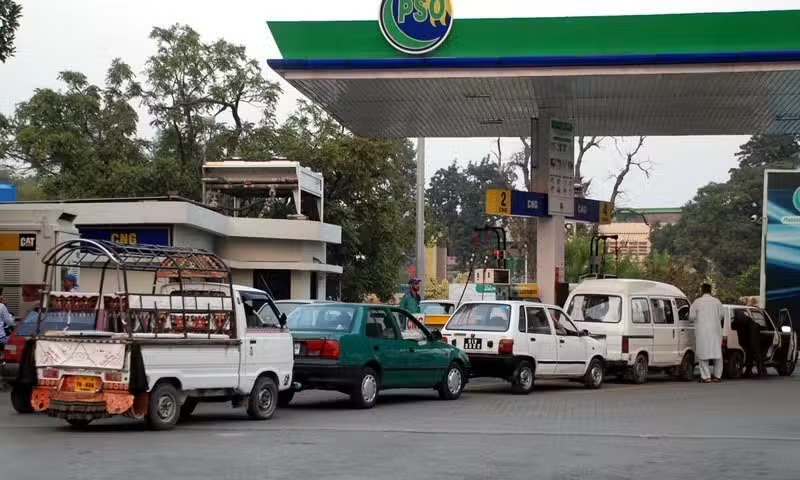

Fuel prices in Pakistan have once again become a major talking point. Moreover, a senior government aide has sparked controversy with his remarks. He linked rising fuel costs to weak tax compliance among citizens. Consequently, public debate has intensified across the country.
Special Assistant to the Prime Minister Huzaifa Rehman commented on the recent petrol adjustment. He suggested that insufficient tax payments by the public have created revenue gaps. Therefore, the government has shifted the burden to petroleum levies.
He stated that missing tax revenue is being recovered through fuel charges. This explanation has triggered strong reactions from consumers and analysts. However, many citizens view the statement as controversial.
Sharp Increase in Petrol and Diesel Prices
The federal government recently approved a significant rise in fuel prices. This decision was sanctioned for a weekly pricing cycle. Moreover, the increase applies nationwide and affects all consumers.
High-speed diesel has increased by Rs. 15 per litre. Meanwhile, petrol has risen by Rs. 14.92 per litre. Consequently, transportation and logistics costs are expected to rise further.
After the revision, diesel now costs Rs. 414.58 per litre. Petrol has reached Rs. 414.78 per litre across the country. These levels mark one of the higher price points in recent months.
Public Pressure and Economic Impact
The latest fuel adjustment adds pressure on already struggling households. Moreover, inflation continues to affect essential goods and services. Fuel price changes directly influence transport fares and commodity rates.
Consequently, businesses may face rising operational costs. This increase can also pass on to consumers in daily purchases. However, wages have not increased at the same pace.
Transporters are expected to adjust fares in response. Therefore, the cost of commuting may rise for ordinary citizens. Additionally, supply chains could experience further strain.
Debate Over Taxation and Responsibility
The adviser’s remarks have shifted attention toward tax compliance issues. He argued that public tax shortfalls contribute to fiscal pressure. Therefore, fuel levies become a tool to bridge revenue gaps.
However, critics argue that fuel prices should not reflect tax inefficiencies. They believe broader reforms are necessary instead. Moreover, transparency in pricing remains a key public demand.
This debate highlights a long-standing issue in fiscal policy. Fuel pricing often becomes a reflection of wider economic challenges. Consequently, public frustration continues to grow.
Conclusion
Fuel prices in Pakistan have once again climbed sharply. Moreover, the accompanying political remarks have intensified public discussion. The link between taxation and fuel costs remains highly sensitive.
Therefore, both economic and policy responses will remain under scrutiny. Citizens continue to feel the impact through daily inflation pressures.

