
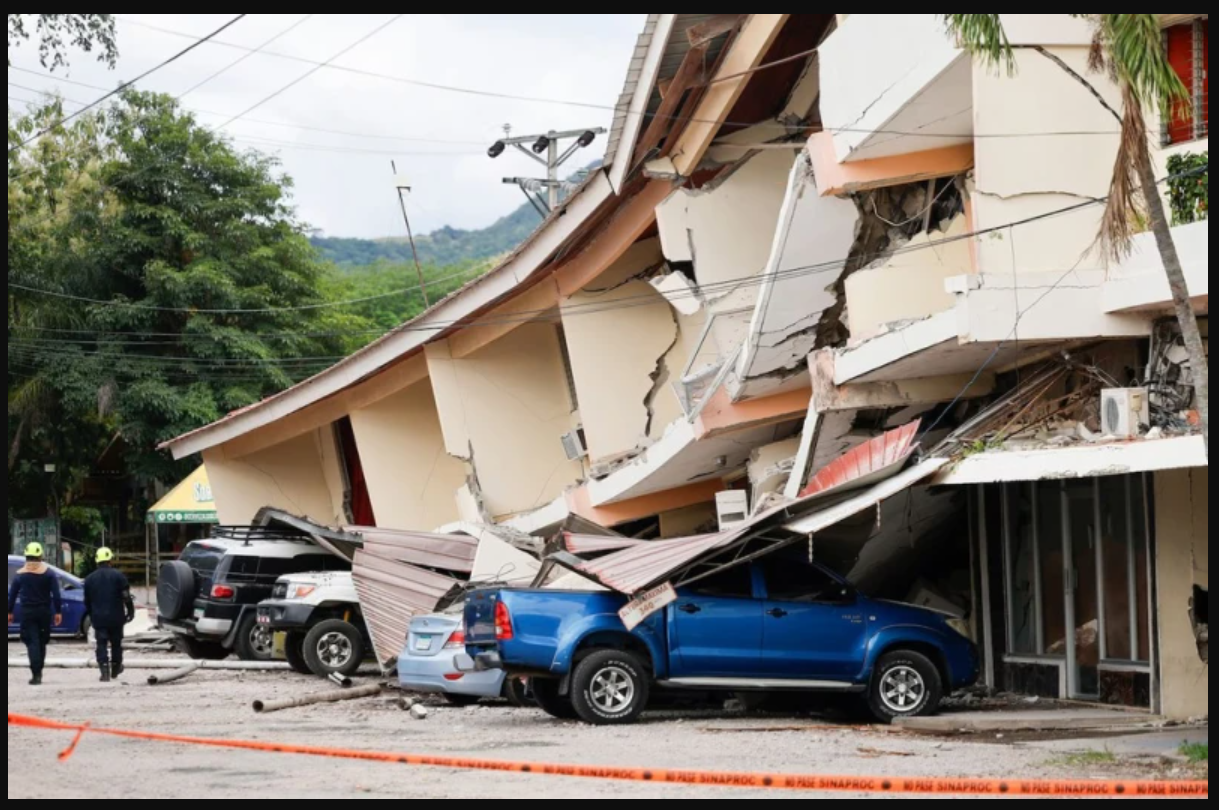

A powerful 7.7-magnitude earthquake struck southern Panama on Friday, damaging buildings, disrupting air travel and cutting electricity across six provinces. The intense shaking sent frightened residents into the streets as repeated aftershocks raised concerns about further damage.
The United States Geological Survey (USGS) recorded the earthquake at a depth of 12.6 kilometres. It placed the epicentre near La Pitaloza, a rural community in Herrera province along the Pacific coast.
The agency warned that casualties were possible. Meanwhile, officials assessed the damage as residents faced uncertainty about the safety of their homes and buildings.
Panama Earthquake Damages Homes and Disrupts Transport
The earthquake triggered more than a dozen aftershocks, intensifying fears among residents. Television footage showed elderly people crying in the streets as weaker tremors continued to shake the country.
Ricardo Brown, 74, described the frightening experience in Las Minas, Herrera province.
“We’re scared. It’s just the two of us old folks here. The house has cracked, and we’re afraid it could fall on us,”
Brown said the earthquake had damaged several homes in his area.
The tremors also disrupted transport and everyday activities. Tocumen International Airport, a major regional aviation hub, suspended flights, while the Metro in Panama City halted services.
Traffic congestion spread across the capital as offices released employees early. Many workplaces took precautions amid concerns about building conditions and possible structural damage.
Schools also dismissed students early across the city. Students in uniforms filled downtown streets, while authorities suspended classes nationwide.
Power Outages Affect Six Provinces
The earthquake disrupted electricity supplies across six provinces, according to power provider Naturgy.
The outages added to the disruption caused by damaged buildings and transport interruptions. However, the full extent of the damage remained unclear in the immediate aftermath.
The USGS estimated that economic losses could reach between 1% and 10% of Panama’s gross domestic product. The estimate highlighted the potential economic impact, although the final cost remained uncertain.
Panama Canal Continues Normal Operations
Despite the powerful earthquake, the Panama Canal continued operating normally. The major shipping route lies approximately 203 kilometres from the earthquake’s epicentre.
Monitoring data showed that around 90 vessels were waiting at both ends of the canal. These included bulk carriers, tankers and container ships awaiting transit or docking.
The vessels were also waiting at berths serving storage terminals and trans-shipment operations. Nevertheless, the earthquake did not interrupt shipping through the canal.
Major earthquakes remain relatively rare in Panama, making the powerful tremor particularly alarming for residents.
Fault System Behind the Earthquake
Nestor Luque, director of Panama’s geosciences institute, attributed the earthquake to the Azuero Sona Fault System. He said pressure had accumulated within the active fault system over time.
“It’s a system of active faults that occasionally, due to the accumulation of stress, release this amount of energy,” he said.
Luque explained that seismic waves travelled throughout the country, allowing people in distant areas to feel the shaking.
“The seismic signals have travelled throughout the national territory, and that is why it could be felt everywhere.”
In Panama City, Luque counted approximately 40 seconds of vibrations. However, residents in other locations may have experienced even longer tremors.
Sabina Rios, who was on the sixth floor of an older building dating to the US military era, described the experience.
“The quake felt strong and lasted a long time, the longest I’ve felt in years,” Rios said.
Her account reflected the intensity of the shaking experienced in the capital, far from the reported epicentre.
Buildings Damaged Near the Epicentre
The earthquake struck near La Pitaloza, a sparsely populated rural community in Herrera province. Nevertheless, its effects extended beyond the immediate area.
Shaking reached San Jose, the capital of neighbouring Costa Rica, according to an eyewitness account.
In Penonome, located between the epicentre and Panama City, videos showed a damaged church and collapsed nearby buildings. The footage had been verified before publication.
Omar Smith, head of Panama’s civil protection agency, also reported impacts in Chitre, the capital of Herrera province. Damage was reported along the coast in Los Santos province as well.
Authorities continued assessing the effects as reports emerged from different parts of the country.
Tsunami Threat Ends After Earthquake
The earthquake initially triggered concerns about a possible tsunami along Panama’s coastline. However, the US Tsunami Warning System later confirmed that the threat had passed.
The system stated that no further tsunami danger remained from the earthquake.
Although the immediate tsunami threat ended, the aftershocks and building damage continued to raise concerns. Authorities still faced the task of assessing affected areas and determining the extent of the losses.
Panama Prepares for National Emergency Drill
Panama had already scheduled a nationwide evacuation exercise for the following Monday. The drill aims to test the country’s emergency response capabilities, including its preparedness for earthquakes.
The powerful tremor has highlighted the importance of emergency planning and public awareness. Meanwhile, authorities must assess damaged buildings and address disruption across affected communities.
The earthquake also comes amid reports of major seismic events in the wider region. Venezuela and Colombia have experienced major earthquakes in recent months, resulting in thousands of deaths combined.
For Panama, the immediate priorities remain assessing structural damage, restoring disrupted services and monitoring aftershocks. Although the tsunami threat has ended and the canal remains operational, the full economic and human impact of the earthquake remains uncertain.
For the latest updates, visit and follow The Truth International website (www.thetruthinternational.com) and subscribe to the YouTube Channel.

