
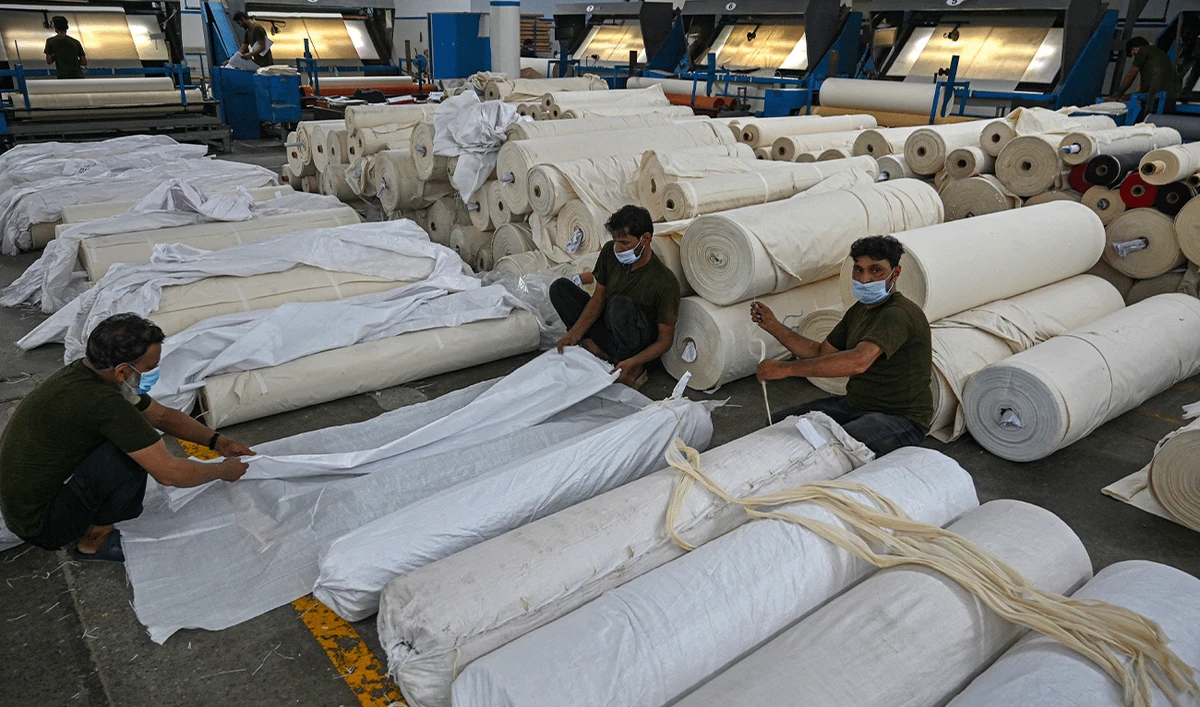

Pakistan’s 20 leading listed textile companies recorded combined profits of Rs51.9 billion in fiscal year 2025-26, marking an 11% increase from the previous year. However, their earnings improved despite largely stagnant sales, as lower financing costs and reduced tax rates supported profitability.
According to a report by Topline Securities, the companies earned Rs46.7 billion in FY25. Their combined sales remained around Rs1.4 trillion, down 0.3% year-on-year.
Lower Financing Costs Boost Textile Profits
Finance costs fell 19% to Rs54.5 billion during FY26. Topline Securities attributed the decline to lower borrowing rates and reduced borrowing under the Export Finance Scheme.
Meanwhile, the companies’ effective tax rate dropped from 37.1% to 33.2%. Changes affecting the future super tax treatment of exporters also led companies to reverse deferred tax liabilities.
Despite stronger net earnings, gross profit declined 0.2% to Rs183.7 billion. Gross margins remained unchanged at 13.1%, highlighting the pressure on underlying business performance.
Interloop, Sapphire and Nishat Report Mixed Results
Interloop Limited recorded a 129% increase in consolidated profit to Rs12.7 billion. Improved gross margins, lower financing costs and higher other income supported its performance. Sapphire Textile Mills reported a 73% increase in unconsolidated profit to Rs6.8 billion, despite a 13% decline in sales. Higher other income and lower costs helped lift earnings.
In contrast, Nishat Mills’ unconsolidated profit fell 9% to Rs5.5 billion. Lower dividend income and weaker gross margins affected its results.
Together, Interloop, Sapphire and Nishat accounted for 48% of the total profits reported by the 20 companies.
Textile Exports Reach Record High
Pakistan’s textile exports reached a record $17.6 billion in FY26, rising 2% from the previous year. The sector accounted for 57% of the country’s total goods exports. Value-added textile exports increased 3% to $13 billion. However, high energy costs and uncertainty surrounding Pakistan’s GSP+ trade status remain challenges for manufacturers.
Lower financing costs and budget measures could support earnings in FY27. Nevertheless, sustained growth will depend on export demand, energy affordability and companies’ ability to remain competitive in international markets.
For the latest updates, visit and follow The Truth International website (www.thetruthinternational.com) and subscribe to the YouTube Channel.

