

Col Retd Sabahuddin Chaudhry
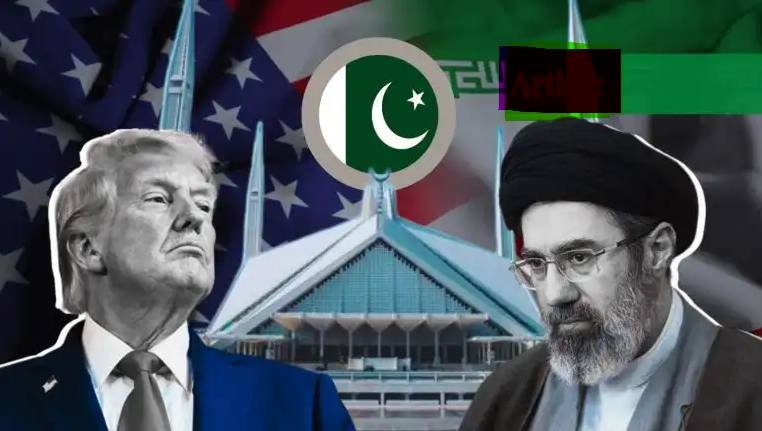
Pakistan proved its ability to participate in international affairs through mediating the conflict between the United States and Iran. So, after US-Iran conflict will Pakistan make some adjustments about domestic and foreign policies.
The assertion that “Pakistan proved its ability to participate in international affairs through mediating the conflict between the United States and Iran” is not only valid but represents a significant evolution in Pakistan’s diplomatic profile from a regional security actor to a constructive stakeholder in global peace and conflict resolution.
Abstract
This paper examines Pakistan’s evolving role in international diplomacy through its mediation efforts during the 2026 crisis between the United States and Iran. Traditionally perceived as a regional security actor, Pakistan demonstrated its capacity as a constructive intermediary by facilitating dialogue, reducing tensions, and contributing to de-escalatory outcomes. The study argues that Pakistan’s effectiveness as a mediator is rooted in its geostrategic positioning, balanced foreign policy, and accumulated diplomatic experience. It further evaluates the implications of this role for Pakistan’s global standing and the evolving dynamics of middle-power diplomacy in a multipolar international system. The analysis is based on qualitative assessment of diplomatic developments, policy patterns, and strategic context.
1. Introduction
In an increasingly multipolar and conflict prone international system, the role of middle powers in conflict mediation has gained renewed importance. The 2026 escalation between the United States and Iran provided a critical test case for third-party diplomacy, particularly in an environment characterized by deep mistrust and limited direct engagement between adversaries.
Within this context, Pakistan emerged as a credible intermediary, facilitating communication and contributing to de-escalation. This development aligns with broader theoretical understandings of mediation, where effectiveness depends on credibility, neutrality, and access to conflicting parties. Pakistan’s role in this crisis thus offers an important case for examining how middle powers can shape outcomes in high-stakes geopolitical conflicts.
2. Strategic Background: From Frontline State to Diplomatic Facilitator
Pakistan’s diplomatic trajectory reflects a pattern of strategic alignment combined with episodic but consequential mediation efforts. A notable historical precedent is its role in facilitating the 1971 rapprochement between the United States and China, which demonstrated its capacity to operate as a discreet intermediary in complex geopolitical settings. Despite such contributions, Pakistan has largely been viewed through a security centric lens, particularly during the Cold War and the post-9/11 period, when its foreign policy was heavily shaped by its role in regional conflicts. This perception often obscured its potential as a diplomatic actor.
The 2026 US–Iran crisis represents a qualitative shift in this trajectory. Rather than functioning as a reactive participant in great power dynamics, Pakistan assumed a proactive role in facilitating dialogue. This reflects an evolution toward a more structured and purposeful diplomatic posture, indicating growing strategic maturity and an expanded foreign policy toolkit.
3. Structural Foundations of Mediation Capacity
Pakistan’s effectiveness as a mediator is grounded in a set of structural factors that enable access, credibility, and operational flexibility.
· Geostrategic Centrality
Pakistan’s geographic position, bordering Iran and situated at the intersection of South Asia, the Gulf, and Central Asia, provides it with direct relevance to regional security dynamics and facilitates engagement with multiple stakeholders.
· Balanced Diplomatic Engagement:
Pakistan maintains functional relations with both the United States and Iran. Its longstanding engagement with Washington coexists with stable ties with Tehran, grounded in geographic proximity, economic interaction, religious, and cultural linkages. This dual engagement enhances its acceptability as an intermediary.
· Strategic Autonomy:
Pakistan’s avoidance of rigid alignment in Middle Eastern rivalries allows it to maintain a degree of neutrality. This controlled alignment minimizes perceptions of bias and creates diplomatic space for mediation.
· Synthesis:
These factors collectively indicate that Pakistan’s mediatory role in the 2026 crisis was not ad hoc but the result of accumulated strategic positioning and diplomatic experience, enabling the activation of latent mediation capacity under favorable conditions.
4. Evidence of Mediation and De-escalation
Pakistan’s role in the crisis extended beyond symbolic engagement to include practical diplomatic facilitation. It enabled indirect communication channels between the United States and Iran, providing a platform for dialogue in a context where direct engagement remained constrained.
Diplomatic reporting indicates that Pakistan also hosted or supported discussions aimed at reducing tensions, contributing to a temporary de-escalatory phase in April 2026. While the durability of such outcomes remains uncertain, these efforts helped create space for negotiation at a critical juncture.
This intervention occurred against the backdrop of escalating tensions with potential implications for regional stability and global energy markets, underscoring the significance of timely diplomatic engagement.
5. International Recognition and Diplomatic Validation
Pakistan’s mediatory role was reflected in increased diplomatic engagement and its acceptance as a communication channel by relevant stakeholders.
The willingness of both the United States and Iran to engage through Pakistan suggests a level of trust that is uncommon in highly polarized conflict environments.
International media and policy discourse have also acknowledged the emergence of alternative diplomatic conduits in managing such crises. Pakistan’s inclusion within this framework indicates a degree of validation of its role as a credible intermediary.
6. Neutrality as Operational Leverage
Pakistan’s effectiveness in mediation can be attributed to its ability to translate neutrality into operational leverage. Unlike passive neutrality, this involved actively facilitating communication, conveying proposals, and reducing informational asymmetries between the parties.
Its simultaneous engagement with both sides, without formal alignment against either, allowed Pakistan to function as a conduit for confidence building measures. This demonstrates that neutrality, when combined with access and intent can serve as a strategic asset in conflict mediation.
7. Contribution to Regional and Global Stability
Pakistan’s mediation contributed to risk containment in a volatile geopolitical environment. By facilitating de-escalation, it helped reduce the likelihood of broader conflict spillover in the Middle East, a region critical to global energy security.
The easing of tensions also had implications for maritime stability in key transit routes, including the Strait of Hormuz. While the intervention did not resolve underlying conflicts, it played a role in managing escalation dynamics, highlighting the importance of middle-power engagement in crisis mitigation
8. Transformation of Pakistan’s Global Image
Pakistan’s mediation during the U.S.–Iran crisis produced not only tangible diplomatic outcomes but also significant reputational and psychological dividends, both domestically and internationally. Islamabad civil military conjunction that worked in tandem to play peace maker in a global conflict with potential of embroiling into a nuclear conflagration put Pakistan as a global cynosure of eulogy.
This move hatched a “hat trick” of checkmate to India after the Abhinandan and Sindoor debacle. We unequivocally established that our military might, and diplomatic and charm offences can disarm high octane situations of potential poly crisis into taking an ugly turn. War mongers in US and Israel have always worn a Janus face with a flagellating forked tongue of double speak. We have clinched global laurels for our bringing about detente between the antagonists, albeit shaky and temporary. The fact remains, arbitrators can only arbitrate. The opening victory for Pakistan was that both countries expressed complete faith and confidence on Pakistan only. This in itself was an unprecedented diplomatic triumph.
At the leadership level, civilian and military coordination enabled Pakistan to act as a credible peace broker in a conflict with potential nuclear escalation risks. This reinforced Pakistan’s image as a responsible nuclear state capable of crisis management, rather than merely a security concern.
From a comparative regional perspective, this episode contributed to relative diplomatic advantage over India, particularly in the domain of crisis handling and international perception. Pakistan demonstrated an ability to combine military deterrence with diplomatic de-escalation, strengthening its credibility as a stabilizing actor.
Internationally, Pakistan gained recognition for facilitating dialogue between historically adversarial actors. While the durability of such peace remains uncertain as mediation does not guarantee long-term resolution, the ability to bring both sides to the negotiating table represents a rare diplomatic achievement.
A particularly notable outcome was the mutual trust extended by both the United States and Iran, positioning Pakistan as a uniquely acceptable intermediary. This level of dual trust is uncommon in contemporary geopolitics and significantly enhances Pakistan’s diplomatic capital.
Additional secondary gains include:
Reinforcement of Pakistan’s FATF compliance credibility, contributing to its removal from the grey list
Strengthening of relations with Gulf States, including security cooperation with Saudi Arabia
Improved diplomatic engagement with countries such as Bangladesh, indicating
wider regional receptivity
At the systemic level, this episode reflects a broader shift in global politics:
Increasing fatigue with interventionist policies, particularly in the Middle East
Growing space for middle-power mediation in a multipolar world
Recognition that geo-economics increasingly outweighs military adventurism
However, these gains also highlight a critical internal challenge. Despite diplomatic success, Pakistan’s economic fundamentals remain fragile, characterized by structural dependence on external financing, limited export growth, and governance constraints.
The contrast between external diplomatic success and internal economic weakness underscores a key policy imperative: Pakistan must now translate strategic relevance into economic resilience.
Lessons from East Asian economies suggest that sustained success requires:
Governance reform and anti-corruption measures
Export-led growth strategies
Industrial and technological development
Policy consistency and institutional discipline
Ultimately, mediation has created strategic opportunity, not strategic transformation. Whether Pakistan can capitalize on this moment depends on its ability to align foreign policy success with domestic reform.
9. Emerging Strategic Assets and Policy Continuities
Pakistan’s mediation has generated several strategic advantages.
First, it has enhanced its diplomatic capital by establishing credibility with both Washington and Tehran as a neutral interlocutor.
Second, it has demonstrated its capacity for crisis management, contributing to regional stability in a high risk environment.
Third, it has contributed to a narrative shift, positioning Pakistan as a potential stabilizing actor rather than a source of instability.
Despite these gains, key policy drivers remain unchanged. Domestically, economic stabilization continues to constrain foreign policy choices, limiting the scope for strategic risk taking. Externally, Pakistan is likely to maintain a balanced, multi vector foreign policy, avoiding exclusive alignment with any single bloc.
Certain strategic priorities remain non-negotiable, including relations with China, economic ties with Gulf States, and the maintenance of credible nuclear deterrence. These factors will continue to define the boundaries within which Pakistan’s diplomatic engagement evolves.
10. Pakistan across Alternative Regional Scenarios
To assess the durability and limits of Pakistan’s emerging diplomatic role, it is necessary to evaluate its strategic behavior across a range of plausible regional trajectories arising from the United States–Iran crisis.
The following scenarios outline differentiated external environments and their implications for Pakistan’s foreign policy orientation, domestic stability, and geo-economics positioning.
Scenario 1: Managed De-escalation (Return to Status Quo)
(Ceasefire holds; no decisive victor; diplomatic engagement resumes)
In this baseline scenario, Pakistan sustains a low-profile but effective intermediary role, facilitating limited communication between the United States and Iran. This positioning enables incremental diplomatic and economic gains, including improved engagement with international financial institutions and reduced external pressure in regulatory domains.
At the domestic level, the relative success of mediation reinforces institutional cohesion and allows policymakers to prioritize economic stabilization.
Externally, Pakistan maintains balanced relations with Gulf partners while cautiously expanding functional engagement with Iran, particularly in trade and energy. Geo-economically, regional stability enhances the predictability of connectivity initiatives, strengthening investor confidence in infrastructure corridors. India’s response in this scenario is likely to remain within the diplomatic domain, avoiding escalation.
Assessment:
Low risk environment with moderate gains, characterized by stability rather than structural transformation.
Scenario 2: Relative Iranian Strategic Ascendancy
(Iran consolidates political and regional influence despite external pressure)
In this scenario, Pakistan faces heightened strategic tension arising from competing expectations of major stakeholders. The United States may seek limitations on Pakistan’s engagement with Iran, while Tehran may expect preferential access.
Pakistan is therefore likely to adopt a strategy of calibrated or selective engagement, maintaining security coordination where necessary while restricting economic interaction within acceptable thresholds. Domestically, this environment may exacerbate sectarian sensitivities and intensify security challenges in border regions, particularly in Balochistan. Managing internal cohesion becomes a central policy priority.
Economic and infrastructure initiatives continue but under heightened risk conditions. Concurrently, India may exploit the diplomatic space created by Pakistan’s constrained maneuverability to advance its regional narrative.
Assessment:
High-risk scenario with limited strategic gains, marked by external pressure and internal vulnerability.
Scenario 3: Transatlantic Fragmentation (Western Policy Divergence)
(Divergence between the United States and European actors on Iran policy)
A fragmented Western response creates diplomatic space for middle powers. In this context, Pakistan can expand its role as a bridge state by leveraging multilateral platforms such as the Organization of Islamic Cooperation, the Shanghai Cooperation Organisation, and the United Nations.
This scenario enables diversification of external partnerships, including deeper engagement with European actors, thereby reducing overdependence on any single strategic partner. Domestically, such positioning may reinforce narratives of Global South leadership and diplomatic autonomy.
Connectivity and infrastructure initiatives remain stable, benefiting from reduced geopolitical polarization. India, meanwhile, may align with specific Western blocs, prompting competitive diplomatic positioning.
Assessment:
Moderate risk with high diplomatic opportunity, representing a peak phase for Pakistan’s intermediary role.
Scenario 4: Decisive US–Israel Strategic Advantage
(Iran is significantly weakened, Western influence consolidated)
Under this outcome, Pakistan may gradually tilt toward the United States and its partners to secure economic and strategic dividends. Engagement with Iran becomes more constrained, though not entirely severed, reflecting a pragmatic recalibration rather than full realignment. Domestically, policymakers would need to manage potential societal sensitivities through calibrated political messaging. Limited cooperation with Western security frameworks may re-emerge, particularly in relation to regional counterterrorism dynamics.
From a geo-economic perspective, Pakistan may seek to broaden participation in its infrastructure initiatives, including selective openness to Western investment, while simultaneously reassuring China regarding the continuity of existing commitments.
Assessment:
Moderate risk with significant economic opportunities, accompanied by a partial reduction in strategic autonomy.
Scenario 5:Gulf Strategic Autonomy
(Key Gulf states pursue greater independence from U.S. security architecture)
A shift toward greater autonomy among Gulf States enhances Pakistan’s relevance as a regional partner, particularly given its economic interdependence through labor markets and remittance flows.
In this environment, Pakistan may prioritize a Gulf-centric engagement strategy while maintaining limited functional ties with the United States.
This scenario also creates space for renewed regional connectivity initiatives, including energy cooperation with Iran under evolving political conditions. Infrastructure corridors gain importance as stabilizing economic anchors amid shifting external alignments.
India may attempt to capitalize on perceived gaps in U.S. regional engagement; however, Pakistan can offset this through strengthened coordination with China and regional multilateral frameworks.
Assessment:
Moderate risk with high geo-economics and diplomatic gains, reinforcing Pakistan’s role as a regional connector.
Scenario 6: Formalized Pakistan – Saudi Security Alignment
(Institutionalized defense cooperation within a Saudi-led framework)
In this high-intensity scenario, Pakistan enters into a formalized security arrangement with Saudi Arabia, significantly reducing its strategic ambiguity. Such alignment is likely to strain relations with Iran and introduce new complexities in Pakistan’s external balancing strategy.
Domestically, the implications include heightened sectarian sensitivities and increased pressure on internal security institutions. The expansion of external commitments may also influence civil–military dynamics and resource allocation.
From a geo-economics perspective, concerns may arise regarding the strategic orientation of infrastructure projects, particularly from China, necessitating reassurances to maintain investor confidence. India is likely to respond assertively, both diplomatically and along contested boundaries, while expanding its own regional partnerships.
a. Baseline vs Transformational Paths
Scenario 1 = Stability baseline (low risk, incremental gains)
Scenario 3 & 5 = Maximum diplomatic and geo-economics leverage
Scenario 4 & 6 = Maximum economic/security gains, but reduced autonomy
Scenario 2 = Highest stress with least payoff
b. Risk Distribution
Lowest Risk: Scenario 1
Highest Risk: Scenarios 2 & 6 (internal + external pressures)
Moderate: Scenarios 3, 4, 5
c. Strategic Behavior Pattern
Across all six scenarios, Pakistan consistently:
Avoids full-spectrum military entanglement (except Scenario 6)
d. Emerging Axes of Choice
Pakistan’s choices increasingly fall along three axes:
Neutrality vs Alignment (1 vs 4/6)
Bridge Role vs Bloc Role (3/5 vs 6)
Geo-economics vs Security Dependence
12. Comparative Strategic Assessment
A comparative evaluation of the six scenarios reveals distinct patterns in Pakistan’s strategic options, risk exposure, and opportunity structures.
Stability-Oriented Pathways: Scenario 1 represents a low-risk baseline, emphasizing continuity and incremental gains.
High-Opportunity Environments: Scenarios 3 and 5 provide the greatest scope for diplomatic expansion and geo-economics leverage.
Alignment-Driven Outcomes: Scenarios 4 and 6 offer potential economic or security benefits but entail constraints on strategic autonomy.
High-Stress Conditions: Scenario 2 presents the most challenging environment, combining external pressure with internal fragility
Across these scenarios, Pakistan’s strategic posture can be understood along a spectrum ranging from active neutrality to formal alignment, with corresponding trade- offs between autonomy, risk, and external dependence.
13. Strategic Synthesis and Policy Patterns
Three overarching insights emerge from the scenario analysis.
a. First, the distinction between baseline stability and transformative opportunity is critical. Scenario 1 provides a stable foundation but limited structural change, whereas Scenarios 3 and 5 offer pathways for expanding diplomatic influence and economic connectivity.
b. Second, risk distribution is uneven and closely tied to alignment choices.
Scenarios involving rigid alignment or heightened geopolitical polarization generate the greatest internal and external pressures, while multi-vector engagement strategies tend to moderate risk exposure.
c. Third, Pakistan’s strategic behavior demonstrates notable consistency.
Across most scenarios, Pakistan exhibits a preference for:
Avoiding direct military entanglement in external conflicts
Maintaining diversified diplomatic engagement
Prioritizing geo-economics instruments over coercive strategies
These patterns suggest a deeply embedded policy orientation shaped by structural constraints and historical experience.
d. Finally, Pakistan’s strategic choices increasingly converge along three axes:
Neutrality versus alignment
Bridge diplomacy versus bloc participation
Geo-economic prioritization versus security dependence
The interaction of these axes will determine the sustainability of Pakistan’s emerging diplomatic role.
13. Policy Implications and Strategic Direction
The analysis indicates that Pakistan’s most viable strategic trajectory lies in a calibrated synthesis of stability, diplomatic expansion, and regional economic integration.
An optimal pathway would involve maintaining the core features of Scenario 1 strategic neutrality and risk management, while selectively leveraging the opportunities presented in Scenarios 3 and 5. This includes expanding engagement in multilateral frameworks, reinforcing its role as a diplomatic intermediary, and capitalizing on emerging regional economic alignments.
Conversely, certain pathways present clear strategic risks. Deep entanglement in polarized alignments, as reflected in Scenario 6, risks undermining diplomatic flexibility and internal stability. Similarly, excessive dependence on any single external actor, as in Scenario 4, may constrain long-term policy autonomy. Scenario 2, characterized by high external pressure and limited returns, represents a condition to be mitigated rather than pursued.
Ultimately, Pakistan’s ability to consolidate its emerging role as a credible intermediary will depend on sustaining strategic balance externally while advancing economic and institutional resilience domestically.
Mediation has created opportunity; its translation into durable influence will depend on policy discipline and long-term alignment between external engagement and internal capacity.
14. Core Grand Insight and Strategic Implications
Pakistan’s mediation during the 2026 United States–Iran crisis underscores a central insight in contemporary international relations: diplomatic credibility, when combined with strategic restraint, can generate influence independent of coercive power.
However, the sustainability of such influence is contingent upon the alignment of external diplomatic gains with internal economic transformation.
Pakistan’s comparative advantage lies not in traditional alliance politics or military projection, but in its capacity to function as a geopolitical hinge state, one that balances competing blocs, leverages geographic centrality, and exercises calibrated neutrality to extract both diplomatic and economic value.
This positioning allows Pakistan to operate effectively in a fragmented international system where rigid alignments are increasingly costly, and flexibility is strategically rewarded.
A. Pakistan’s Global Standing after Mediation
Regardless of the ultimate outcome of the United States–Iran engagement, Pakistan’s mediation has already generated measurable shifts in its international profile across four interrelated domains:
a. Diplomatic Positioning
Prior to the crisis, Pakistan was frequently characterized as a reactive and crisis prone state, often associated with external financial dependence. Post-mediation, it has emerged as a credible diplomatic convener capable of facilitating engagement between adversarial actors. This repositioning increases the likelihood of Pakistan’s inclusion in future crisis management frameworks within multilateral settings.
b. Security Perception
Historically, international discourse on Pakistan has emphasized nuclear risk and internal instability. The mediation episode contributes to reframing Pakistan as a responsible nuclear power capable of contributing to crisis management. Its strategic capabilities are thus increasingly viewed within a stabilizing, rather than purely risk oriented, framework.
c. Economic Outlook
Pakistan’s perceived risk profile has been a persistent constraint on foreign investment. Diplomatic success has the potential to moderate this perception by signaling political relevance and external stakeholder interest in Pakistan’s stability.
While such shifts do not automatically translate into sustained investment flows, they create favorable conditions for improved economic engagement.
d. Strategic Identity beyond South Asia
Pakistan’s global profile has often been interpreted through a comparative lens with India. Mediation has enabled partial decoupling from this framework, positioning Pakistan as an autonomous diplomatic actor with relevance extending beyond regional rivalry.
B. Pakistan’s Prospective Strategic Roles
Building on this momentum, Pakistan can consolidate its position through several functional roles:
a. Backchannel Facilitator:
Pakistan is well-positioned to serve as a discreet communication conduit in politically sensitive engagements, particularly where direct dialogue remains constrained.
b. Regional Stabilizer in the Gulf:
Rather than relying on military deployment, Pakistan can contribute through diplomacy, intelligence cooperation, and counterterrorism coordination, reinforcing regional stability.
c. Guardian of Strategic Connectivity:
As the central node of the China–Pakistan Economic Corridor (CPEC), Pakistan must ensure the security and continuity of infrastructure networks amid evolving geopolitical competition.
C. Strategic Risks: Overextension and Erosion of Neutrality
The principal risk emerging from mediation success is strategic overextension. Diplomatic credibility is contingent upon sustained neutrality; any visible shift toward bloc alignment risks undermining trust with competing actors.
Potential consequences include:
Erosion of credibility as an impartial intermediary
Reduced access to rival stakeholders
Diminished long-term diplomatic leverage
In this context, mediation should be understood as a source of strategic opportunity rather than a basis for alignment.
D. Policy Imperative: Monetizing Neutrality
Pakistan’s central policy challenge is to translate diplomatic capital into tangible economic and strategic gains while preserving flexibility. This requires a calibrated approach:
Converting diplomatic credibility into favorable economic engagement
Attracting investment linked to regional stability
Strengthening protection of critical infrastructure
Avoiding binding commitments that constrain strategic autonomy
Ultimately, effective diplomacy reduces the cost of strategic vulnerability by expanding policy options and enhancing resilience.
15. Conclusion
Pakistan’s mediation during this current United States–Iran crisis represents a significant evolution in its international role, marking a transition from a predominantly security driven state to a credible diplomatic intermediary. By facilitating dialogue and contributing to de-escalation, Pakistan demonstrated that influence in a multipolar system increasingly derives from diplomatic agility, strategic positioning, and the ability to manage competing relationships.
This episode has generated three enduring outcomes:
Enhanced diplomatic credibility
Expanded strategic leverage
Redefined global narrative
Together, these developments position Pakistan as a potential bridge between competing geopolitical blocs.
However, the durability of these gains remains contingent upon two critical factors.
First, Pakistan must sustain strategic neutrality and avoid rigid alignment in an increasingly polarized environment.
Second, and more importantly, it must convert external diplomatic success into internal economic resilience and institutional strength.
The long-term significance of this moment will therefore depend not on the mediation itself, but on Pakistan’s ability to institutionalize its role as a stabilizing intermediary while aligning foreign policy success with domestic reform. Mediation has created opportunity; its transformation into enduring influence will depend on policy discipline, economic restructuring, and strategic consistency.
About the Author
The author Col Muhammad Sabahuddin Chaudhry (Retired) is a highly respected Senior Security and Fire Life Safety Consultant with over 43 years of extensive professional experience across the defence, banking, and corporate sectors. An MBA qualified professional, who has a distinguished career includes 25 years in Army, 12 years in senior management roles at Citi Bank and Two year as a country manager Human resource in Wackenhut a Path finder Group in Pakistan. His research focuses on Pakistan’s evolving defense posture, regional threat environment, and the strategic implications of proxy warfare in Asia. Email: Chaudhry186@yahoo.comThe author Col Muhammad Sabahuddin Chaudhry (Retired) is a highly respected Senior Security and Fire Life Safety Consultant with over 43 years of extensive professional experience across the defence, banking, and corporate sectors. An MBA qualified professional, who has a distinguished career includes 25 years in Army, 12 years in senior management roles at Citi Bank and Two year as a country manager Human resource in Wackenhut a Path finder Group in Pakistan. His research focuses on Pakistan’s evolving defense posture, regional threat environment, and the strategic implications of proxy warfare in Asia. Email: Chaudhry186@yahoo.com

