
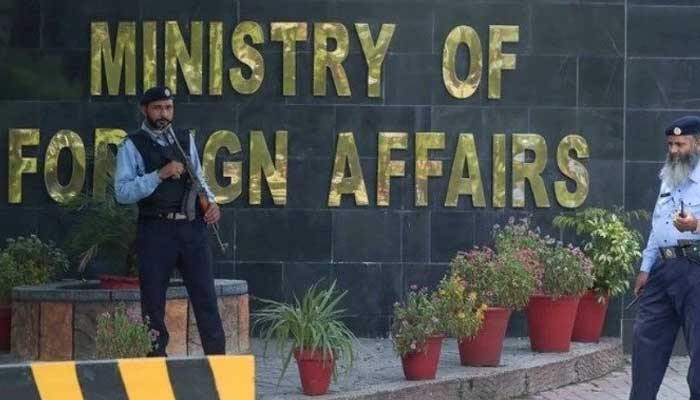

Pakistan has strongly rejected India’s allegations linking it to the Pahalgam incident. The Foreign Office described the claims as baseless and politically motivated.
Moreover, officials criticised what they called a recurring pattern of propaganda. They argued that such narratives aim to shape domestic political discourse in India.
“At a time when Pakistan, along with its international partners, is undertaking concerted diplomatic efforts for regional and international peace and security, it is deplorable that India has once again resorted to a campaign of baseless allegations and propaganda to link Pakistan with the Pahalgam incident,” the statement said.
Call for Responsible Conduct Amid Tensions
Furthermore, Islamabad urged New Delhi to act responsibly during a sensitive period. It emphasised the importance of avoiding rhetoric that could escalate tensions.
Pakistan also called for restraint in both statements and actions. Officials warned that inflammatory narratives could undermine ongoing peace efforts in the region.
In addition, the Foreign Office expressed hope that the international community would take notice. It urged global stakeholders to encourage responsible behaviour from India.
Background of the Pahalgam Incident
The Pahalgam attack occurred in April 2025 in Indian Illegally Occupied Jammu and Kashmir. The incident resulted in the deaths of 26 people.
Following the attack, India accused Pakistan of involvement without presenting evidence. Islamabad rejected the allegations and called for a neutral investigation.
However, tensions escalated quickly between the two countries. India later carried out missile strikes inside Pakistan, leading to casualties among civilians and security personnel.
Escalation and Military Confrontation
Consequently, the situation developed into a broader military confrontation. Pakistan responded with defensive measures, targeting multiple aerial threats.
The conflict between the two nuclear-armed neighbours intensified before a ceasefire was reached. The agreement came into effect on May 10 after international mediation.
Despite the ceasefire, political tensions have persisted. Both sides continue to exchange statements on past incidents and regional security issues.
Foreign Office Criticism of India’s Narrative
The Foreign Office criticised India’s approach in strong terms. It stated that such allegations reflect a deliberate attempt to shift focus from key issues.
“It is unfortunate that, in the midst of an ongoing regional crisis, India remains focused on weaponising its false narrative against Pakistan for narrow domestic political gains.”
Moreover, the statement linked these claims to broader regional concerns. It argued that such narratives cannot divert attention from the Kashmir dispute.
“The fact remains that such propaganda campaigns cannot distract the international community’s attention from India’s continued occupation of Indian Illegally Occupied Jammu & Kashmir (IIOJK) and its denial of the right to self-determination to the Kashmiris, in violation of relevant UN resolutions.
“Nor can such gimmicks conceal the fact that India continues to undermine regional peace and security by resorting to inflammatory rhetoric, repeated provocations, and aggressive military posturing, including its illegal unilateral action to hold the Indus Waters Treaty in abeyance, in clear violation of international law,” the statement added.
Renewed Debate on Evidence and Accountability
Meanwhile, Pakistan reiterated its demand for credible evidence regarding the Pahalgam attack. Officials maintained that India has not substantiated its claims.
A federal minister also criticised India’s position. He stated that New Delhi has avoided calls for an independent investigation.
Additionally, he described the incident as reflective of flawed reasoning and policy direction. He argued that unanswered questions continue to surround the episode.

